
 Furnace & heating
 AC repair
 Heat pumps
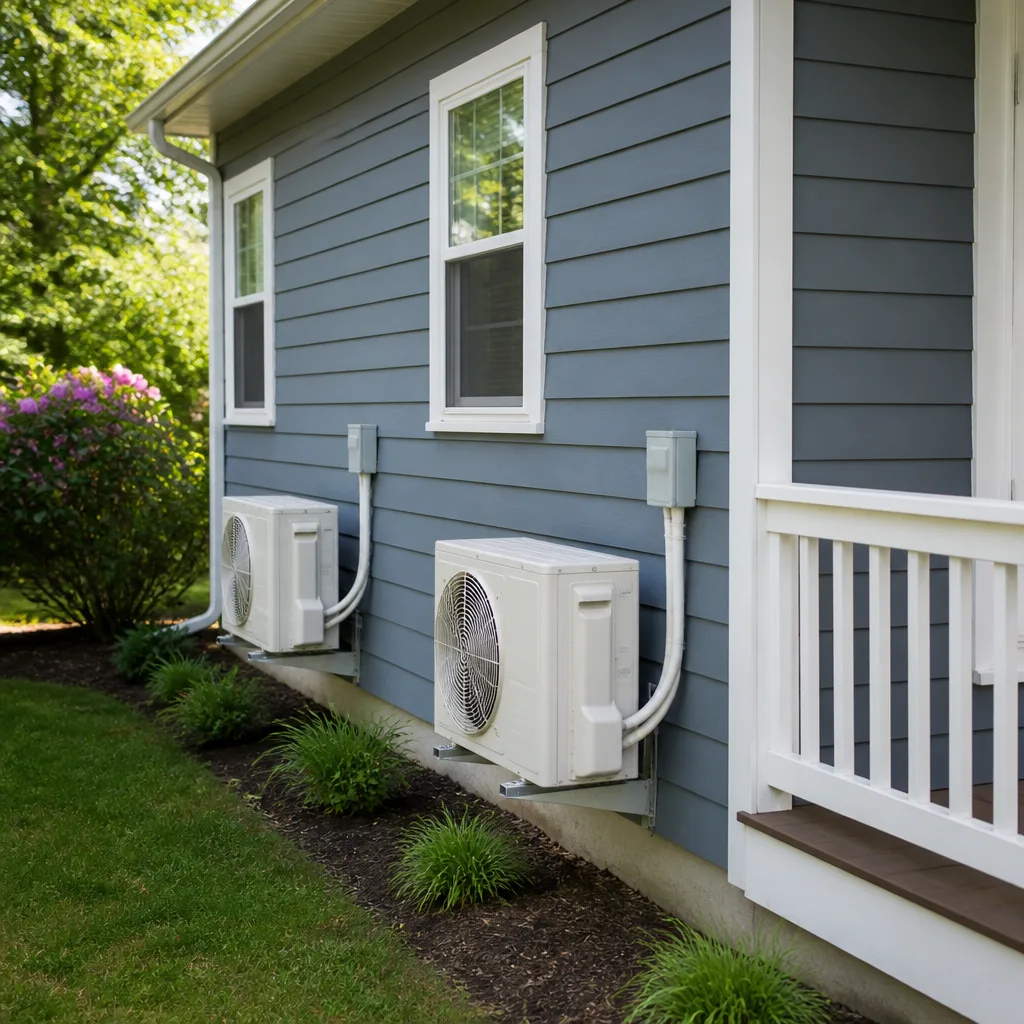 Ductless mini splits
 Carrier
 Trane
Trane Goodman
Seasonal tune-up and full diagnostic on your Carrier, Trane, or Goodman system - readings shown to you before any repair is proposed
Diagnosis first, numbers second - you approve the repair price before a single part goes in.
Get your free estimateCarrier Mini-Split Installation: The Miami Owner’s Guide
Carrier mini-split installation in Miami typically runs $4,130 to $8,850 for a complete single-zone system, with most homeowner jobs landing between $5,200 and $6,800 depending on the condenser location, line set length, and whether you’re replacing an existing unit or starting fresh. We stock Carrier-compatible mounting hardware, line sets, and condensate pumps on our trucks, so most single-zone swaps are done in one four-to-six-hour visit. The usual story we hear goes like this: the unit ran fine for five or six years, then a Florida afternoon pushed it harder than it could take… or a mount corroded through, or the condensate line backed up into the drywall, or the compressor started short-cycling and no one caught it until the humidity crept back into the house.
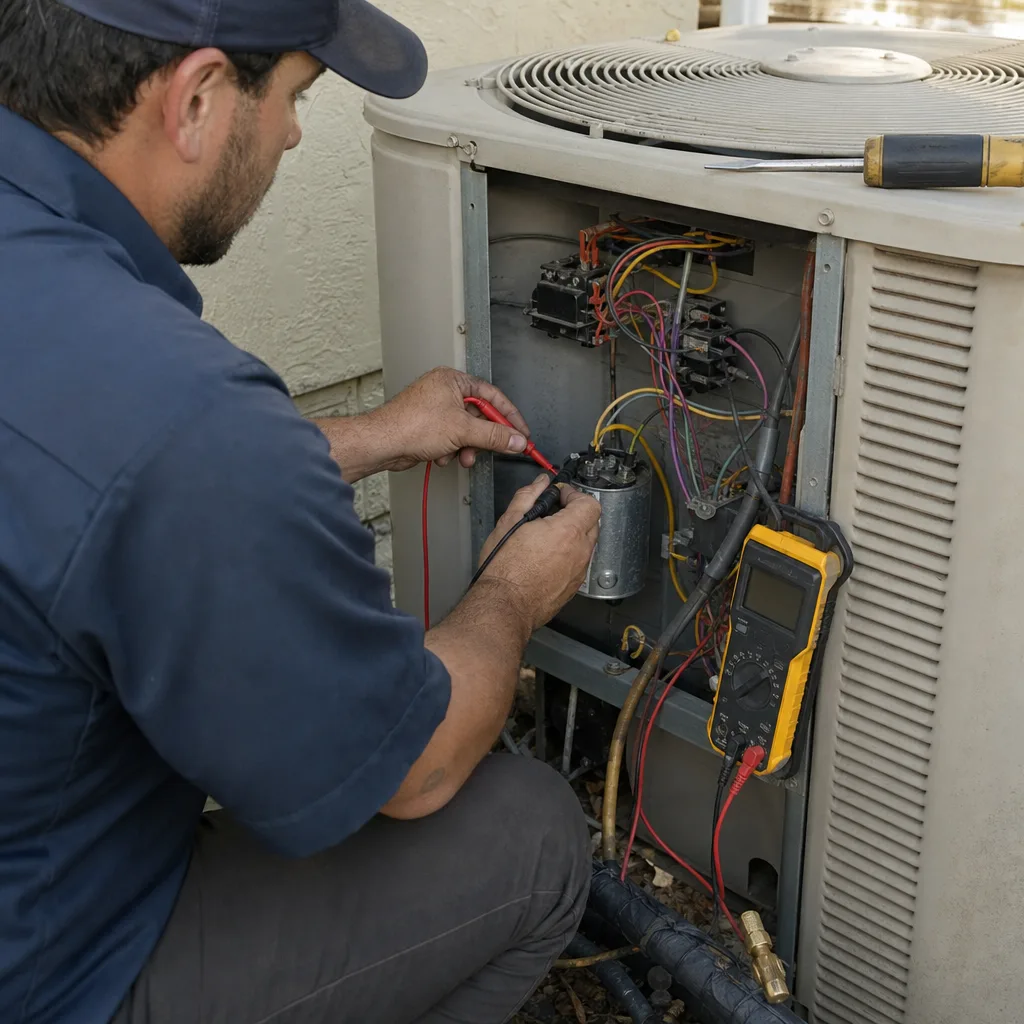
Before we get into the details, let’s name the elephant: Cold Harbour Heating and Air Miami is an independent HVAC company. We install and service Carrier equipment, but we’re not a Carrier corporate entity or factory dealer. What we are is a Miami-based shop that’s been working on Carrier mini-splits long enough to know which parts fail first in salt air, which models have refrigerant line quirks, and how to mount an outdoor unit so it survives hurricane season. Victor Mancini and the crew have handled everything from ductless retrofits in 1920s Coral Gables bungalows to condenser swaps on Brickell high-rise balconies.
Which Carrier Models This Applies To
This covers the full Carrier ductless lineup: the Performance Series (38MGRQ outdoor units paired with 40MPHA wall-mounted heads), the Infinity Series (38MBRC/40MBFC, which adds better humidity control and quieter operation), and the older 38MGRD units that are still all over Miami condos from the early 2010s. If your wall unit is a slim white panel with a horizontal louver and the outdoor condenser has a black grille with “Carrier” in silver lettering, you’re in the right place.
Here’s a compatibility gotcha most homeowners never hear about: Carrier changed their refrigerant line flare specifications between the MGRD and MGRQ generations. The old model used a 1/4-inch liquid line with a standard 45-degree flare. The newer MGRQ runs a 3/8-inch liquid line and a deeper flare seat. If a previous installer re-used the old line set without re-flaring, you get a slow refrigerant leak that no dye test will find because it only leaks under high head pressure on the hottest days. We pressure-test with nitrogen before we ever charge a system, because we’ve learned that in Miami, the heat will find the shortcut every single time.
For replacement parts, OEM Carrier components are always our default recommendation for anything that touches refrigerant or electrical controls: the inverter board, the compressor, the EEV (electronic expansion valve that meters how much refrigerant reaches the coil). For non-critical pieces like mounting brackets, vibration pads, or condensate drain fittings, quality aftermarket equivalents from brands like DiversiTech or RectorSeal perform just as well and save you 30-40%. We’ll tell you which is which before you spend a dollar.
Styles & brands we work with
Signs Your Carrier Mini-Split Installation Is Failing
- The unit runs but the room won’t cool below 78°F on a hot day. This usually means low refrigerant from a slow leak at a flare fitting, or a failing inverter board that won’t ramp the compressor to full speed. A quick gauge reading tells us which one in about ten minutes.
- Water stains on the wall below the indoor head, or a musty smell when the fan kicks on. The condensate drain line is clogged with the algae and biofilm that thrive in Miami’s humidity, or the drain pan inside the unit has cracked from UV exposure. Left alone, this rots drywall and invites mold.
- You hear a loud buzz or hum from the outdoor unit that changes pitch. The compressor is struggling against a failing capacitor or the fan motor bearings are seizing. In salt-air neighborhoods like Key Biscayne or North Beach, corrosion accelerates this by years.
- The outdoor unit short-cycles: runs three minutes, shuts off, restarts five minutes later. The inverter board’s thermistor (the temperature sensor that tells the board how hot the coil is) has drifted out of spec. Carrier boards are picky about this; aftermarket thermistors rarely read accurately enough and you end up chasing the same fault code.
- Error code on the wall unit, usually a blinking LED pattern like 2-3 or 3-1. Carrier’s fault codes are specific: 2-3 on a Performance Series means a communication error between indoor and outdoor boards, often caused by a loose terminal screw or a nick in the low-voltage wire where it passes through the wall.
See the difference
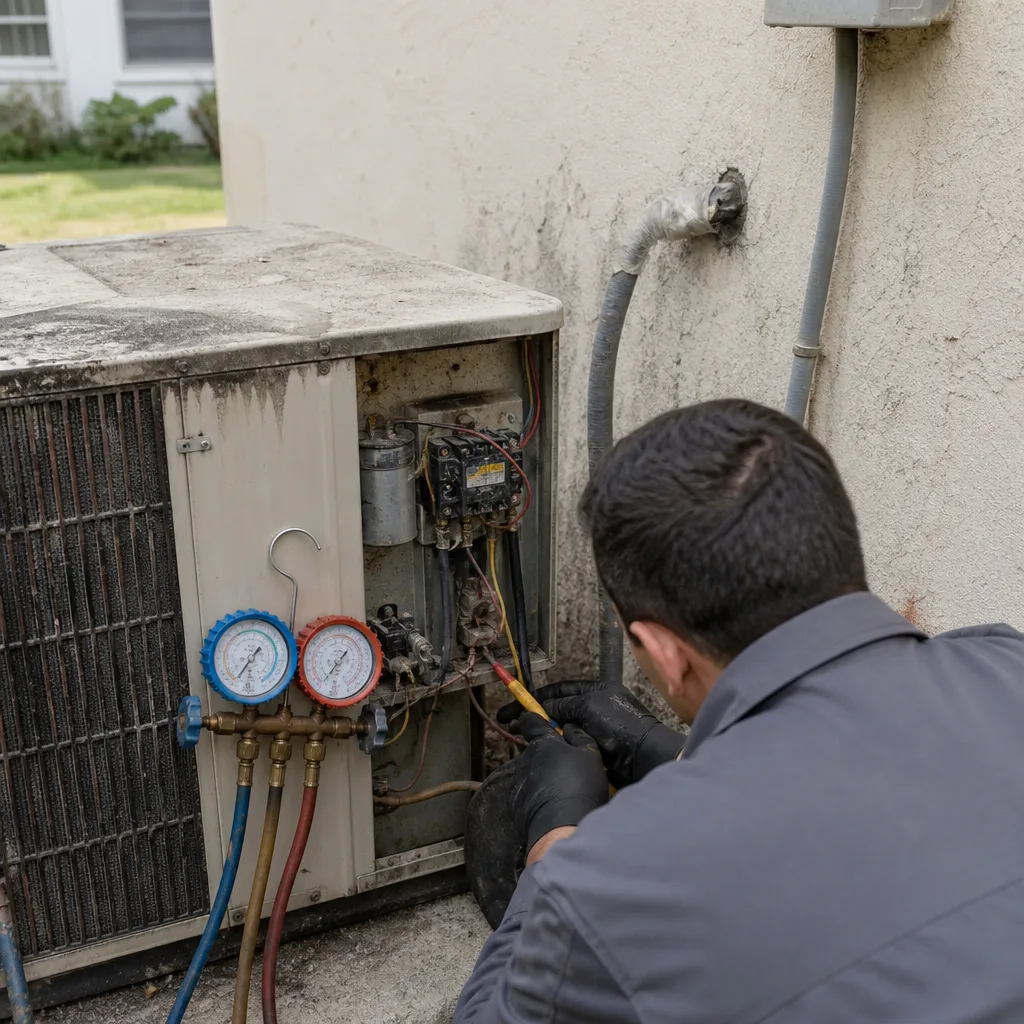 Before
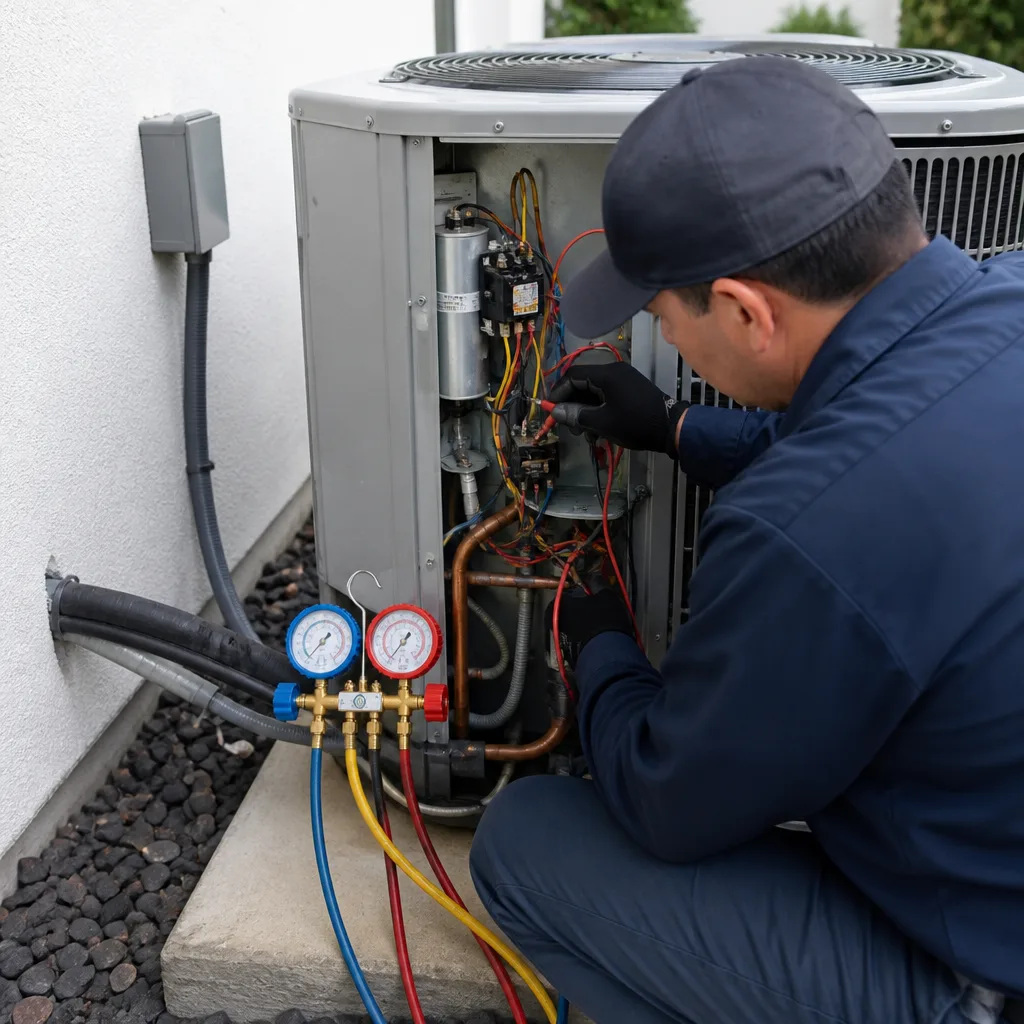 After
After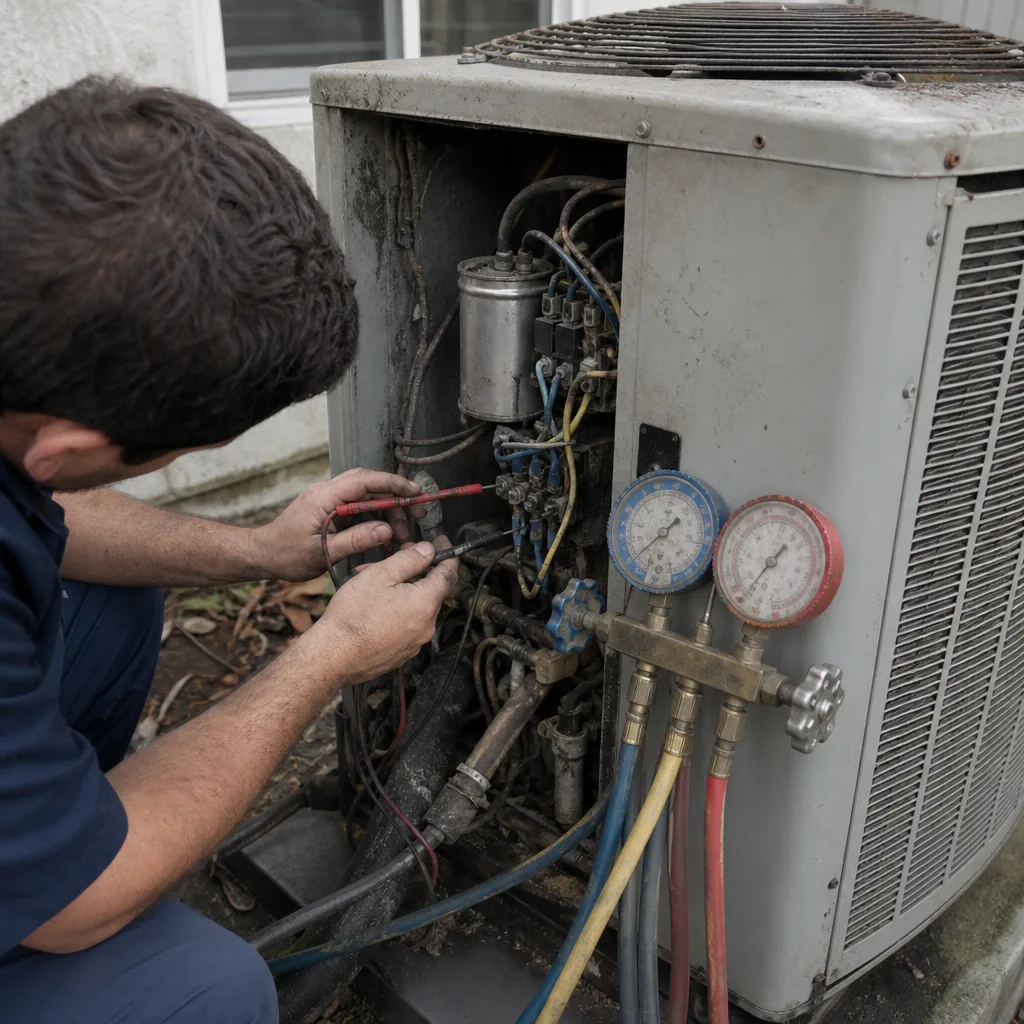 Before
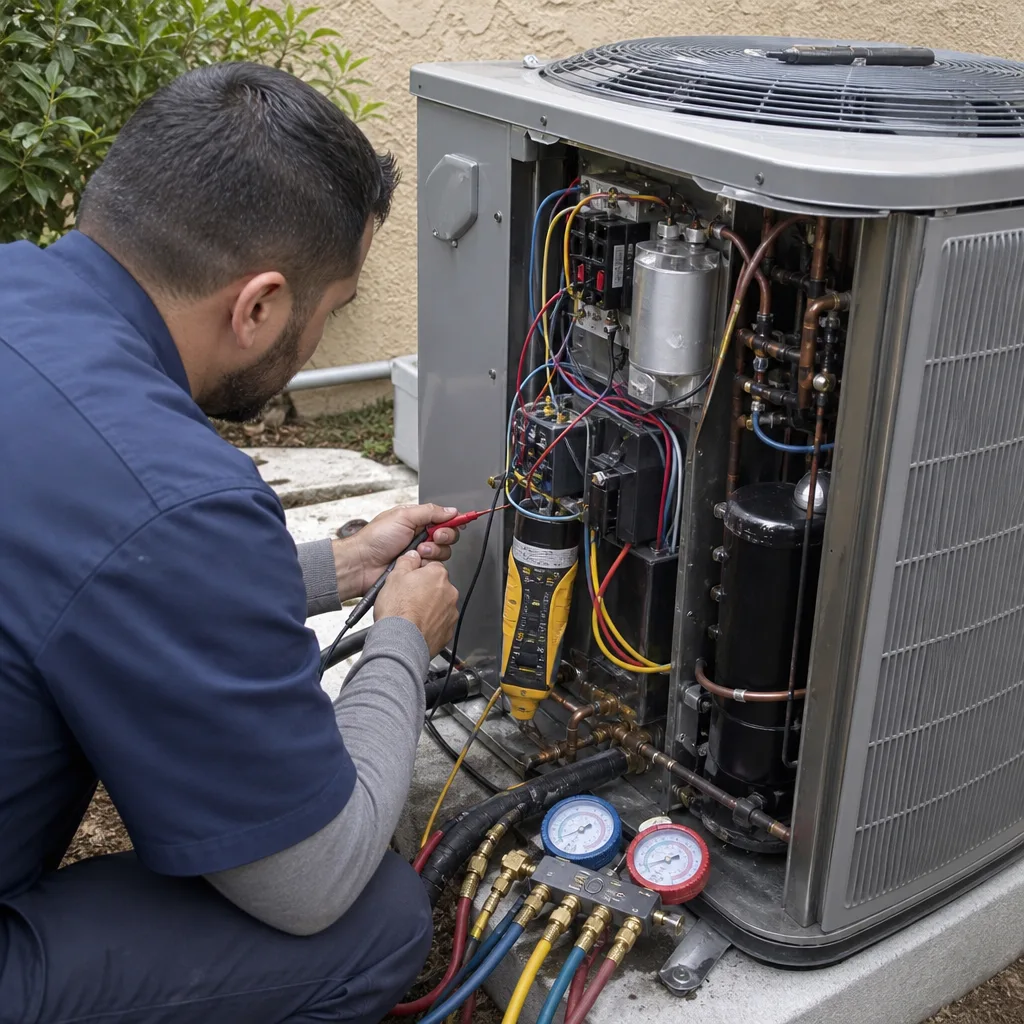 After
After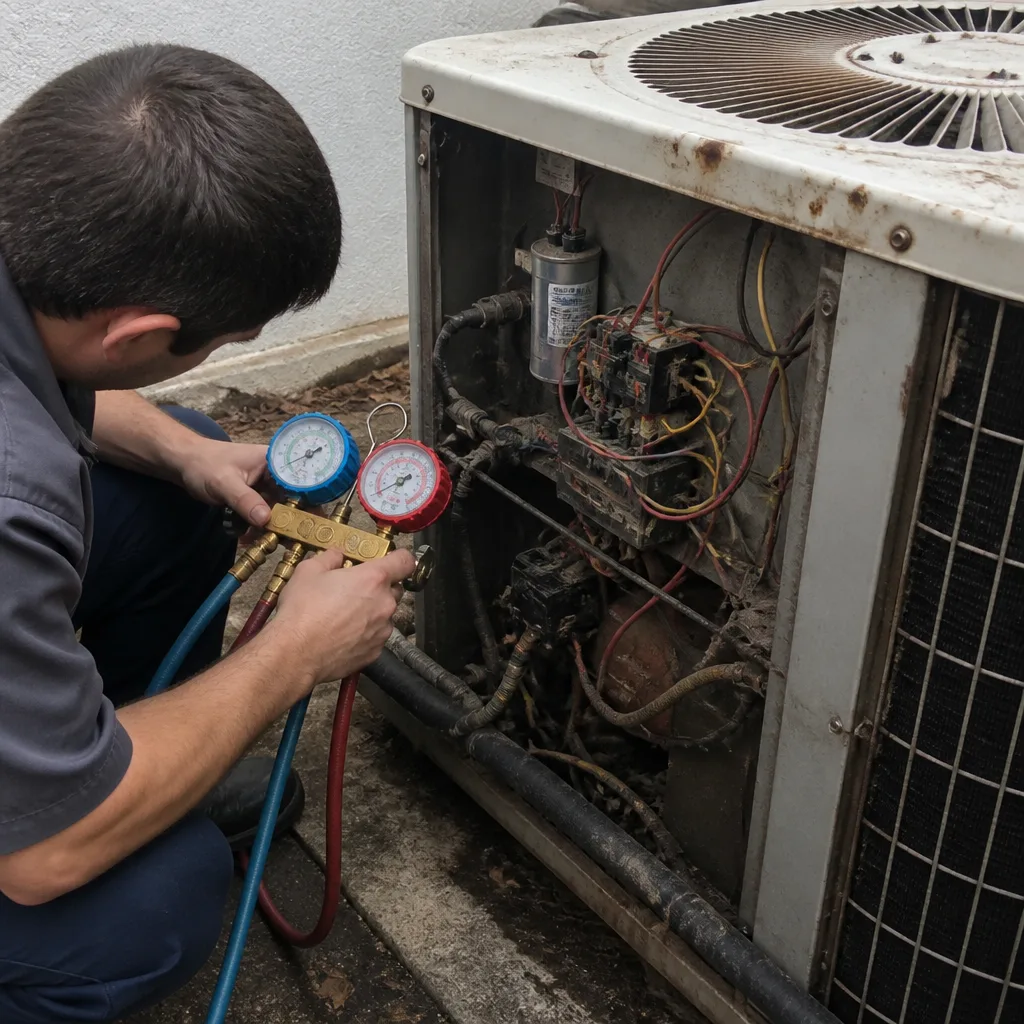 Before
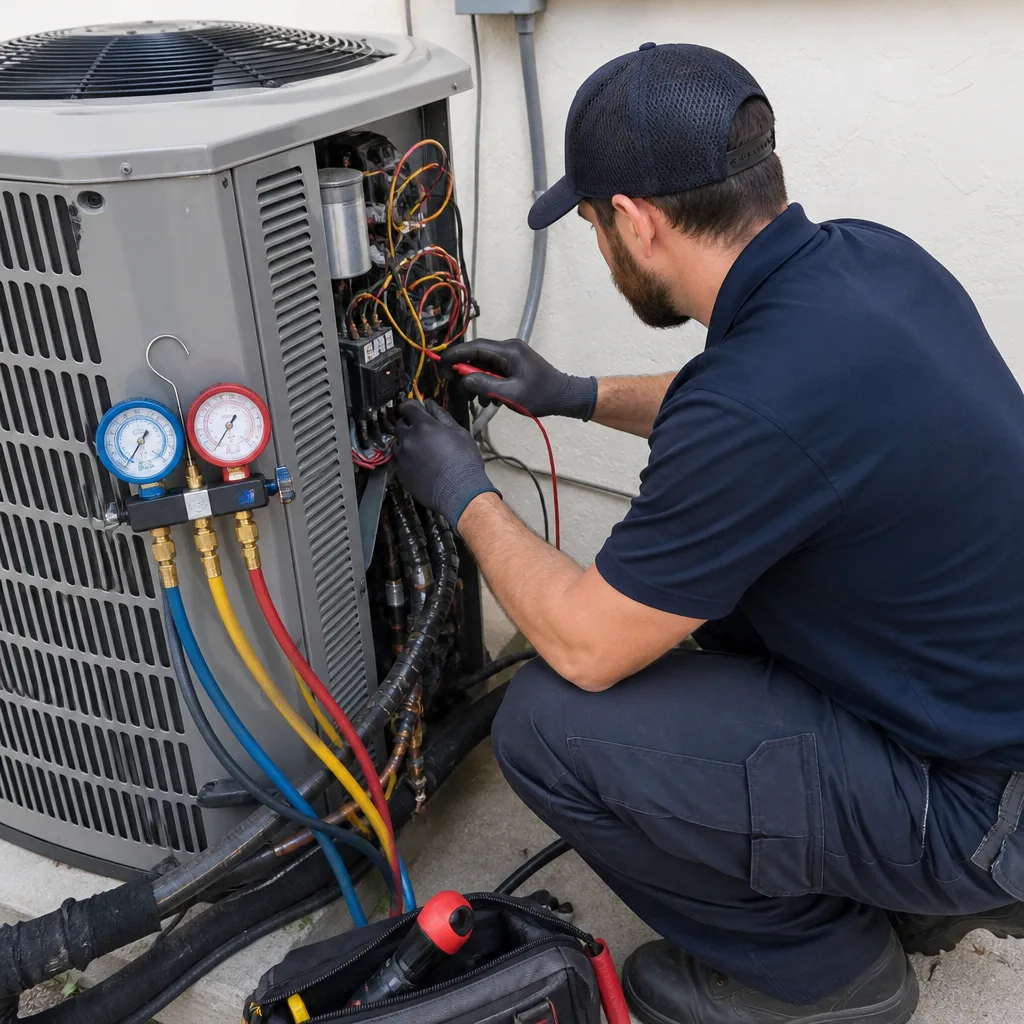 After
AfterReplacement Cost & What’s Included
Here’s what you’re looking at in Miami, parts and labor included:
- Single-zone mini-split installation (new, complete system): $4,130 – $6,200 for a 9K or 12K BTU unit; $5,800 – $8,850 for an 18K or 24K unit with a longer line set (over 25 feet) or a difficult condenser pad on a balcony.
- Line set replacement only (leaking or undersized): $450 – $900, depending on length and whether we’re snaking through an existing chase or running new line hide.
- Condensate pump replacement: $220 – $380, pump included; the Aspen Mini Blanc and Sauermann SI-30 are the two we trust in Miami’s humidity.
- Wall bracket or condenser pad replacement: $180 – $350, corrosion-resistant stainless or galvanized hardware included.
- Inverter board replacement: $500 – $900, OEM Carrier board, which carries its own one-year parts warranty on top of our work.
The range isn’t a mystery: the same 12K BTU unit costs more to install on a third-floor Brickell balcony with a 40-foot line run than on a ground-level pad in Kendall with 15 feet of line. The written price we hand you before work starts already accounts for all of it: equipment, refrigerant, electrical whip, disconnect box, line set, pad or bracket, condensate drainage, and the permit paperwork Miami-Dade requires. You never sign a change order at the door. Every installation we do and every part we replace carries our 365-Day Done Right Promise, written down before the technician leaves. If the work fails within a full year, we come back and make it right at no charge.
DIY or Call Us?
Some things are worth checking yourself: make sure the air filter is clean (slide it out of the top of the wall unit, rinse it, let it dry, slide it back), clear any leaves or debris from around the outdoor condenser, and confirm the condensate line isn’t visibly kinked where it exits the wall. Those are safe, five-minute tasks that solve maybe ten percent of Miami mini-split complaints.
But here’s the part we can’t soften: anything involving the refrigerant circuit, the electrical connections, or the high-voltage disconnect is not a DIY job. Refrigerant under pressure can cause frostbite burns in seconds. A mis-wired inverter board can destroy a $1,200 compressor. A bad flare means you’re recharging the system every summer until the fitting finally fails entirely. Carrier mini-splits are built to tight tolerances, and Miami’s heat and salt air exploit every shortcut. If your system is showing error codes, leaking, or short-cycling, call (850) 810-1910 and we’ll dispatch a technician who does this specific work every week.
FAQs
A properly installed Carrier mini-split in Miami lasts 12 to 15 years on average, with the outdoor condenser being the first major component to go, usually around year 10 to 12 because of salt-air corrosion and constant summer load. Units within two miles of the coast often lose two to three years off that. Call (850) 810-1910 if you’re chasing a problem that keeps coming back; sometimes a replacement is cheaper than a third repair.
Yes, and we’ll always quote a repair first if the compressor and coil are still sound. Inverter boards, thermistors, capacitors, fan motors, condensate pumps, and line sets are all repairable; a failed compressor on a ten-year-old unit usually tips the math toward replacement. We’ll show you both numbers in writing and let you decide.
A single-zone replacement in Miami usually takes four to six hours from the time our truck arrives until the system is charged, tested, and cooling. New installations with a fresh electrical circuit, a long line run, or a condensate drain that needs routing through a condo wall can take a full day. We’ll give you a firm arrival window when you book, and a firm completion time once the technician sees the site.
Yes, our Miami trucks carry the most common Carrier mini-split parts: line sets, flare fittings, condensate pumps, capacitors, thermistors, mounting brackets, and vibration pads. We also keep OEM Carrier inverter boards for the Performance and Infinity series in our local parts inventory, so most repairs don’t need a second visit. Trane and Lennox parts are also stocked for homes with mixed-brand systems.
Written by Victor Mancini, Owner, Cold Harbour Heating and Air Miami at Cold Harbour Heating and Air Miami, serving Miami and nearby areas.