
 Furnace & heating
 AC repair
 Heat pumps
 Ductless mini splits
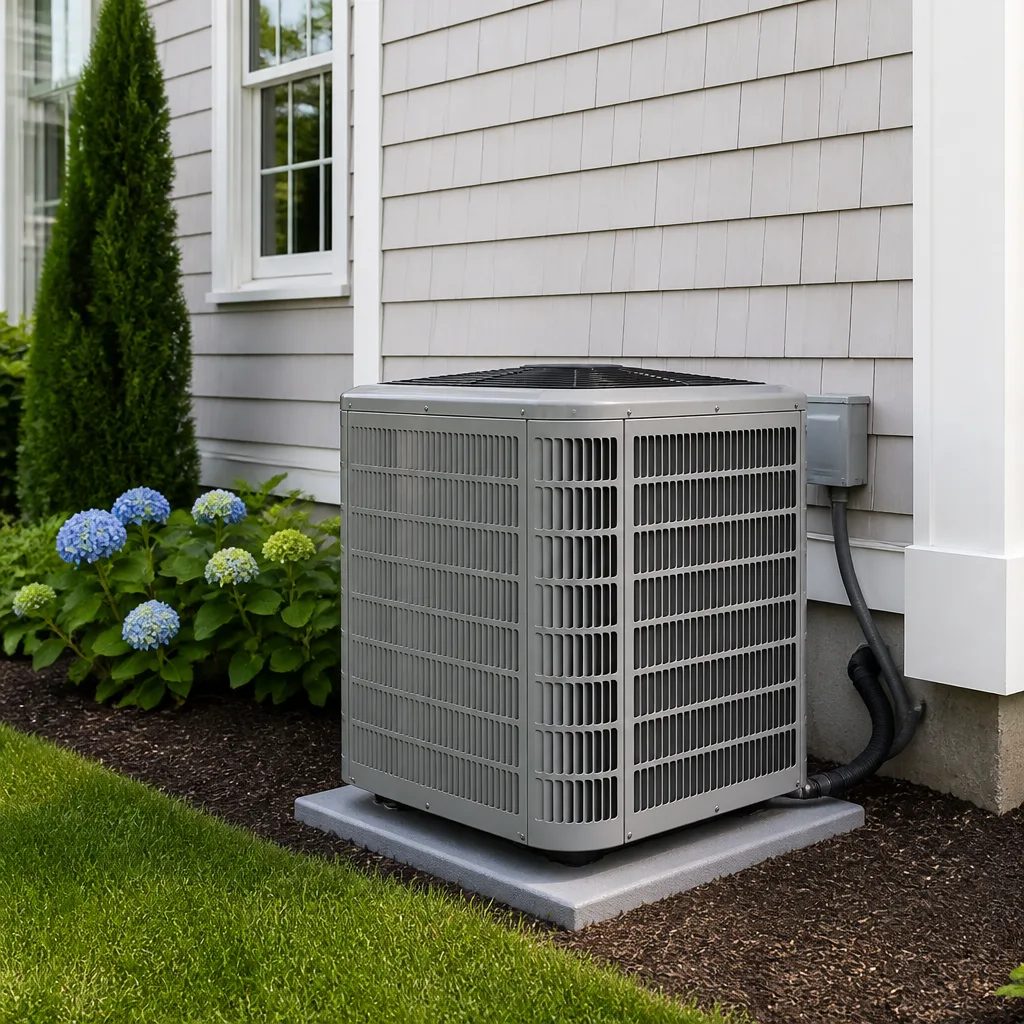 Carrier
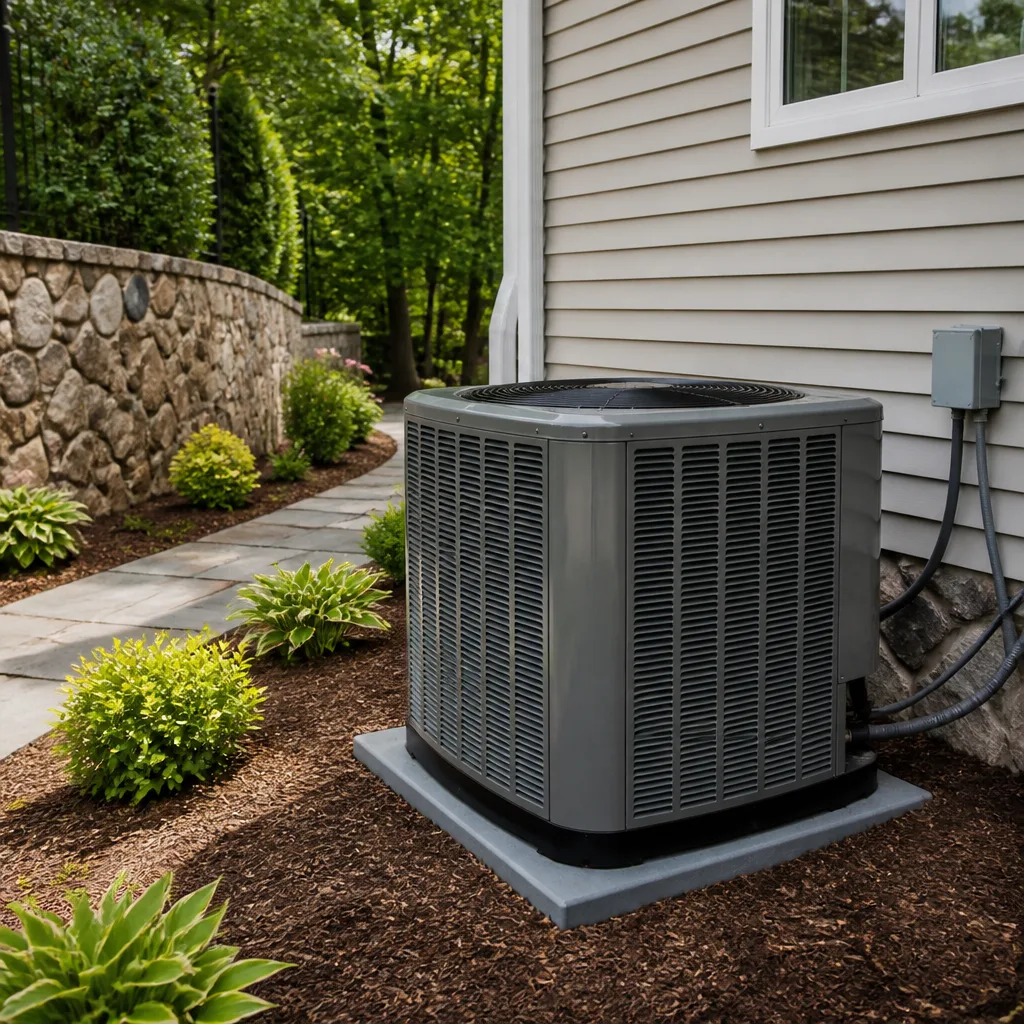 Trane
Trane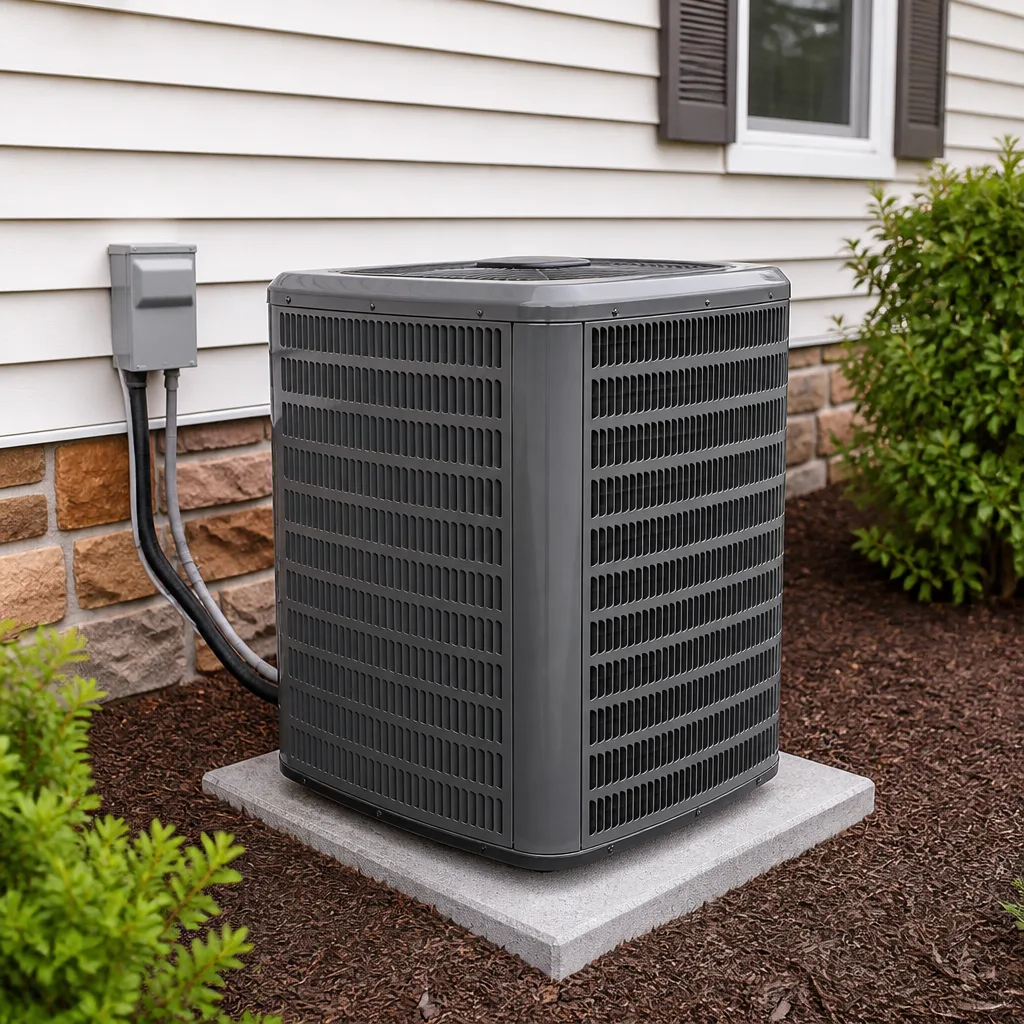 Goodman
Seasonal tune-up and full diagnostic on your Carrier, Trane, or Goodman system - readings shown to you before any repair is proposed
Diagnosis first, numbers second - you approve the repair price before a single part goes in.
Get your free estimateRheem Capacitor Replacement: The Miami Owner’s Guide
We replace Rheem capacitors throughout Miami every week, most often the same day you call. A Rheem capacitor replacement in Miami typically runs $175 – $385 installed, part and labor included, and our trucks carry the common Rheem capacitor ratings so we can usually complete the job in one visit. You’ll know the capacitor is suspect when your Rheem condenser outside hums but the fan isn’t spinning, the AC starts hard or not at all, or the system short-cycles as the compressor strains against a failing start component.
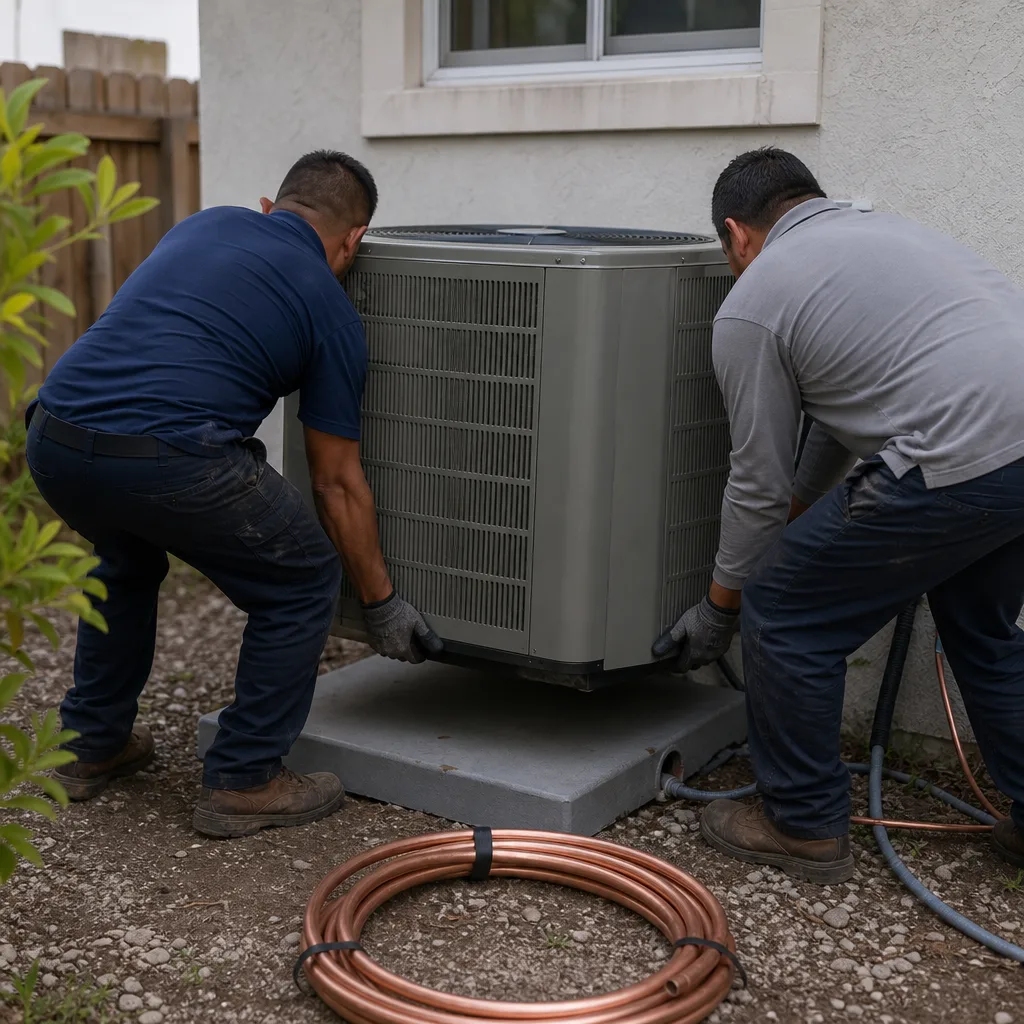
The capacitor is a small cylinder inside your outdoor condenser, not much bigger than a soda can, that stores and releases the electrical jolt your fan motor and compressor need to start turning. South Florida heat and humidity work capacitors hard: the electrolyte inside breaks down faster when the unit runs near-constantly from March through October, and repeated heat soak on a rooftop or west-facing condenser ages the part noticeably faster than the national average. Victor Mancini, who has been working on Rheem systems in South Florida for years, will tell you he has pulled capacitors in Miami that failed in as little as two or three summers, while the same original part up north might go eight or nine years. That’s not a quality knock on the component – it’s what Miami does to electrical parts.
Key Takeaways:
- Most Rheem capacitor replacements in Miami run $175 – $385 installed, with the part itself typically costing $15 – $75 depending on the rating.
- We stock common Rheem capacitor specs on the truck and can usually complete the replacement same-day.
- The 365-Day Done Right Promise backs every capacitor replacement we do: if it fails within a year, we return and correct the work at no charge.
- A capacitor that has started to bulge, leak, or read under-spec should be replaced, not patched or “repaired.”
Which Rheem Models This Applies To
Rheem’s residential lineup – the Classic, Prestige, and Rheem Value series including common RA13, RA14, RA16, and RA17 condensers – all use one or both of the two standard capacitor configurations: a dual-run capacitor (one can, serving both the fan and compressor) or a separate run capacitor for each component. Before ordering or swapping anything, the only reliable identification is the label on the capacitor itself. It will read something like “45/5 µF, 370 VAC” or “40/5 µF, 440 VAC” – the first number is the compressor microfarad rating, the second the fan rating, and the volt figure is the voltage ceiling.
A common trap we see in Miami is the homeowner or handyman who matches the microfarad rating but undershoots the voltage rating. A 370 VAC capacitor in a unit designed for 440 VAC will run, weakly, then fail within weeks – usually on the hottest afternoon of the year. Rheem is not especially forgiving here, so we spec the exact rating printed on the original part and never step down. Both OEM Rheem capacitors and quality aftermarket equivalents from Titan HD or AmRad are available to us; for systems still under Rheem’s own parts warranty, we use genuine OEM. Outside of warranty, AmRad’s USA-made capacitors with a stated no-PCB construction have become our default because we see fewer infant failures with them than with generic imported units. Cold Harbour Heating and Air Miami is an independent service provider, not affiliated with or endorsed by Rheem, but our technicians train on Rheem systems specifically along with eight other major brands: Carrier, Trane, Lennox, Goodman, York, Daikin, Bryant, and American Standard.
Styles & brands we work with
Signs Your Rheem Capacitor Replacement Is Failing
Capacitors rarely die without giving a few weeks of warning, though Miami heat compresses that timeline. If your Rheem system is doing any of the following, get it checked before the failure becomes a no-cooling emergency:
- Outside unit hums but the fan won’t turn. This is the classic capacitor failure signature. The compressor or fan motor is getting power but not the starting kick the capacitor provides. Without a start, the motor sits stalled and overheats until its internal thermal protector trips. Left long enough, the motor itself dies – a much more expensive fix.
- The system short-cycles on and off every few minutes. A capacitor that is below spec can’t sustain the compressor through a full cooling cycle. The compressor drops out, then tries again minutes later. Short-cycling is brutal on compressor windings and inflates your FPL bill while delivering far less cooling.
- AC struggles to start, especially in the afternoon. Capacitors function worse as they heat up, so a weak unit may pass a morning start and fail at 3 p.m. when the roof is sweltering and the condenser is pulling maximum load. If your Rheem sounds like it’s coughing twice before it turns over, that’s a start capacitor on borrowed time.
- The capacitor looks swollen, bulging, or has oily residue. If you’re comfortable opening the electrical access panel, a capacitor with a domed top or visible electrolyte seepage is already dead or close to it. A flat top and clean body doesn’t guarantee good health – an under-voltage reading on a capacitance meter can confirm, which is what we check on every diagnostic.
- The fan runs but the air blowing is warm or barely cool. A dead compressor-side capacitor leaves the fan running and the compressor locked out, so the outdoor unit sounds normal-ish while the indoor air gets progressively warmer. This partial failure flummoxes homeowners, because the system is clearly “running.” It’s running – it just isn’t cooling.
See the difference
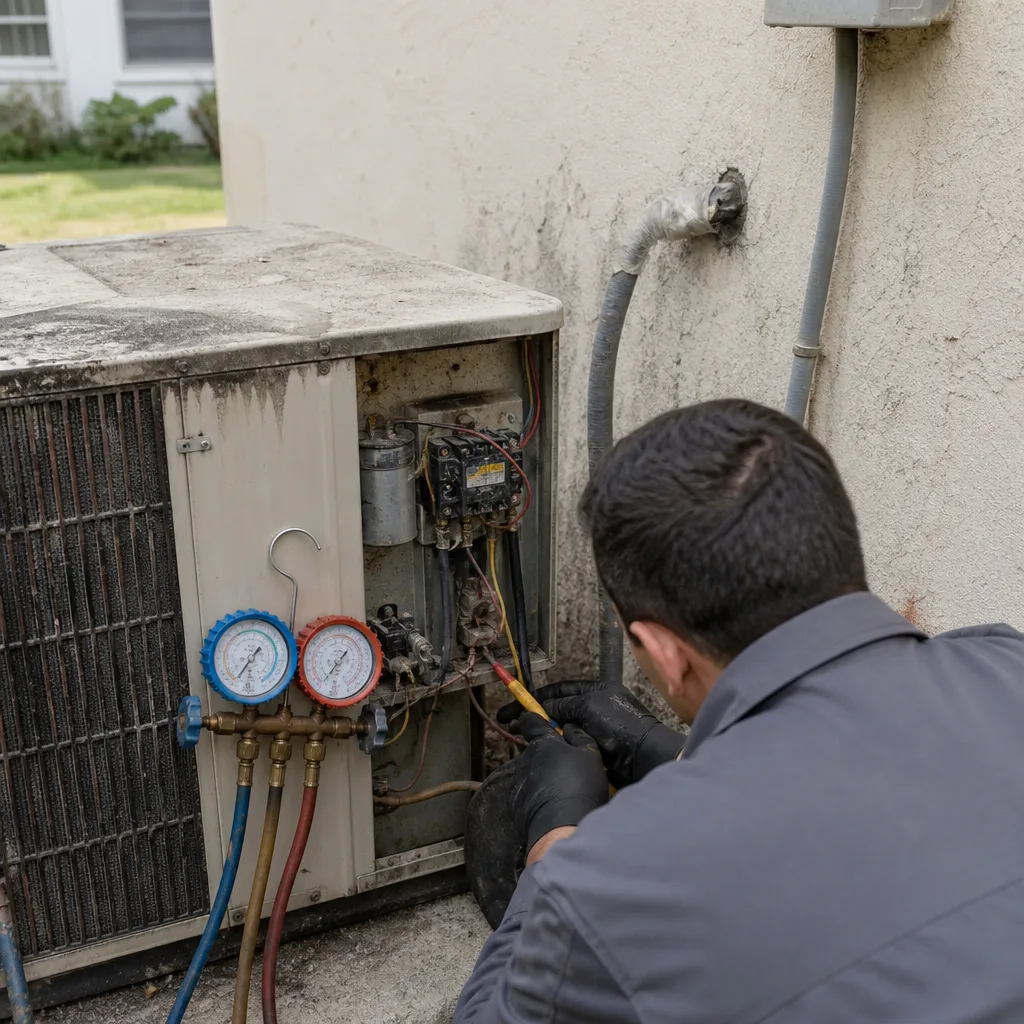 Before
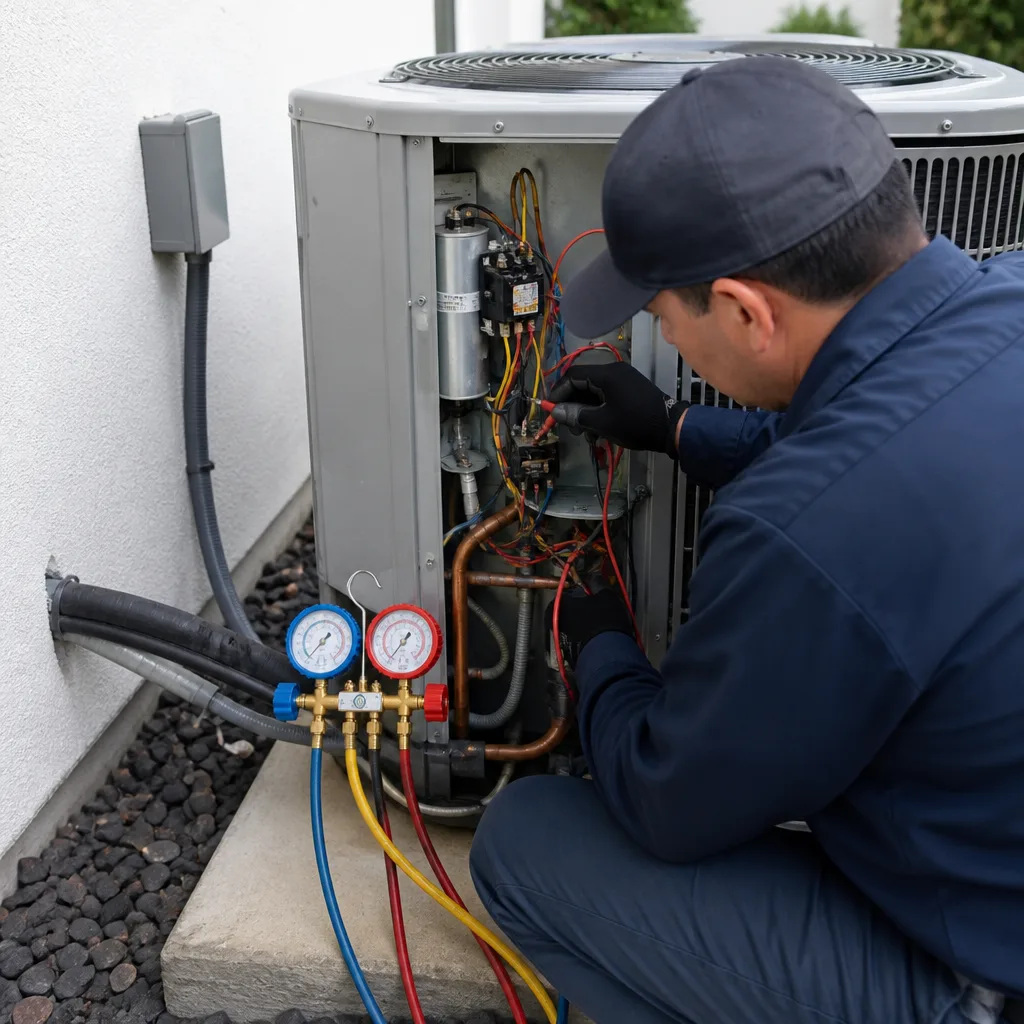 After
After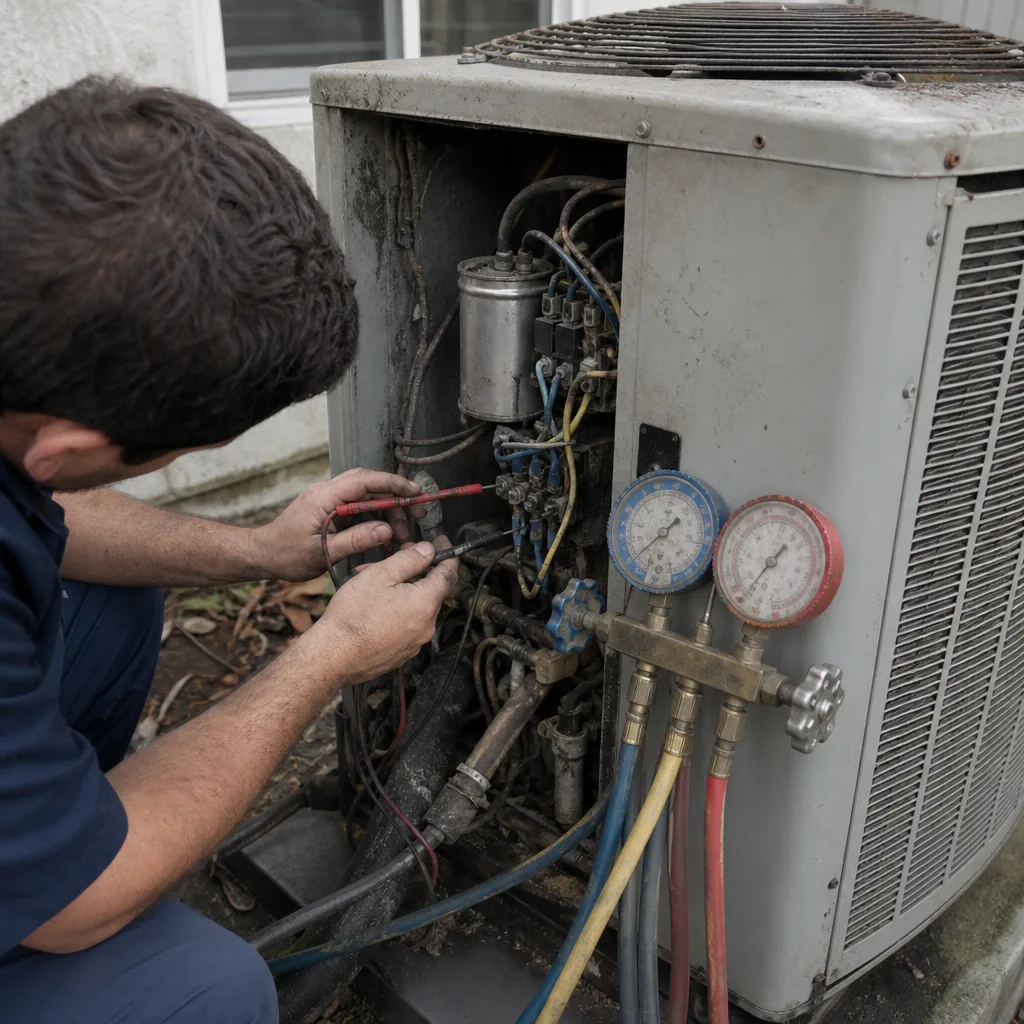 Before
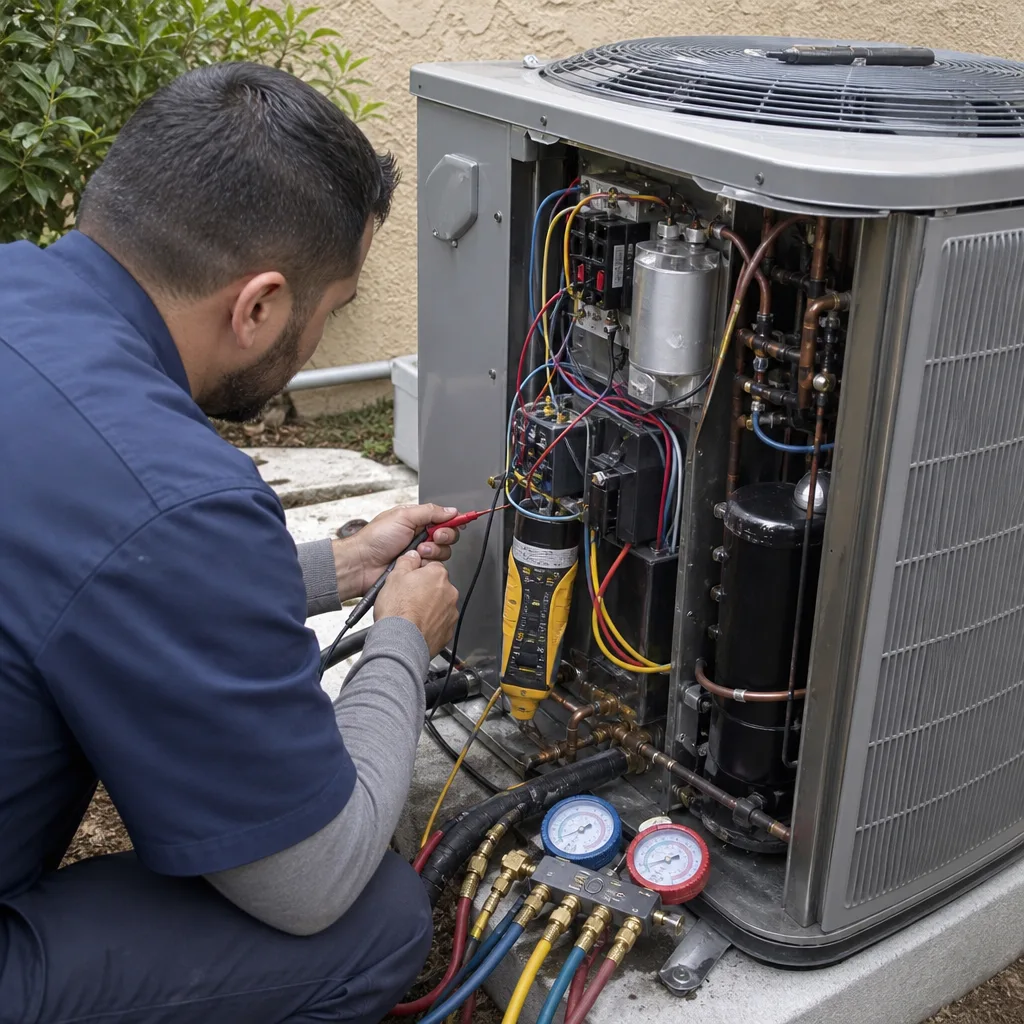 After
After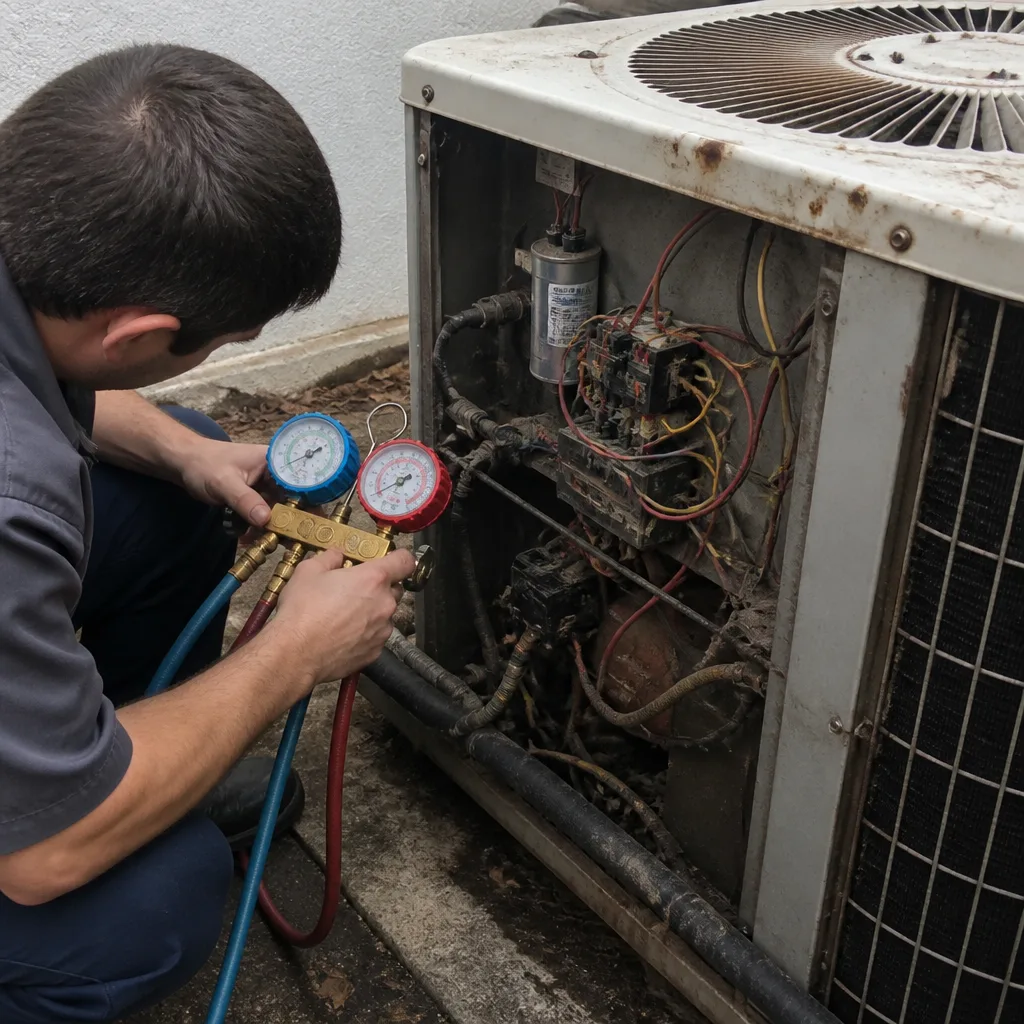 Before
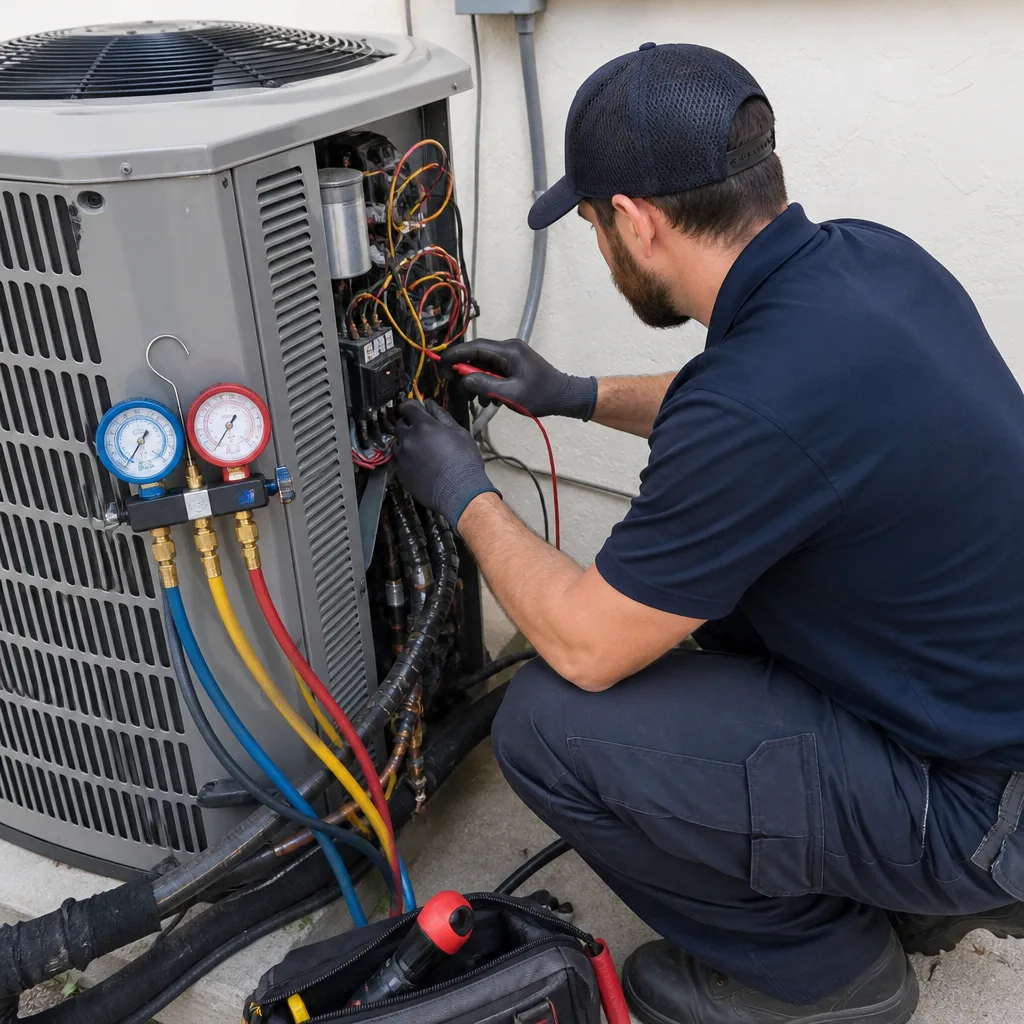 After
AfterReplacement Cost & What’s Included
A Rheem capacitor replacement in Miami falls within a tight, honest range: $175 – $385 installed. Here’s how that breaks down:
| Line Item | Typical Cost |
|---|---|
| Capacitor (typical Rheem dual-run, 35/5 to 70/7.5 µF) | $15 – $75 |
| Labor & diagnostic time | $120 – $185 |
| Testing & verification after install | Included with labor |
| Total installed | $175 – $385 |
The spread exists because capacitor pricing varies by rating and whether we’re using OEM Rheem or a premium aftermarket unit, and because some Rheem condensers require both a start capacitor and a run capacitor replaced together if the start relay has been stressed. What doesn’t vary: you get a written price before any tool comes out of the truck, and that price does not change at the door. Every capacitor replacement we perform carries the 365-Day Done Right Promise in writing. If the part fails inside one full year, we come back and make it right at no charge – no diagnosis fee, no labor charge, no discussion.
DIY or Call Us?
We’ll level with you: a capacitor holds a charge even with system power off, and it can deliver a genuinely dangerous shock if handled incorrectly. It is not like changing an air filter. If you intend to inspect or replace this part yourself, you must discharge the capacitor safely first using a proper resistor-tipped discharge tool, and you must confirm the system breaker and outdoor disconnect are both open before the panel comes off. What any owner can safely do: look at the capacitor for visual swelling, make sure the outdoor unit’s breaker hasn’t tripped, and confirm the thermostat is calling for cooling. From there, the practical and safe move is to let a trained technician handle the swap.
We supply the correct Rheem-spec capacitor, test the new part before and after installation, and verify the system’s amp draw is in range before we leave. If the capacitor failed because a fan motor is dying or a compressor is pulling high current, we catch that too. Call (850) 810-1910 and you’ll reach a live person – always, 24/7. Tell them the problem, and we’ll get a Rheem-trained technician headed your way with the right parts on the truck.
FAQs
A Rheem capacitor in Miami typically lasts 5 to 10 years, though units on west-facing rooftops or heavily run systems often fail in the 3 to 5 year range due to constant heat exposure. The standard ratings (370 or 440 VAC) don’t correlate to lifespan, but installation quality does. Call (850) 810-1910 and we’ll test your existing capacitor’s microfarad reading during a diagnostic.
No. A capacitor that has bulged, leaked, or reads more than 10 percent below its rated microfarad value cannot be repaired or reconditioned – it must be replaced, and trying to “recharge” or patch one is how compressors get destroyed. The good news is that capacitor replacement is one of the least expensive AC repairs in Miami and we carry the common Rheem specs on the truck.
Most Rheem capacitor replacements take 45 to 90 minutes from panel off to system verified, including a full cooling-cycle test. Our diagnostic checks the fan motor and compressor amp draw too, so you’re not getting a part swap that ignores why the last one failed. Call (850) 810-1910 – same-day service is often available.
We stock the most common Rheem dual-run and start capacitor ratings on our trucks, including 35/5, 40/5, 45/5, 50/5, and 60/7.5 µF in both 370 and 440 VAC. If your Rheem uses an uncommon rating, we can usually source it from a Miami HVAC supply house the same day, and we will confirm the exact part before scheduling a return visit.
If your Rheem is short-cycling, humming without spinning, or struggling to start as the Miami sun climbs, call (850) 810-1910 for a free estimate on capacitor replacement. The Kingswell Way means you get the real price upfront, a firm arrival window, a clean work area, and a repair guarantee in writing for 365 days. Tell them the price, show up on time, back the work – everything else takes care of itself.
Written by Victor Mancini, Owner, Cold Harbour Heating and Air Miami at Cold Harbour Heating and Air Miami, serving Miami and nearby areas.