
 Furnace & heating
 AC repair
 Heat pumps
 Ductless mini splits
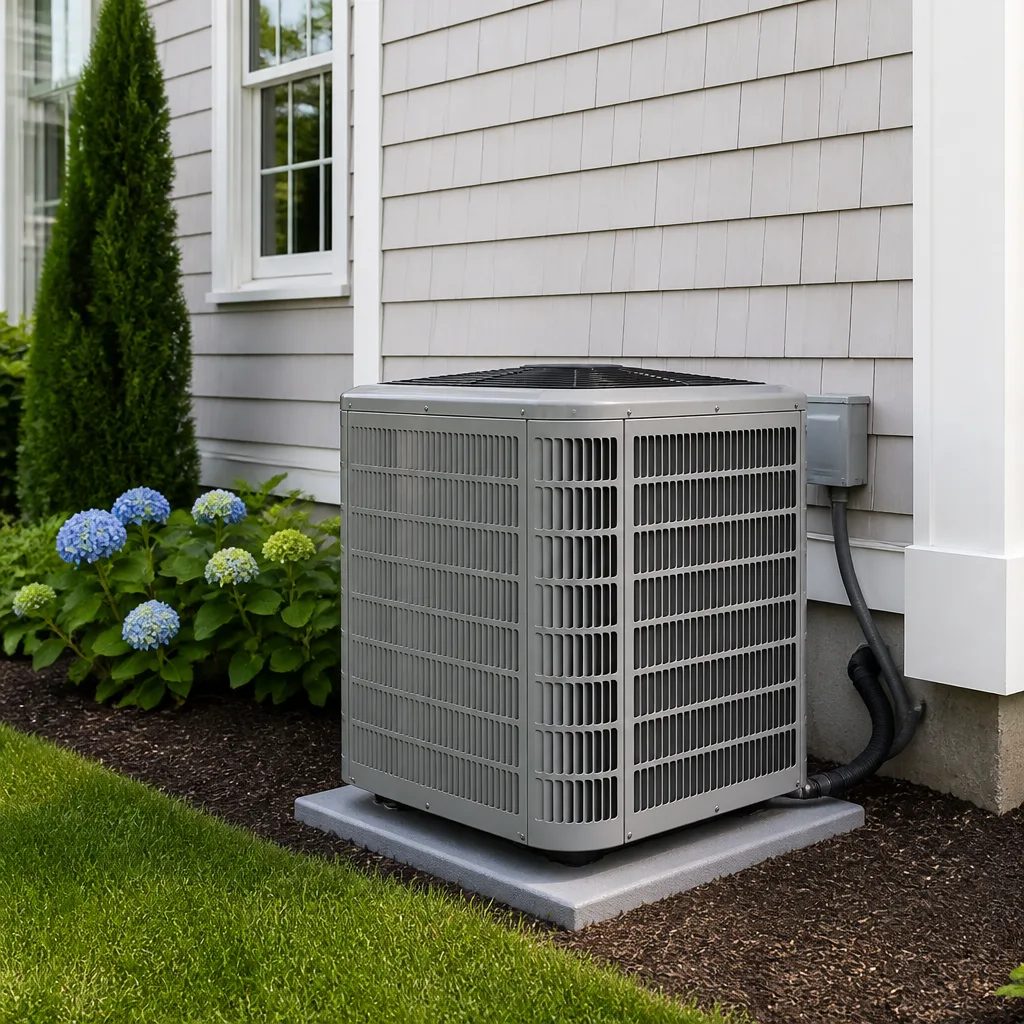 Carrier
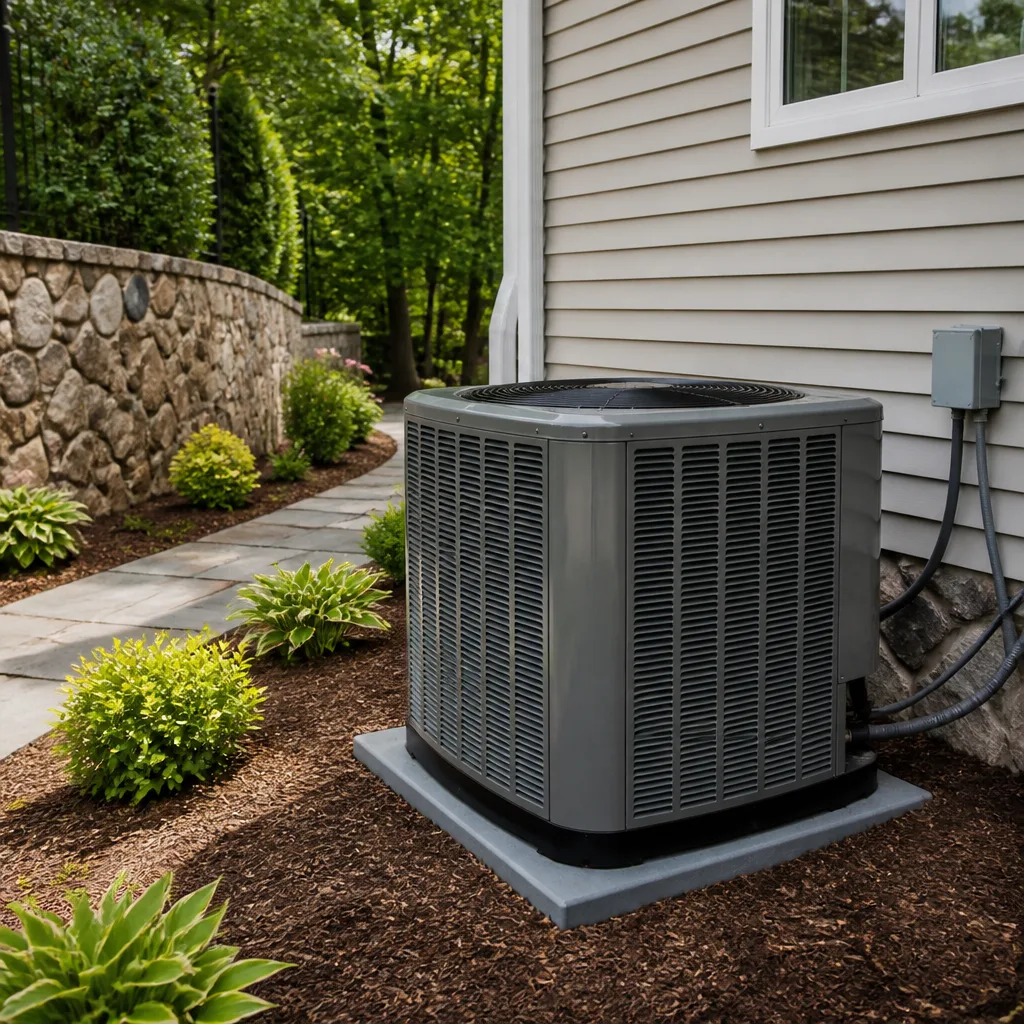 Trane
Trane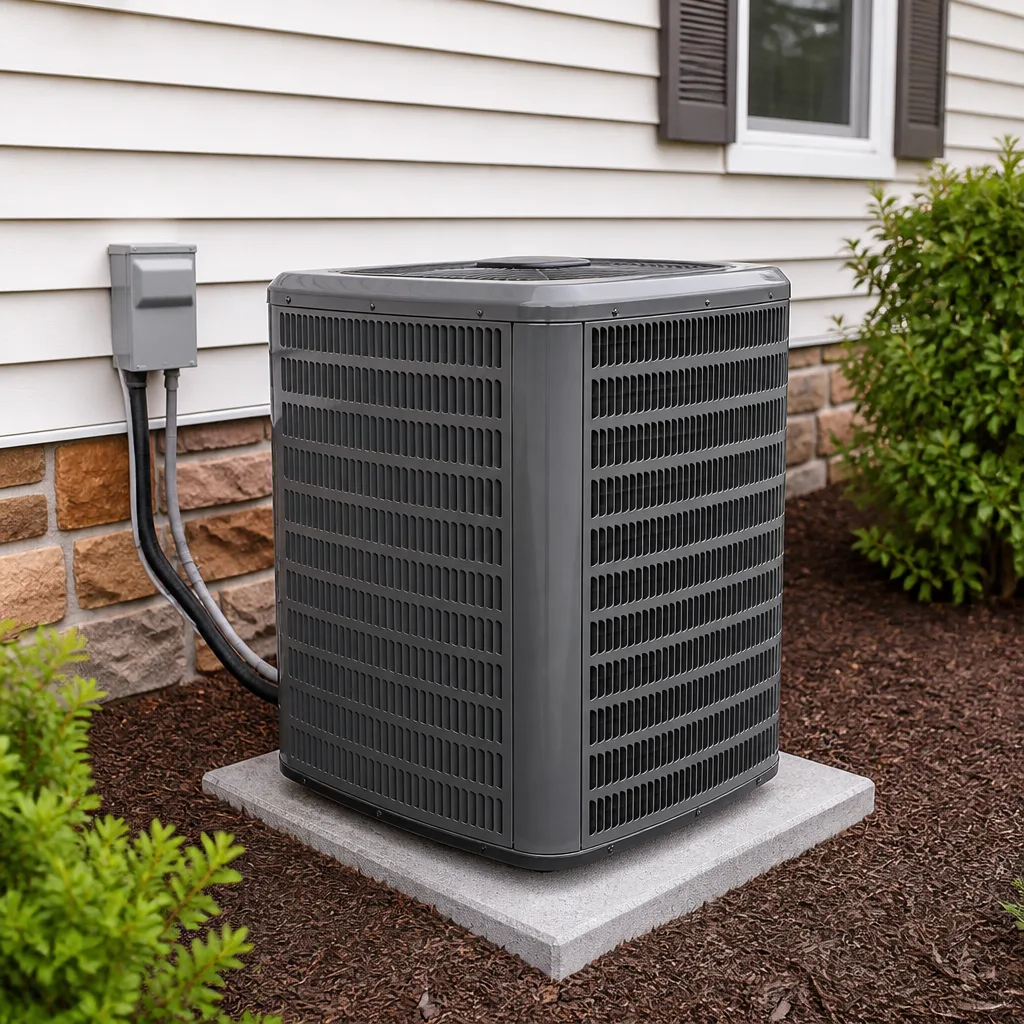 Goodman
Seasonal tune-up and full diagnostic on your Carrier, Trane, or Goodman system - readings shown to you before any repair is proposed
Diagnosis first, numbers second - you approve the repair price before a single part goes in.
Get your free estimateCarrier Capacitor Replacement: The Miami Owner’s Guide
If your Carrier AC has stopped cooling or the outdoor unit just hums without the fan spinning, there’s a good chance the capacitor has failed. We stock Carrier-compatible replacement capacitors on our trucks and can usually have your system running again the same day. In Miami, expect to pay $175 – $385 installed for a single capacitor replacement, parts and labor included, depending on whether it’s a basic run capacitor or a dual-run unit that serves both the compressor and the fan motor.
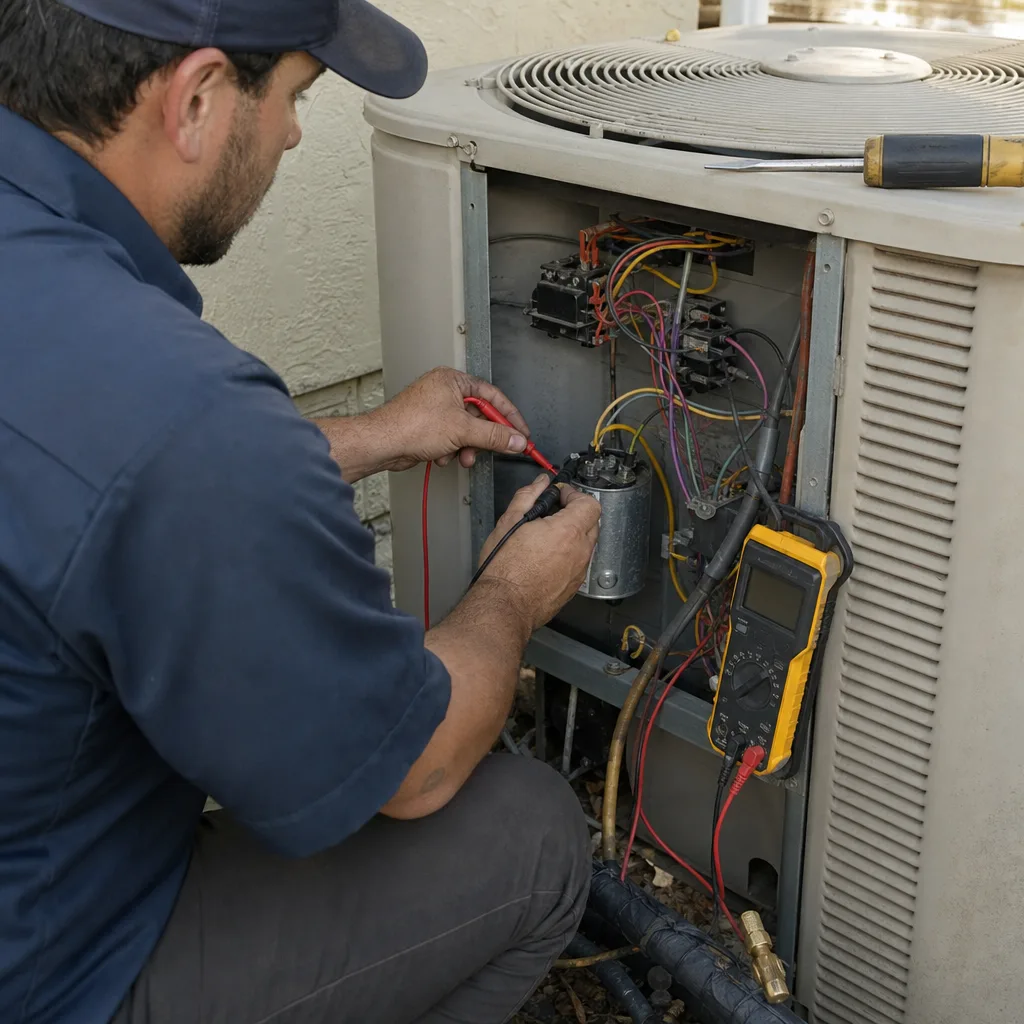
Most Miami homeowners discover a failed capacitor the hard way: the thermostat is set to 74, the air handler is blowing warm air, and the condenser outside is either dead silent or making a faint clicking sound. Sometimes the compressor tries to start, fails, and shuts off on thermal overload. That click-and-hum cycle is the telltale signature of a capacitor that can no longer deliver the starting jolt your compressor needs. August in Miami is a bad month to find this out, but it’s also when capacitors fail most often, because sustained heat and humidity age the internal dielectric material faster than anything else.
Which Carrier Models This Applies To
Capacitors are a wear-and-tear component across nearly every Carrier residential line we see in Miami, from the entry-level Comfort series to the higher-efficiency Infinity and Performance models. Whether you have a 24ABC6, a 25HBC5, or an older 38 series condenser that’s been fighting South Florida humidity for fifteen years, the capacitor is doing the same job: storing and releasing the electrical charge needed to start and run the motors.
The trick is matching the right microfarad (µF) rating and voltage. Carrier units commonly use capacitors rated 35/5 µF, 40/5 µF, 45/5 µF, or 50/5 µF for dual-run applications. The label on your existing capacitor will show both numbers, and we always verify against the rating printed on the compressor and fan motor nameplates, not just against the old part. That matters because a previous technician may have installed the wrong size as a stopgap, and we’d rather not repeat someone else’s mistake. We stock OEM Carrier capacitors as well as quality aftermarket equivalents from AmRad and Titan HD. For most Miami homes, a properly rated aftermarket capacitor is a perfectly good choice; the OEM label doesn’t change how the part performs. What matters is the exact µF match, the voltage rating (370 or 440 VAC, with 440 being the better long-term choice), and a clean installation.
Styles & brands we work with
Signs Your Carrier Capacitor Replacement Is Failing
- Humming outdoor unit that won’t start. The compressor or fan motor is getting power, but the capacitor can’t supply the jolt needed to get it turning. You’ll hear a low hum for a few seconds, then a click as the thermal overload cuts out. This is the most common first indicator.
- AC runs, then short-cycles. The capacitor is weak enough that the compressor starts but can’t stay running smoothly. You’ll notice the system kicking on and off more often than it should, which puts extra strain on the compressor and shortens its life.
- Fan spins slowly or not at all. A failing fan-side capacitor in a dual-run unit can still deliver partial voltage, so the fan turns sluggishly. In Miami’s heat, a slow condenser fan means the system can’t reject heat properly, and your indoor temperatures creep up even though the compressor is running.
- No cold air, but indoor air handler works. This is the classic “everything inside sounds fine, nothing outside is running” scenario. If the air handler is circulating warm air and the outdoor unit is silent, there’s a very good chance the capacitor is the culprit.
- Bulging or leaking capacitor top. Capacitors have a flat top with pressure-relief scores. When they fail, they often bulge upward or leak a small amount of oil. If you can safely see the capacitor in your condenser and the top is domed, it’s done and needs replacement today.
See the difference
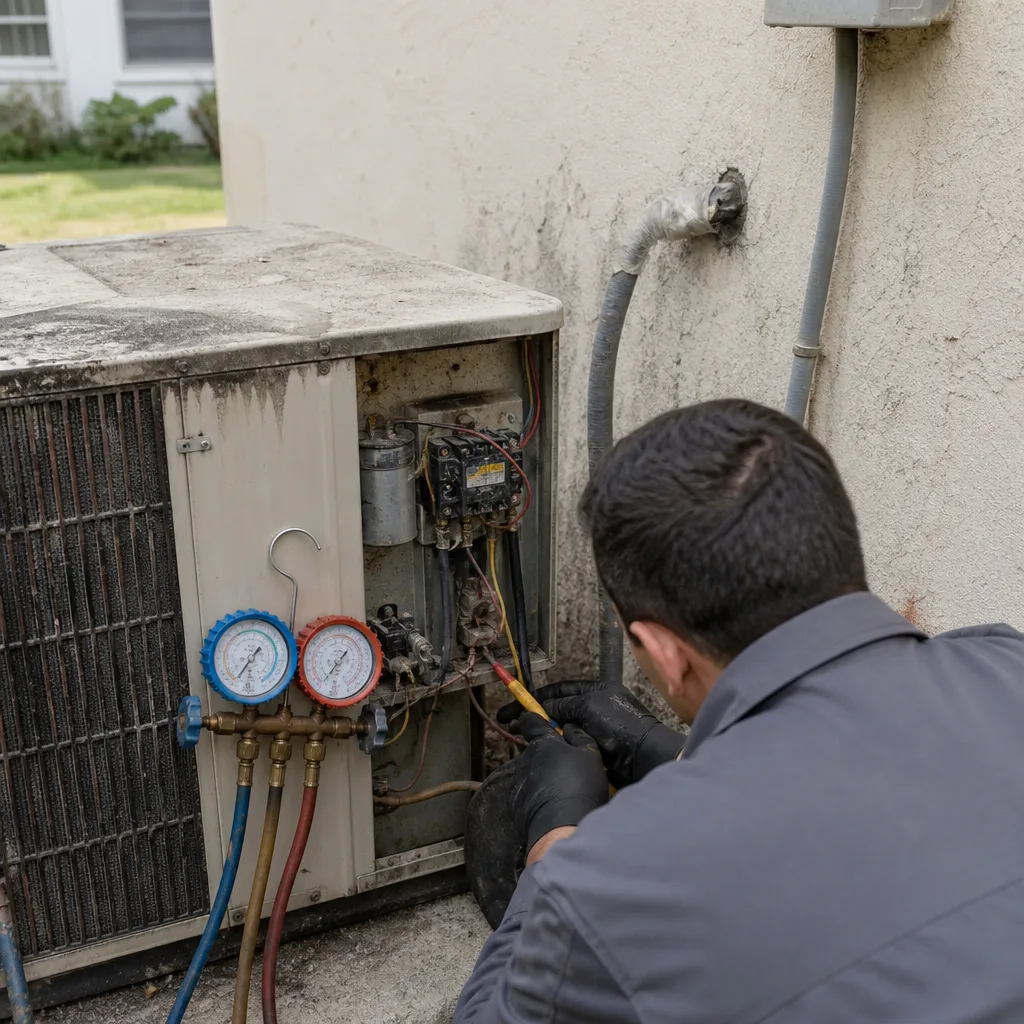 Before
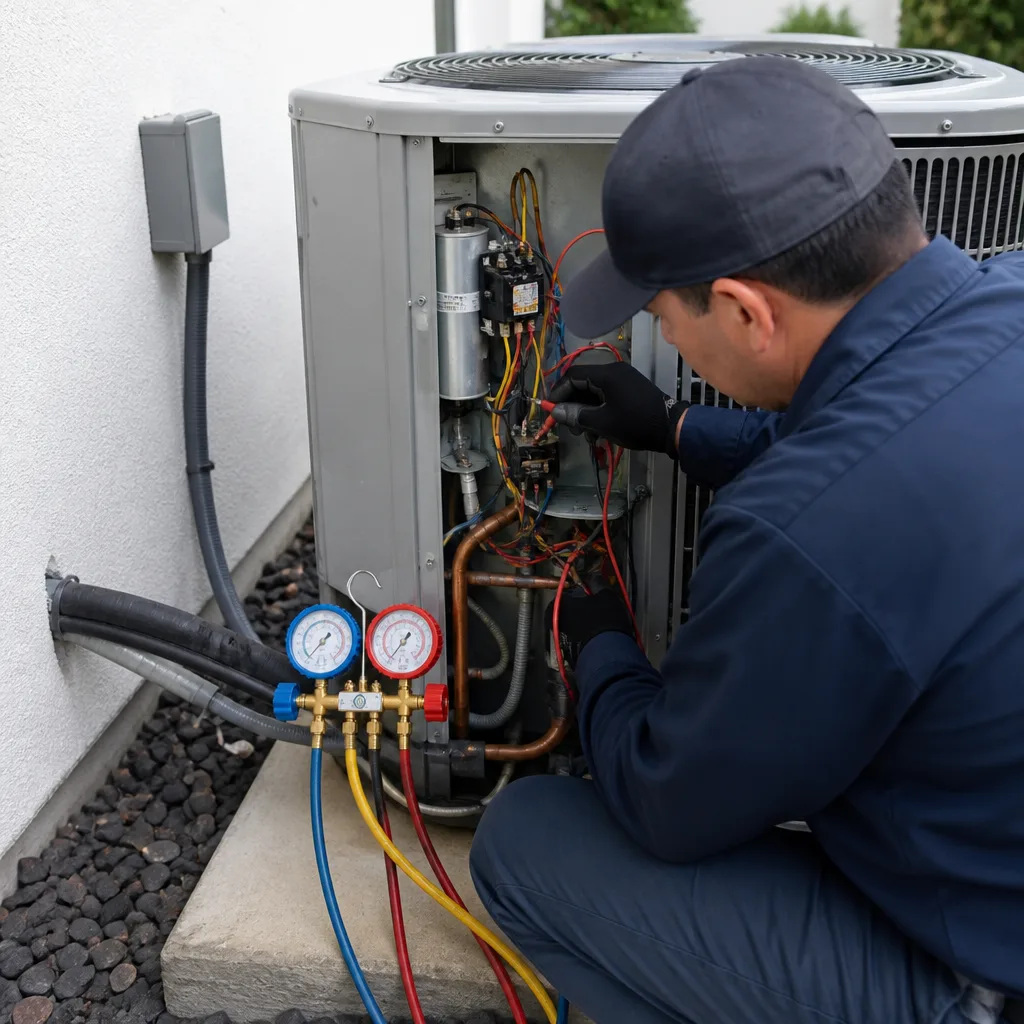 After
After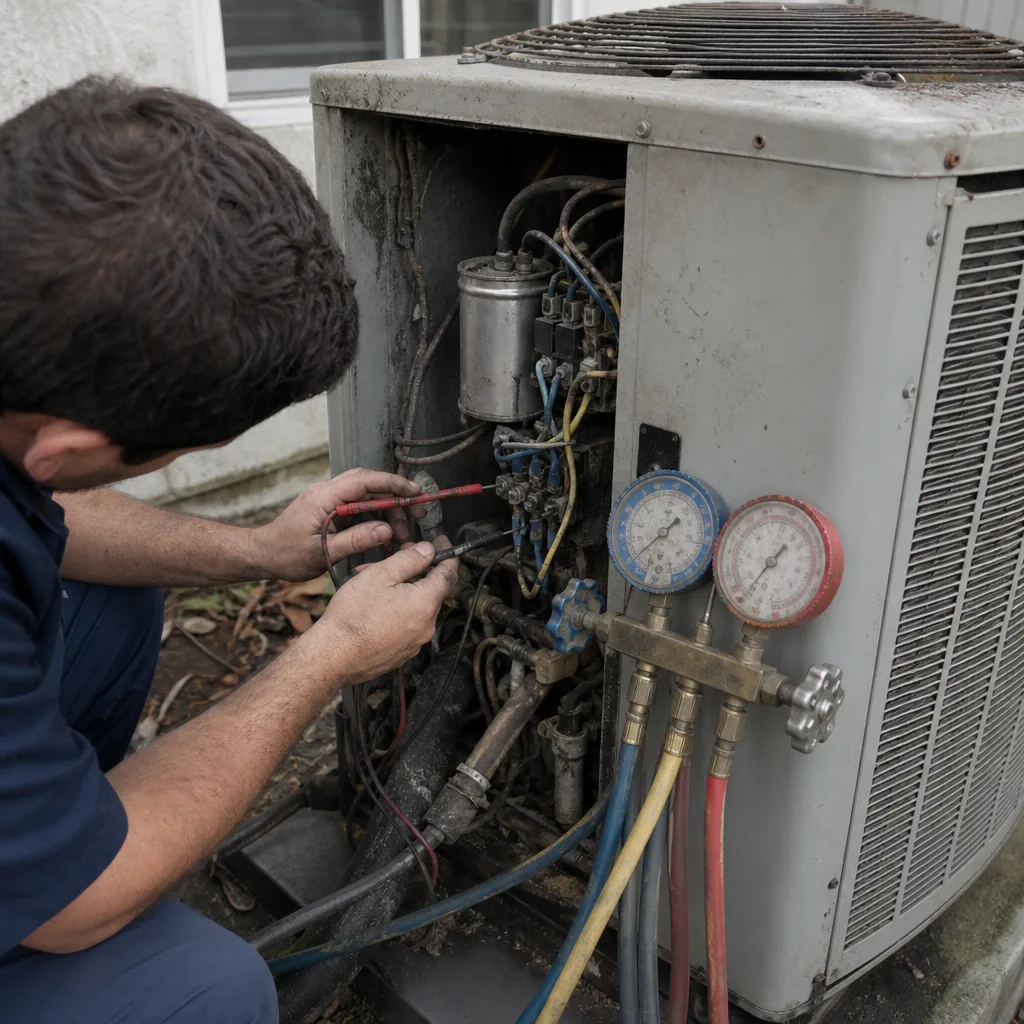 Before
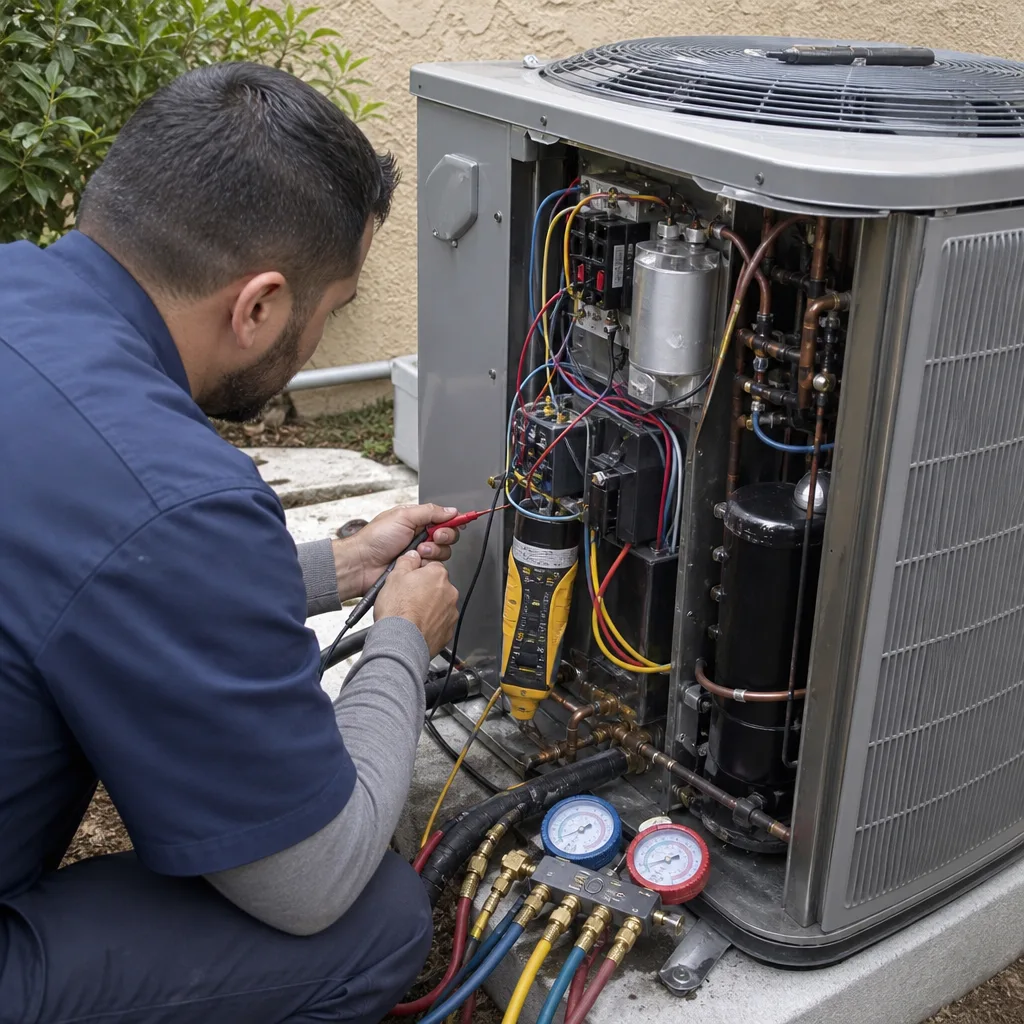 After
After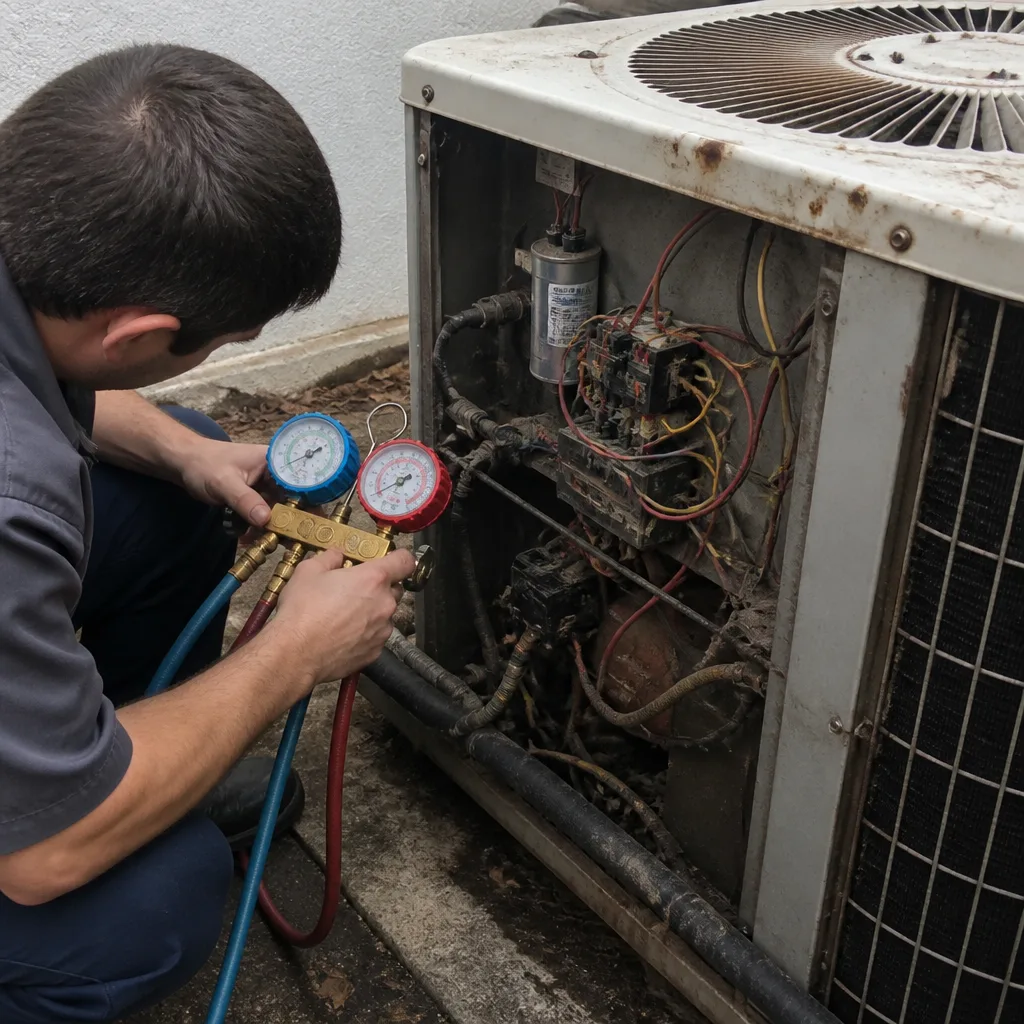 Before
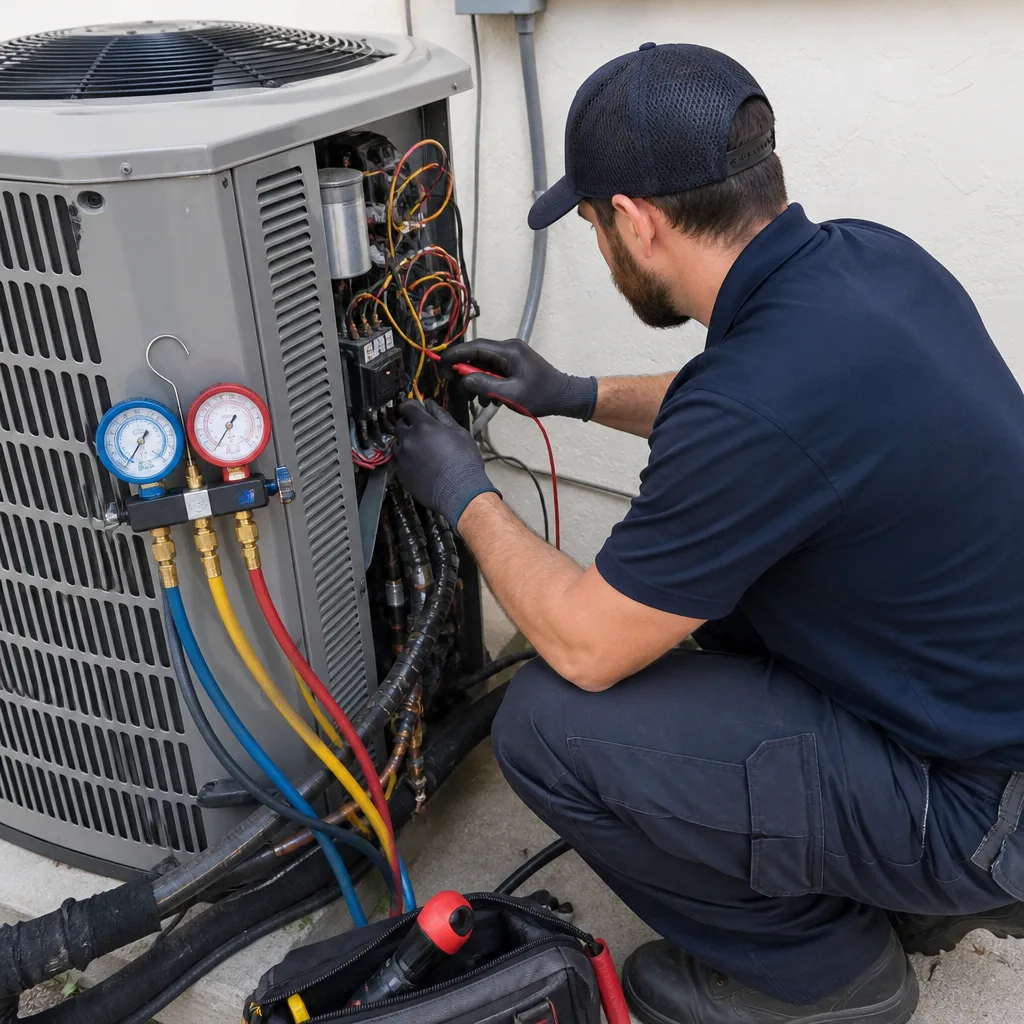 After
AfterReplacement Cost & What’s Included
In Miami, a single capacitor replacement on a Carrier system typically runs $175 – $295 when it’s a straightforward single or dual-run swap. The higher end of the range, up to $385, applies when the system uses two separate capacitors (a dedicated compressor capacitor plus a separate fan capacitor), or when the part is oversized or awkwardly located in a rooftop or high-rise condenser setup.
The price you get from us is the price you pay. We hand you a written quote before any work begins, and that number doesn’t change at the door. The quote includes the capacitor itself, the labor to install it, and a written 365-Day Done Right Promise. If that capacitor or our installation fails within a year, we come back and fix it at no charge. That’s not a verbal promise; it’s on paper before we leave.
DIY or Call Us?
Here’s the honest truth about capacitors: they store an electrical charge even when the power is off. Touching the wrong terminal on a charged capacitor can deliver a jolt that ranges from unpleasant to dangerous, depending on the size and your own health. We’ve also seen DIY replacements go wrong in Miami because the homeowner guessed at the µF rating instead of checking the nameplate, and a mismatched capacitor is how you kill a perfectly good compressor. If you’re not completely comfortable reading a wiring diagram and safely discharging a capacitor with an insulated screwdriver and meter, this is a job for a trained technician.
What you can safely do is confirm the symptom: is the outdoor unit humming without starting? Is the fan spinning? Is the capacitor visibly bulged? That information helps us prepare before we even arrive. If you’d rather skip the troubleshooting entirely, call (850) 810-1910 and describe what you’re seeing. A live person answers, day or night, and we’ll give you an honest assessment and a written price before any work starts.
FAQs
In Miami’s heat and humidity, a capacitor typically lasts 5 to 12 years, with most failing on the earlier side of that range because sustained high temperatures break down the internal insulation faster. We’ve seen capacitors fail at the two-year mark and others still running at fifteen, but for planning purposes, figure on replacement roughly every 7 to 10 years. Call (850) 810-1910 if you’re unsure whether yours is due.
No. Once a capacitor has bulged, leaked, or lost its µF rating, it cannot be repaired or rebuilt. The only correct fix is replacement with a new capacitor matched to your Carrier system’s rating, and at $175 to $385 installed in Miami, it’s one of the least expensive AC repairs you’ll ever make.
A standard Carrier capacitor replacement takes 30 to 60 minutes once the technician is on site. The work involves safely disconnecting power, verifying the old capacitor is discharged, swapping the part, checking the wiring, and testing the system’s start-up under load. We’ll also check the motor amp draw while we’re there, because a failing motor can take out a good capacitor, and vice versa. Call (850) 810-1910 for a same-day appointment, and a live person will get you on the schedule.
We stock the most common Carrier-compatible capacitor ratings on our trucks, including 35/5, 40/5, 45/5, and 50/5 µF dual-run units in 370 and 440 VAC. We also carry Trane and Lennox compatible parts for mixed-brand households. If your system needs an uncommon size, we can usually source it the same day from one of our Miami supply partners. We’ll tell you before we start whether your capacitor is on the truck or needs a quick run.
Written by Victor Mancini, Owner, Cold Harbour Heating and Air Miami at Cold Harbour Heating and Air Miami, serving Miami and nearby areas.