
Last updated October 16, 2026
 AC repair
 Furnace & heating
 Heat pumps
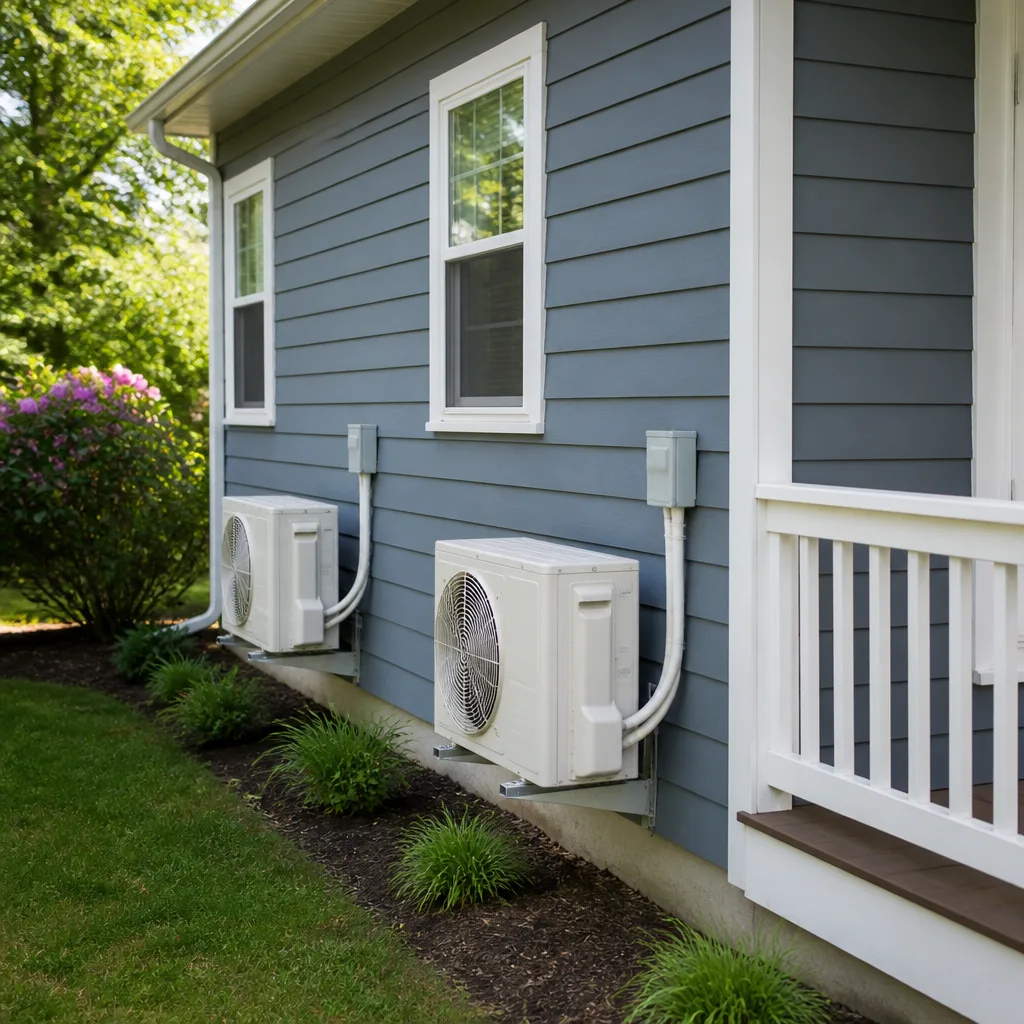 Ductless mini splits
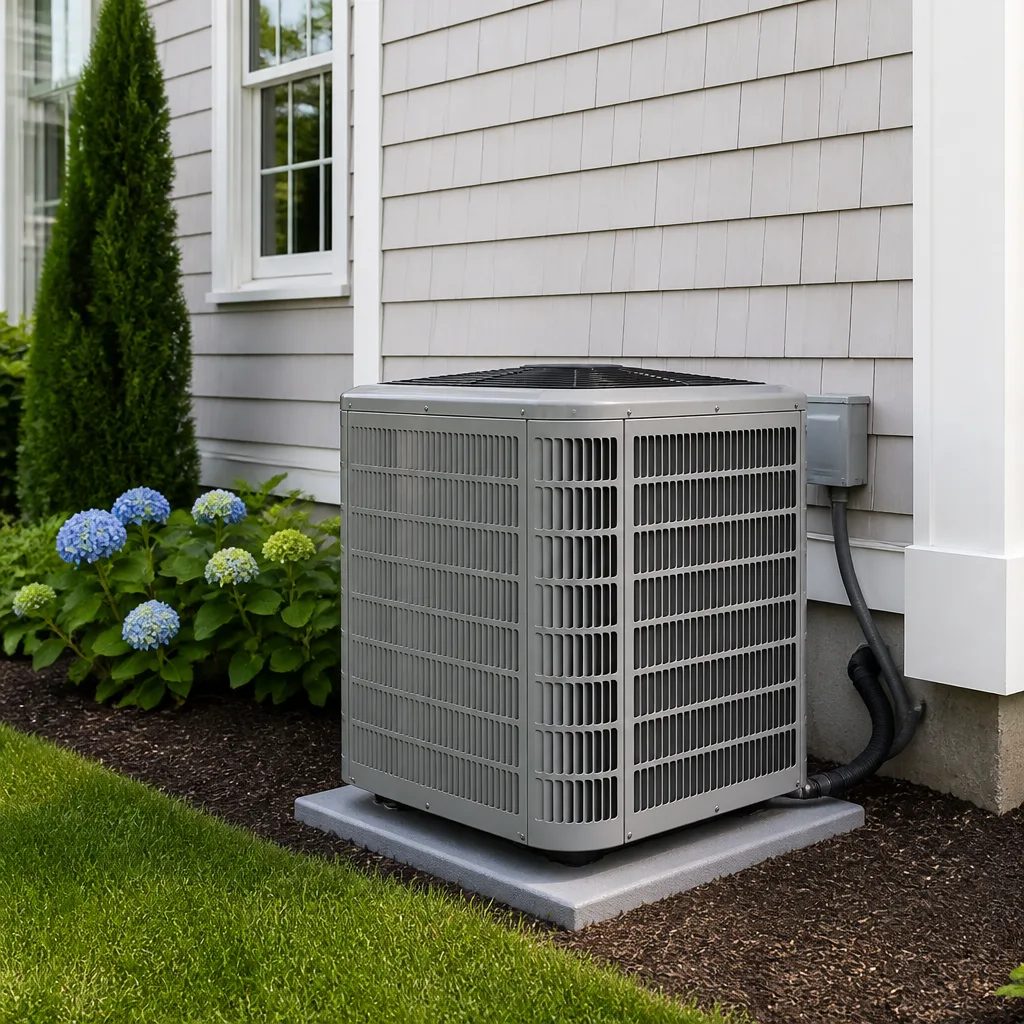 Carrier
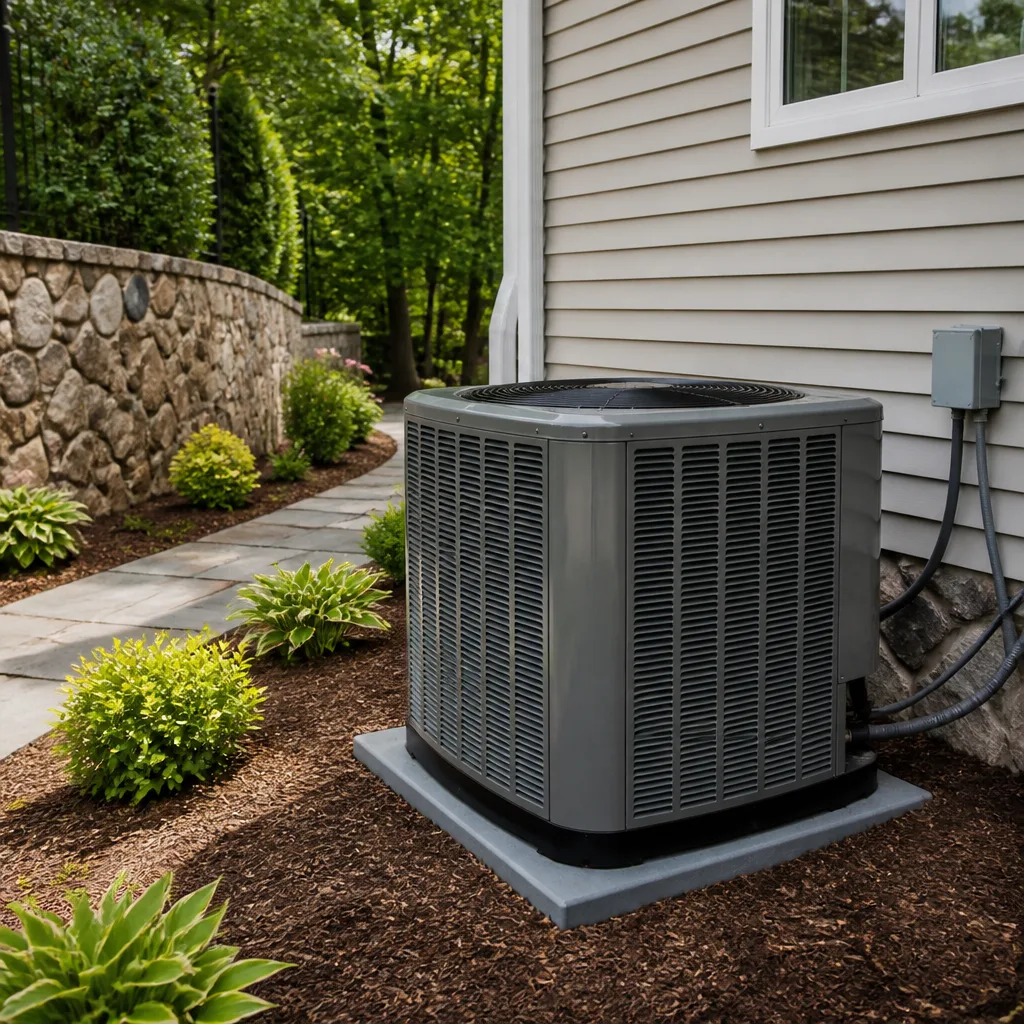 Trane
Trane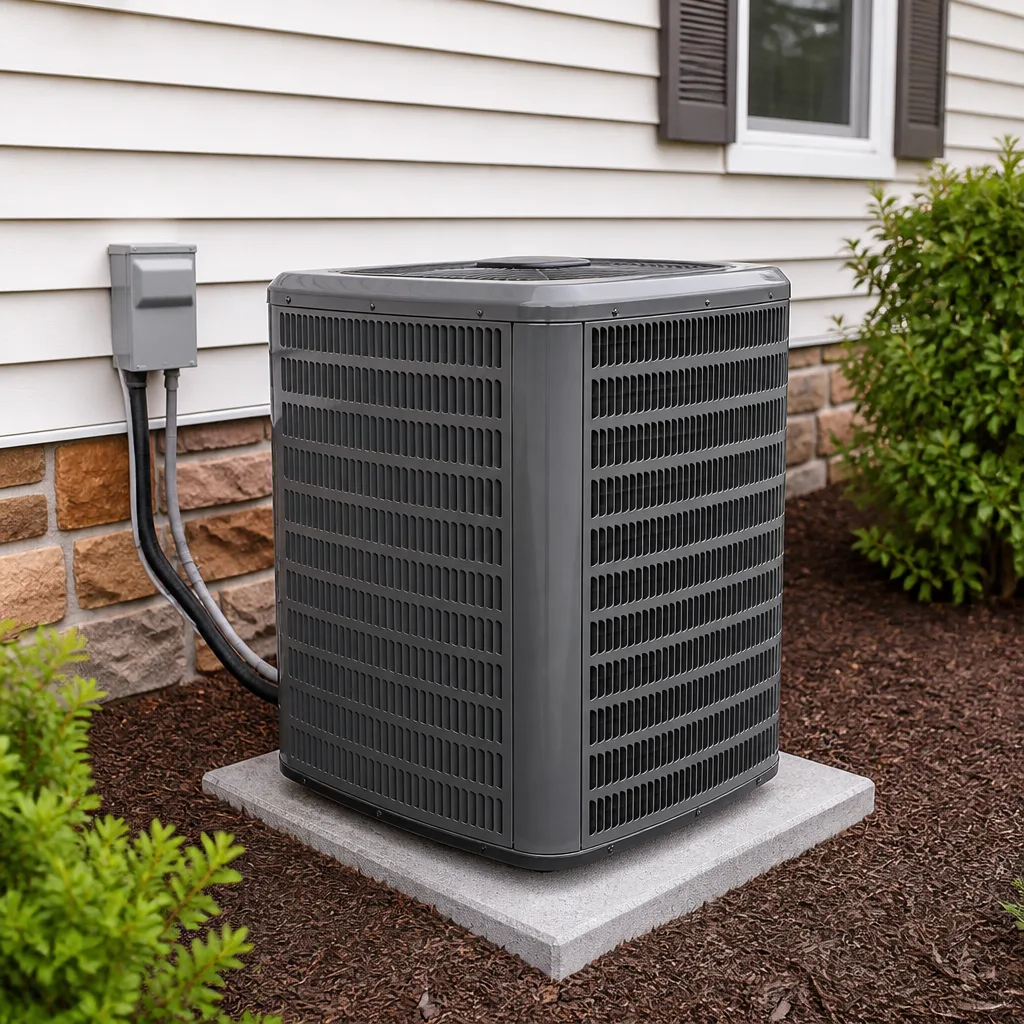 Goodman
Seasonal tune-up and full diagnostic on your Carrier, Trane, or Goodman system - readings shown to you before any repair is proposed
Diagnosis first, numbers second - you approve the repair price before a single part goes in.
Get your free estimateHow to Hire a HVAC Contractor in Miami: A Step-by-Step Guide
Miami-Dade County saw more than 140 HVAC-related contractor complaints filed with the Florida Construction Industry Licensing Board in a recent two-year period. The most common pattern wasn’t shoddy brazing or botched ductwork. It was unlicensed subcontractors performing permitted work under a licensed company’s number, a problem you cannot spot by asking, “Are you licensed?” Everyone says yes. This guide walks the hiring process backward from that legal reality, because in Miami, the license class on the paperwork matters as much as the technician at your door. For HVAC Warning Signs: A Miami Homeowner’s Reference Guide on spotting trouble early, see our companion resource. By the end, you’ll know how to verify a license in under two minutes, what a real quote must include, and how to structure payment so you’re never the one holding the bag.
Quick Answer
To hire an HVAC contractor in Miami, verify their Florida license class on the DBPR website, get a written quote that itemizes equipment, scope, permits, and payment terms, confirm they pull the permit themselves, and never pay more than 10% upfront. Then confirm the warranty is in writing, not spoken. That sequence protects you from Miami’s most common HVAC scam: unlicensed crews operating under someone else’s number.
Styles & brands we work with
Table of Contents
- Understand Florida’s HVAC License Classes Before You Call Anyone
- How to Verify a Miami HVAC Contractor’s License in Under Two Minutes
- The Four Things a Written Quote Must Include Before You Sign
- Why the Permit Question Matters More in Miami Than Anywhere Else in Florida
- Red Flags Specific to Miami’s Storm-Season Contractor Surge
- How to Structure a Payment Schedule So You Never Pay More Than 10% Upfront
- The Seven Questions to Ask Every Miami HVAC Contractor
- What a Real Warranty Looks Like (And What It Doesn’t)
Understand Florida’s HVAC License Classes Before You Call Anyone
Florida divides HVAC contractor licenses into classes, and the distinction is not bureaucratic trivia. The class determines what a contractor is legally allowed to install, repair, and sign off on. If the wrong class does the work and something goes wrong, your homeowner’s insurance can deny the claim on the grounds that the work was performed without proper licensure. That’s not a hypothetical. It’s a documented pattern in Miami-Dade County, where the permitting process is stricter than most of the state.
Here’s the plain-English breakdown:
- Class A (Certified or Registered): Authorized to work on any size HVAC system, including large commercial equipment. This is the broadest license. In Miami, most residential companies hold this class because it covers everything from a 2-ton split system to a 40-ton chiller. If a contractor tells you they can only do residential, they may hold a more limited class.
- Class B (Certified or Registered): Limited to systems up to 25 tons of cooling and 500,000 BTU of heating. For a Miami single-family home, this is perfectly adequate. Most residential AC systems run between 2 and 5 tons. You don’t need a Class A contractor for a suburban house in Kendall or a condo in Brickell.
- Certified vs. Registered: A Certified contractor can work anywhere in Florida. A Registered contractor is limited to the local jurisdiction where they’re registered, such as Miami-Dade County. For hiring purposes, either is fine as long as they hold the right one for this county. If you live in Coral Gables and the contractor is only registered in Broward, that’s a problem.
What this means for you: before you even schedule an estimate, know what class of license the job requires. For a standard residential AC replacement in Miami, a Class B contractor is sufficient. For anything involving complex multi-zone systems or commercial rooftop units, you want Class A. Ask the contractor directly: “What class is your license?” If they hesitate, move on.
We’ve seen Miami homeowners discover this too late, after a claim was denied because the technician who replaced their condenser held a specialty license that didn’t cover the full scope of the install. It’s a hard conversation to have with an insurance adjuster. It’s an easy conversation to avoid with a two-minute license check.
How to Verify a Miami HVAC Contractor’s License in Under Two Minutes
The Florida Department of Business and Professional Regulation (DBPR) maintains a public license lookup that costs nothing to use. Here is the exact sequence:
- Go to myfloridalicense.com, the DBPR’s license portal. This is the only site you should trust. Contractor review sites and lead-generation platforms do not verify licenses.
- Click “Verify a License” at the top of the page.
- Select “Certified Contractor” or “Registered Contractor” from the dropdown. For HVAC, you’ll also see a specific “Air Conditioning” category.
- Enter the contractor’s name, business name, or license number. If you don’t have the number, use the business name exactly as it appears on their website or business card.
- Look at the license status. It should say “Active.” Anything else, including “Active with Conditions,” “Probation,” or “Suspended,” is a red flag you should ask about.
- Check the “Qualifying Agent” field. This is the person whose name is on the license. In Florida, a company may operate under a license held by a qualifying agent who may or may not be the person you talk to on the phone. Make sure the qualifying agent is actually affiliated with the company at your door. Ask: “Is [name] the license holder? Will they be on site or sign off on the work?”
- Note the license class. Confirm it matches what the work requires, as covered in the section above.
In Miami-Dade County specifically, you can cross-check the license with the county’s Contractor Licensing Section. Miami-Dade enforces its own rules on top of state requirements, and if there is an open complaint or local enforcement action, it may not show up on the DBPR site. Call the Miami-Dade Contractor Licensing office or use their online verification tool. It adds one minute to the process and closes the gap between state and local oversight.
When we visit a home in Miami, we expect the homeowner to check our license. We’d be more concerned if they didn’t. A contractor who bristles at a license check is telling you something. A contractor who hands you the license number before you ask is telling you something else.
The Four Things a Written Quote Must Include Before You Sign
A verbal price is not a price. In Miami, where summer heat pushes AC units past their limits every single year, the difference between a verbal estimate and a written quote can be thousands of dollars and weeks of waiting. Before you sign anything, hold the quote against this four-point checklist:
- Exact equipment model numbers. “A 3-ton Trane system” is not enough. You want the full model number of the condenser, the air handler, and the thermostat. Without model numbers, the contractor can install a smaller or cheaper unit and charge you for the one they described. With a model number, you can look up the unit yourself and verify what you’re actually paying for. If you’re quoted a Daikin, a Bryant, or an American Standard, the model number proves exactly which line and efficiency tier you’re getting.
- Scope of work, line by line. The quote should itemize every task: removal of the old unit, new pad installation, duct modifications, line set replacement, electrical disconnect, drain line, thermostat wiring, startup and testing. If a line just says “full installation” with no itemization, ask for the breakdown. A legitimate contractor itemizes because it protects both parties when there’s a dispute about what was promised.
- Permit and inspection fees, stated separately. In Miami-Dade, a mechanical permit is required for any AC replacement or major repair. The permit fee is not cheap, and some contractors bury it in the equipment cost. If the quote doesn’t list the permit fee as its own line item, ask whether the permit is included at all. If it isn’t, you’re about to sign up for an unpermitted job, which has consequences we’ll cover next.
- Payment terms, in writing. The quote should state the total price, the deposit amount, the payment due at completion, and any conditions for final payment. Florida law requires contractors to cap initial deposits on residential jobs, and if a contractor asks for 50% upfront on a full system replacement, that’s a violation of state rules and a signal to walk away. We’ll get to the exact payment structure later in this guide.
If any of these four elements is missing, don’t sign. Ask for a revised quote. A contractor who cannot produce a line-item written quote may still do good work, but you’re taking on risk you don’t need to take. In our experience handling AC Installation in Miami, the homeowners who get the best outcomes are the ones who insist on paper before work begins. The Kingswell Way, which is how Cold Harbour Heating and Air Miami operates, is built on exactly this: a written price handed to the homeowner before a single tool comes out, with no change at the door.
Why the Permit Question Matters More in Miami Than Anywhere Else in Florida
Miami-Dade County has some of the strictest HVAC Permits, Codes & Inspections in FL: What You Need to Know enforcement in the Southeast, and for good reason. Hurricane Andrew changed the way this county builds and inspects, and HVAC systems here are subject to wind-load requirements, strapping specifications, and flood-zone elevation rules that don’t apply in Orlando or Tampa. A correctly permitted and inspected AC installation in Miami is one that can withstand 150 mph wind forces without turning into a projectile. An unpermitted one might not.
But there’s a second, less obvious reason the permit matters here: owner-builder permits and resale disclosure. When you hire a contractor, the contractor pulls the permit under their license. When you pull the permit yourself as an owner-builder, even if a contractor does the physical work, Florida law treats you as the general contractor. That imposes a disclosure obligation when you sell the home. You must tell the buyer that the work was done under an owner-builder permit, and some buyers or lenders will balk at that. It’s a legal gray zone that becomes a very concrete problem at closing.
The fix is simple: require the contractor to pull the permit. Ask for the permit number before the job starts. In Miami-Dade, you can verify the permit online through the county’s Building Department e-permitting portal. If the contractor pushes back and suggests you pull the permit to “save money,” decline. The savings are rarely meaningful, and the disclosure obligation at resale is not worth it.
We’ve handled enough AC Repair in Miami jobs to know the difference between a properly permitted system and one that wasn’t. It shows up in the inspection report, in the insurance paperwork, and at the closing table. It’s the kind of thing you only discover once, because after that you never skip the permit question again.
Red Flags Specific to Miami’s Storm-Season Contractor Surge
Every hurricane season, Miami sees an influx of out-of-state contractors who follow the storm damage. They show up with magnetic signs on rented trucks, offer fast cash deals, and disappear before warranty calls are returned. They are not all scammers, but the pattern is consistent enough that Florida law now requires specific documentation for storm-related repairs. Here are the red flags we tell every Miami homeowner to watch for:
- Out-of-state plates and no Florida license number on the truck. Legitimate contractors in Miami are required to display their license number on all commercial vehicles. If the truck has Georgia plates and no visible license number, that’s a problem.
- Cash-only pricing with a “storm discount.” Storm chasers offer discounts for cash because cash leaves no paper trail. A legitimate Miami contractor takes checks, cards, and financing, and every dollar is documented.
- Pressure to sign before your insurance adjuster arrives. If a contractor tells you to sign now and sort out the insurance later, walk. The insurance process is messy, but signing a contract before the adjuster assesses the damage is how homeowners end up paying for work their policy would have covered.
- No local address, no local phone number, no local history. Check the contractor’s license verification page for the business address. If it’s a P.O. box in another state, that’s a storm chaser. We’ve been in Miami since 2003, and our address is real because our work is real.
- A warranty that only covers “parts, not labor” for 30 days. A real Miami contractor stands behind the work. When a repair fails because of installation error, the part warranty from the manufacturer doesn’t cover the labor to fix it. That’s on the contractor. If they won’t put a labor guarantee in writing, they’re not planning to be here when you call.
Storm season insurance claims require licensed contractors with a Florida license. If you hire an unlicensed out-of-state crew and file a claim, the insurer can deny the claim outright. The same logic applies to Furnace Repair in Miami in the rare cold snaps that drive furnace failures here. The license protects you before the work starts and long after the truck leaves.
How to Structure a Payment Schedule So You Never Pay More Than 10% Upfront
Florida law is specific about construction deposits. For residential jobs, a contractor cannot require more than 10% of the total contract price as an initial deposit, with a maximum of $1,000 in most cases. That applies to HVAC installation. If a contractor asks for 30% or 50% upfront on a new system, they are breaking Florida law, and you should not work with them.
Here’s the payment structure we recommend for a Miami AC replacement, and it aligns with state rules and common sense:
- Initial deposit: 10% or $1,000, whichever is less. This locks in your schedule and covers initial ordering costs. No more than that, ever, before work begins.
- Progress payment: 40-50%, due the day installation begins. The crew is on site, the equipment is in your driveway, and work is underway. This is the moment you pay for the equipment you can see with your own eyes.
- Final payment: remaining balance, due only after final inspection passes. Not when the crew packs up. Not when the AC blows cold air. After the county inspector signs off. If the contractor demands payment before inspection, remind them that Miami-Dade requires a final inspection for every permitted job, and you’ll pay when it’s done.
This structure protects you from the most painful scenario in Miami HVAC: a contractor who collects half the money, starts the job, and then vanishes for three weeks because they overbooked during the summer rush. If you hold the final payment, you hold the leverage. The contractor wants that payment, which means they want the inspection to pass, which means they want the job done right.
We follow this structure every time, on every job. Not because Florida law requires it, though it does, but because it’s the right way to do business. The Kingswell Way puts the price in writing before the work starts, and the payment schedule is part of that written agreement. You should expect the same from any contractor you hire in Miami.
The Seven Questions to Ask Every Miami HVAC Contractor
These questions are designed to surface the difference between a contractor who will protect you and one who will cut corners. Ask all seven, in order, on the phone or during the estimate. The good contractors answer without hesitation. The others get defensive, and that’s your answer.
- “What’s your Florida license number, and what class is it?” Write it down. Verify it on the DBPR website. If they can’t produce it on the spot, end the conversation.
- “Will you pull the permit, or do I need to?” The answer is always “we pull the permit.” If they suggest you do it to save money, hang up.
- “Who will actually be doing the work, and are they your employees or subcontractors?” In Miami, the subcontractor problem is real. A company may be licensed, but the crew at your door may be a sub who isn’t. Ask directly. If they use subs, ask for the sub’s license information too.
- “What brands do your technicians train on?” A company that trains on Carrier, Trane, and Lennox can handle your system. A company that says “all brands” without specifics may mean “whatever shows up.” Cold Harbour Heating and Air Miami trains our technicians on nine major brands, including York, Daikin, Bryant, and American Standard, so the person at your door already knows your equipment.
- “What’s your labor warranty, and is it in writing?” The manufacturer warranties the parts. The contractor warranties the labor. If the labor warranty is 30 days, that’s not a warranty. If it’s 365 days, get it on paper. We issue a written 365-Day Done Right Promise on every repair: if the repair fails within a year, we come back and make it right at no charge. It’s written down before the technician leaves because a verbal promise isn’t a promise.
- “Can you give me the written quote today?” If the contractor needs a week to produce a line-item quote for a standard split system replacement, they’re not organized enough to handle your job. Miami’s HVAC season doesn’t wait.
- “Who answers the phone when I call at 9 p.m. in August?” A live person or a voicemail tree? In Miami, a failed AC in August is a health problem, not a comfort problem. You need a company that answers the phone. We staff our phones 24 hours a day, 7 days a week, with a real person who can dispatch a technician.
What a Real Warranty Looks Like (And What It Doesn’t)
Most homeowners never read the warranty until they need it, and by then it’s too late. Here’s what to look for when a Miami contractor talks about their guarantee:
A real warranty has:
- A specific term in writing. “365 days” is a real warranty. “We stand behind our work” is a slogan. Ask for the term in writing before you pay.
- Coverage for parts and labor. Manufacturer warranties cover defects in manufacturing. They do not cover installation errors, which is the most common cause of a failed new system. The contractor’s labor warranty covers that gap. If there’s no labor warranty, you’re paying for someone else’s mistake.
- A clear process for making a claim. Who do you call? What happens after you call? How fast do they respond? A real warranty answers these questions in writing.
- A local address where you can find them. A warranty from a company that’s no longer in business is worthless. In Miami, where storm chasers come and go, the warranty is only as good as the company’s staying power. We’ve served Miami since 2003 from a real address with a real phone number.
A real warranty doesn’t:
- Exclude everything. If the fine print excludes labor, excludes refrigerant, excludes the drain line, and excludes “acts of God,” you don’t have a warranty. You have a piece of paper.
- Require you to pay a “trip fee” for warranty service. Some Miami contractors charge a $79 or $99 dispatch fee even for warranty calls. A real warranty covers the service call. Read the fine print and ask directly: “If this repair fails in six months, do I pay anything for you to come back?”
- Expire after 30 days. A 30-day labor warranty is what contractors offer when they don’t trust their own work. At Cold Harbour Heating and Air Miami, every repair carries a written 365-Day Done Right Promise. If it fails inside a year, we come back at no charge. Not a discounted fee, not a trip charge. No charge. It’s written on the invoice before our technician leaves.
The company name, if you’re curious, comes from an old English term. A cold harbour was a roadside shelter where travelers waited out bad weather before continuing their journey. That’s the job: comfort in any season, delivered by someone who will be here next season too.
Common Mistakes to Avoid
- Asking “are you licensed?” and accepting the answer at face value. Everyone says yes. Verify the license number on the DBPR website and check the class. Unlicensed subcontractors working under a real company’s number are the single most common complaint pattern in Miami-Dade.
- Signing a quote that doesn’t itemize the equipment model number. Without the model number, the contractor can install a lower-tier unit and you’ll never know the difference. You’re buying a specific piece of equipment, not a vague promise.
- Pulling your own permit to save a few hundred dollars. The owner-builder permit creates a disclosure obligation at resale, and some Miami lenders won’t finance a home with owner-builder HVAC work. Let the contractor pull the permit.
- Paying more than 10% upfront on a new system. Florida law caps the initial deposit. If a contractor asks for more, they’re either unaware of the law or hoping you are. Neither one is good.
- Hiring a storm chaser after hurricane damage. The out-of-state crew with the cash discount is gone by the time you discover the installation was wrong. Hire a licensed Florida contractor with a local address and a real warranty.
- Accepting a verbal warranty as sufficient. “We’ll take care of you” is not a warranty. Get the term in writing. If the contractor won’t put the guarantee on paper before the job starts, they won’t honor it after.
- Skipping the permit verification after the job is done. Ask for the final inspection date and verify it with Miami-Dade County. An installed system without a passed inspection is not a finished job.
See the difference
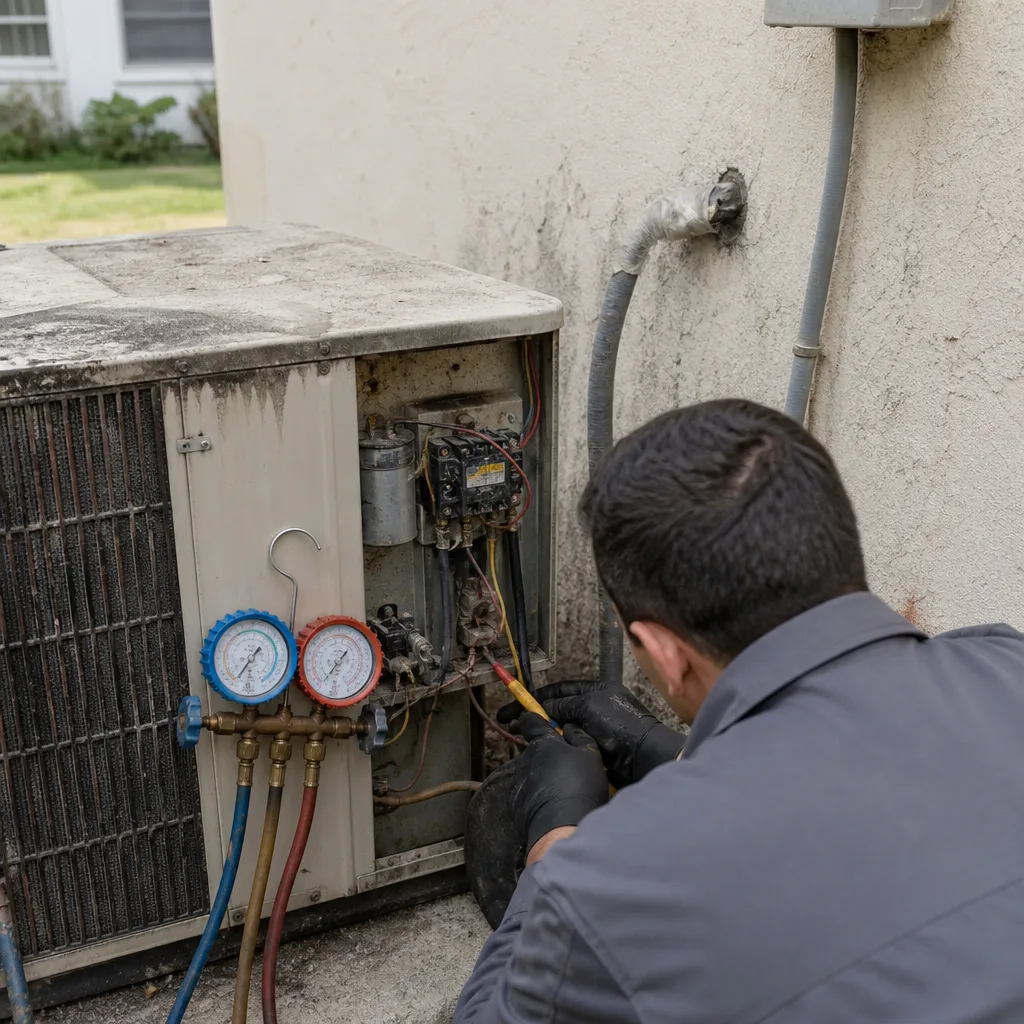 Before
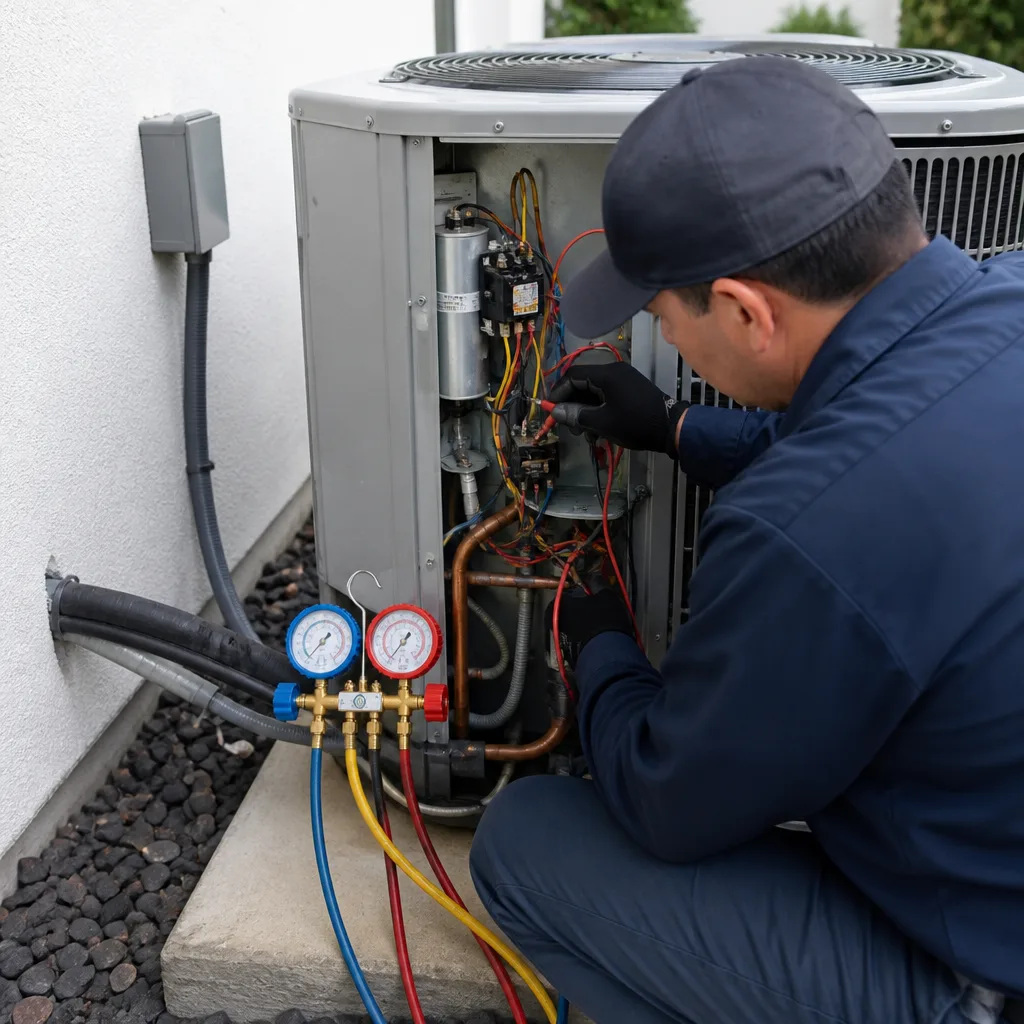 After
After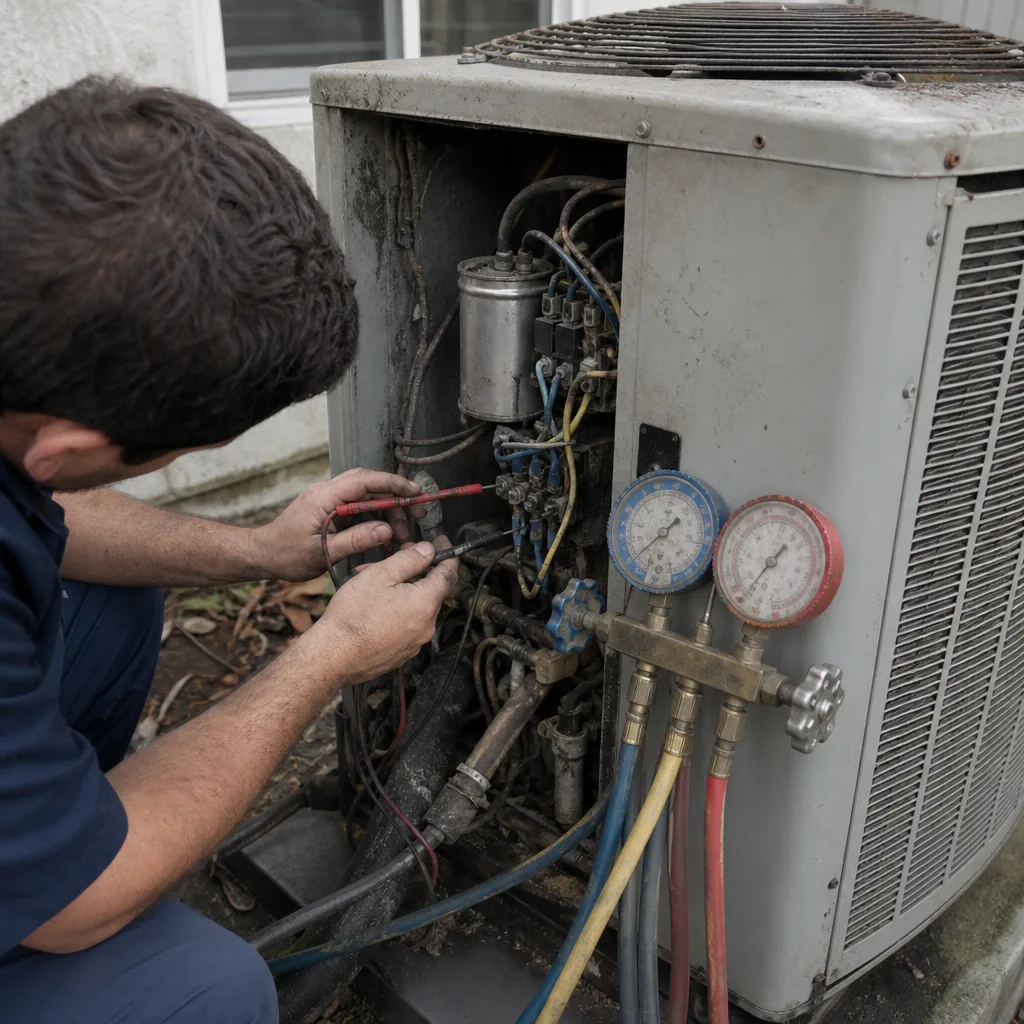 Before
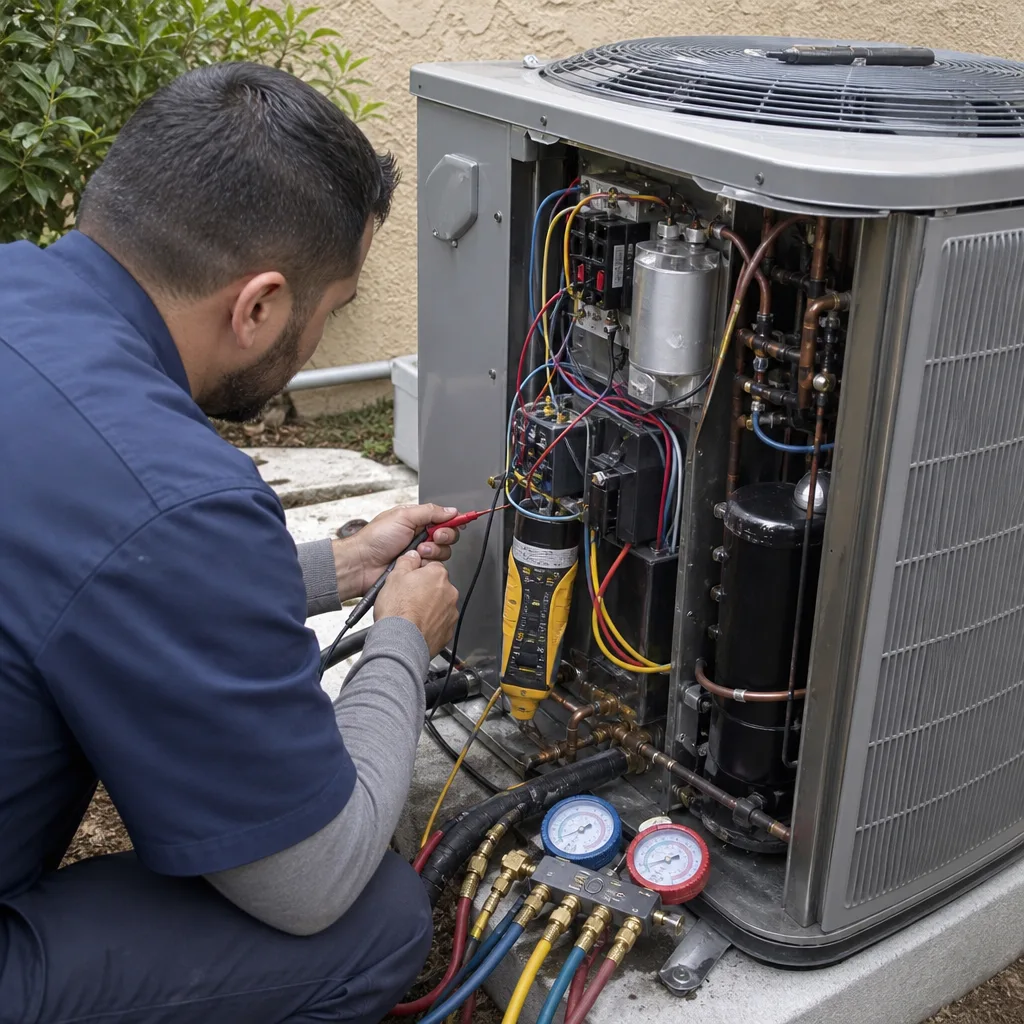 After
After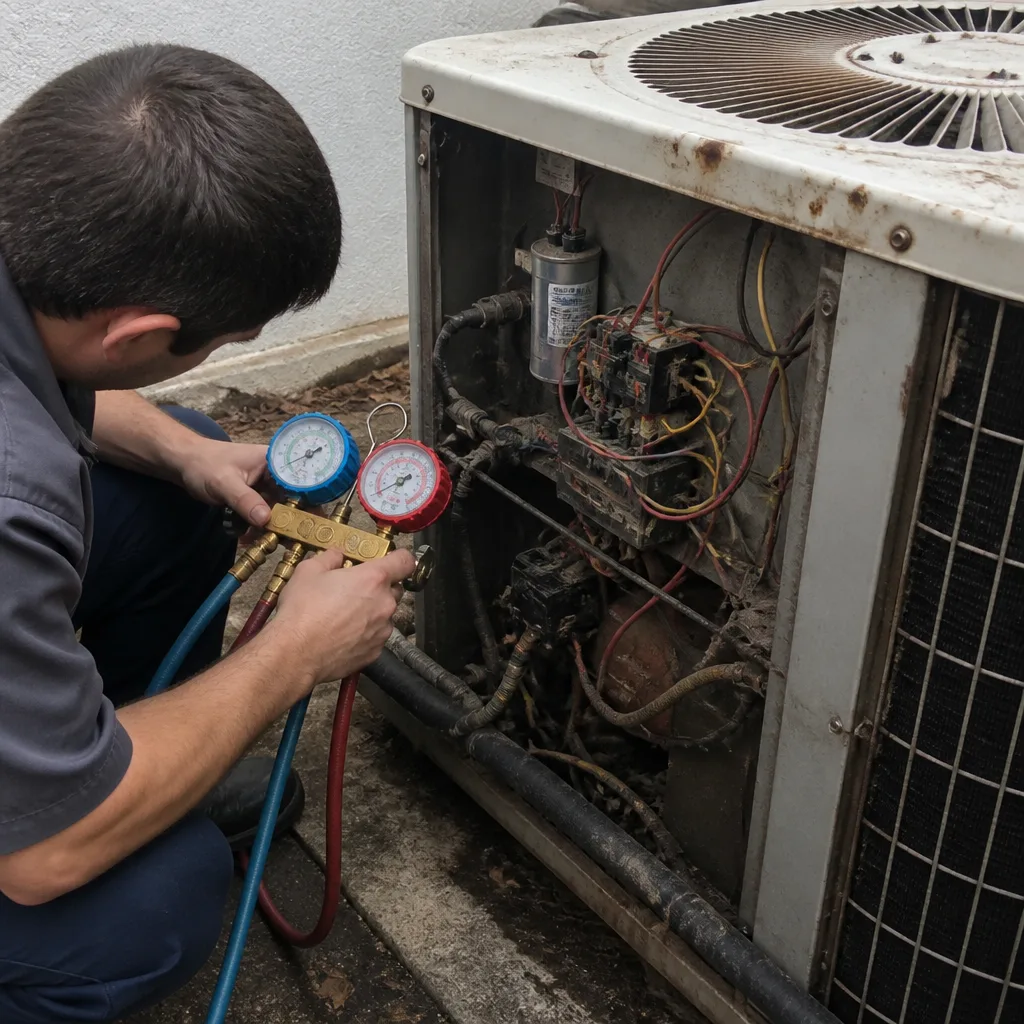 Before
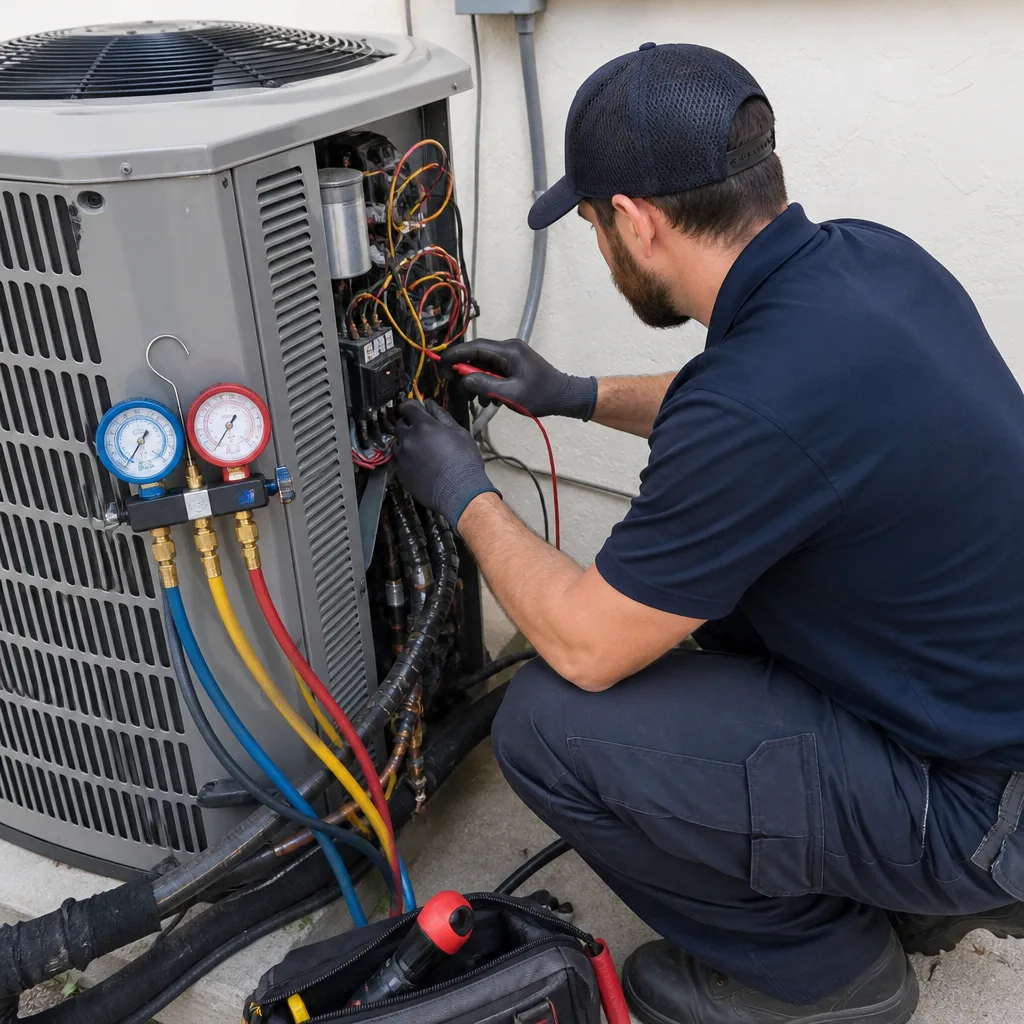 After
AfterWhen to Call a Professional
Some HVAC work in Miami is genuinely dangerous or legally regulated enough that you should never attempt it yourself. Working with refrigerant requires an EPA Section 608 certification. Electrical connections to the condenser and air handler carry 240 volts. A wrong connection can kill you or burn the house down. Ductwork in a Miami attic in July is a heat-stress risk that hospitalizes people every summer. If your AC is blowing warm air, making unusual noises, or leaking, that’s a call to a licensed technician, not a YouTube tutorial. For help understanding what a fair repair should cost, read our HVAC Cost Breakdown: The Miami Homeowner’s Reference for 2026. The same applies to furnace work in the rare weeks when Miami temperatures dip enough to trigger a heating system. Carbon monoxide from a misadjusted burner is odorless and deadly. Cold Harbour Heating and Air Miami offers free estimates in Miami, call (850) 810-1910 and a real person will pick up, day or night.
Frequently Asked Questions
A Miami HVAC contractor needs either a Florida Certified or Registered Air Conditioning Contractor license from the DBPR. Class A allows work on systems of any size, while Class B covers residential systems up to 25 tons of cooling. Most Miami single-family homes only require a Class B contractor, but you should verify the license class on the DBPR website before hiring anyone. Explore our more guides & resources for additional homeowner tools.
Florida law caps the initial deposit on residential construction jobs at 10% of the total contract price, with a $1,000 maximum in most cases. Never pay more than that before work begins. A reputable Miami contractor will structure payments as a small deposit at signing, a progress payment when installation starts, and final payment after the county inspection passes.
Yes. Miami-Dade County requires a mechanical permit for any AC replacement or major repair. The contractor should pull the permit under their license, not ask you to pull it as an owner-builder. An owner-builder permit creates a disclosure obligation when you sell the home and can complicate your financing and insurance.
Check their license on the DBPR website at myfloridalicense.com, verify their local address on the license record, confirm they pull permits themselves, and ask about their labor warranty in writing. A legitimate company answers these questions without hesitation. One that stalls on any of them is telling you what you need to know.
A parts warranty covers manufacturing defects in the equipment itself and comes from the manufacturer. A labor warranty covers installation errors and comes from the contractor. Most failed new systems are due to installation mistakes, not part defects, so the labor warranty is the one that matters. Look for a minimum of one year in writing.
Only if they hold a Florida contractor license. An out-of-state contractor without a Florida license cannot legally perform HVAC work in Miami, and your insurance company can deny a claim tied to unlicensed work. Storm chasers who appear after hurricanes are a persistent problem in Miami. Verify the license before anyone touches your system.
The Bottom Line
Hiring an HVAC contractor in Miami is a legal process before it’s a comfort decision. Verify the license class, get a line-item written quote with model numbers and permit fees, require the contractor to pull the permit, structure payments legally and cautiously, and demand a labor warranty in writing. The Kingswell Way was built on these principles: say the price before the work, show up when promised, leave the place cleaner than found, put the guarantee in writing, and come back if it fails. If a contractor won’t commit to those terms, find one who will. For a free estimate in Miami, call Cold Harbour Heating and Air Miami home at (850) 810-1910.
Written by Victor Mancini, Owner at Cold Harbour Heating and Air Miami, serving Miami since 2003.