
Last updated October 16, 2026
 AC repair
 Furnace & heating
 Heat pumps
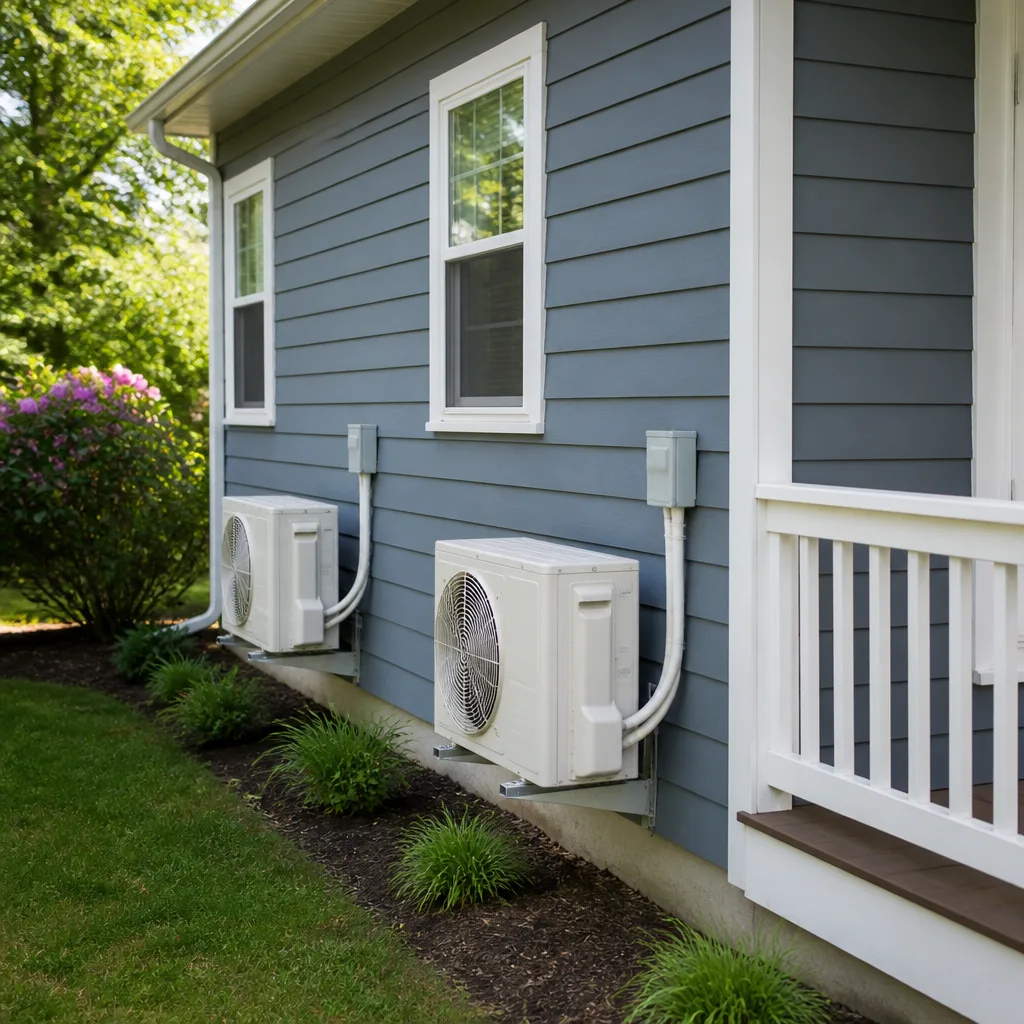 Ductless mini splits
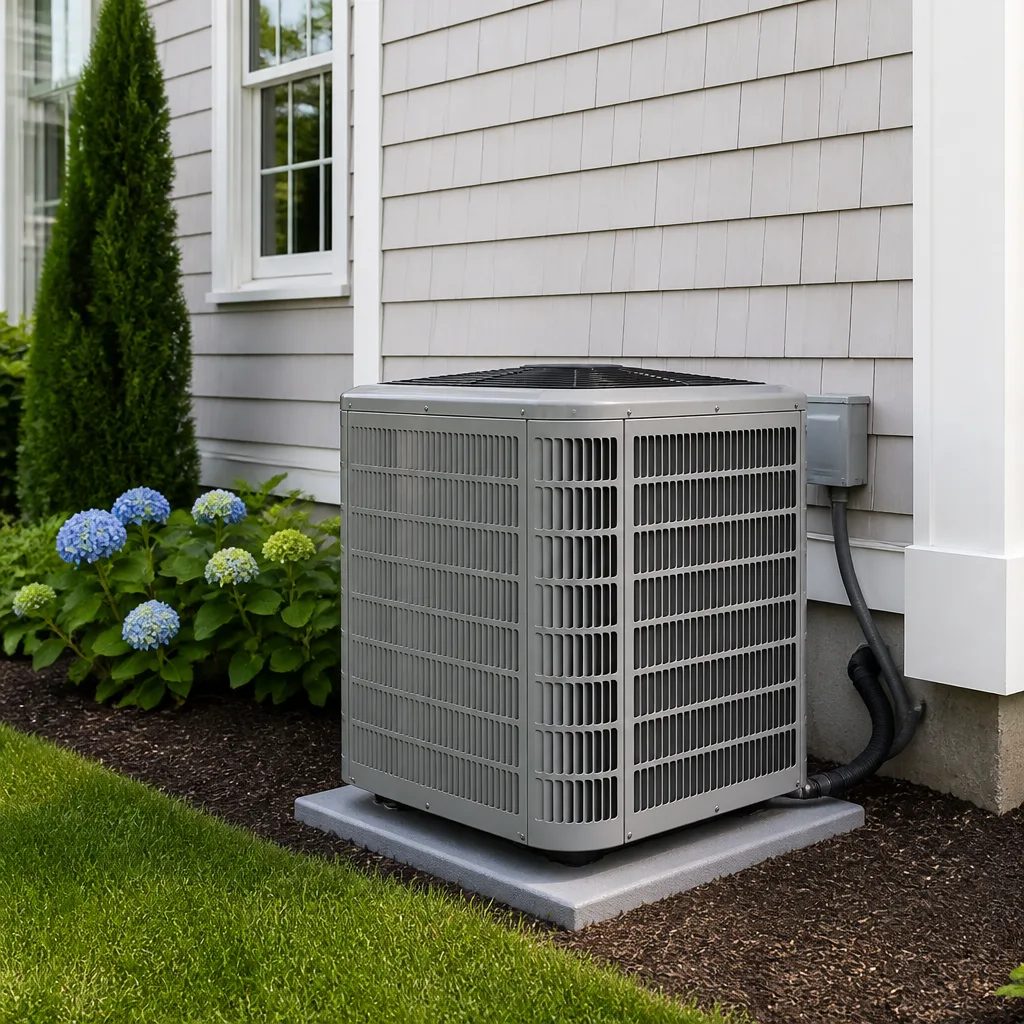 Carrier
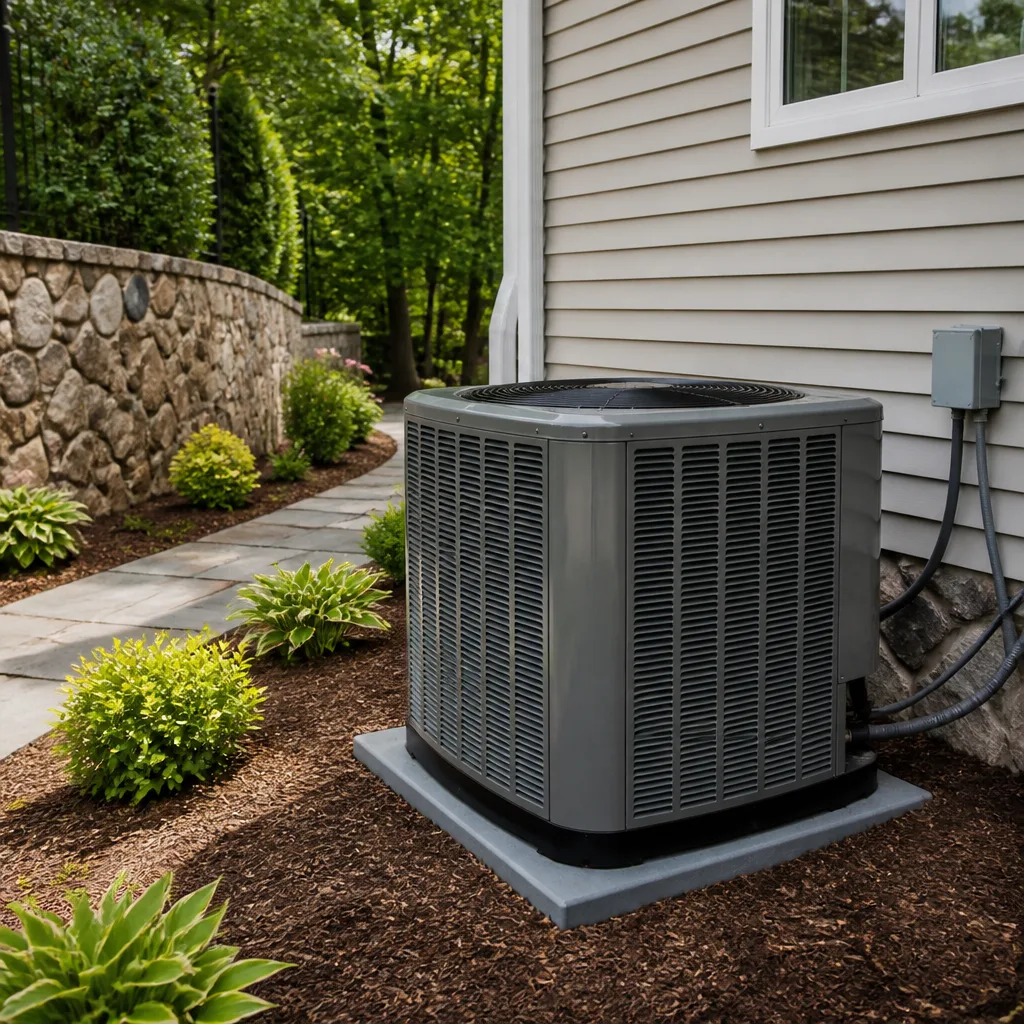 Trane
Trane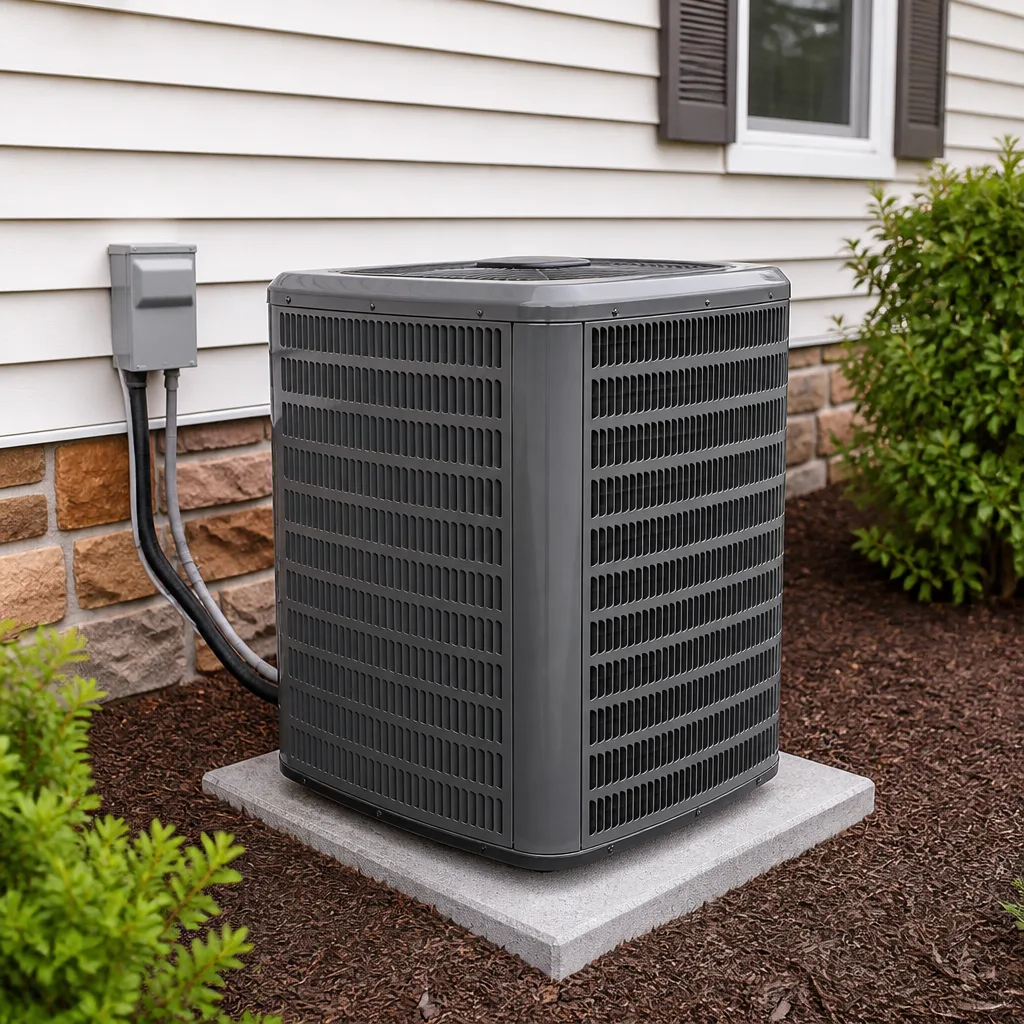 Goodman
Seasonal tune-up and full diagnostic on your Carrier, Trane, or Goodman system - readings shown to you before any repair is proposed
Diagnosis first, numbers second - you approve the repair price before a single part goes in.
Get your free estimateSeasonal HVAC Care for Miami: Year-Round Homeowner’s Guide
Most seasonal HVAC guides written for Florida homeowners parrot the same advice you’d give someone in Ohio: check your furnace before winter, change the filter, schedule a fall tune-up. But Miami homeowners ran their heat for an average of 11 days last year. Eleven. The real seasonal risk in this city isn’t a frozen coil in February. It’s the 48-hour window in late April when outdoor temperatures jump 15 degrees, humidity swings from dry-season comfortable to wet-season oppressive, and thousands of AC systems turn on hard for the first time after months of light duty. That’s when compressors fail, capacitors pop, and condensate lines back up. This guide, alongside our The Complete Guide to HVAC in Miami, is built around Miami’s two real HVAC seasons: the dry-and-mild stretch from November through April, and the brutal latent-heat summer that runs May through October. What you do in the transition month between them decides whether your system survives the next cycle.
Quick Answer
Seasonal HVAC care in Miami comes down to two annual transition windows, not four seasons. In late April, before the first sustained heat and humidity, you clean or replace filters, clear the condensate drain line, check the outdoor condenser for debris and foliage, test the system with a short cooling cycle, and address any weak airflow or odd sounds immediately. In late October, as the rainy season ends, you clean the outdoor unit again, trim back vegetation, consider a surge protector before next hurricane season, and schedule one professional inspection so the system coasts through the mild months without losing ground. A spring check takes a homeowner 30 to 45 minutes; a fall condenser cleaning takes 20 minutes. Both beat a $400 emergency call in July. For the full list, see our AC Repair Maintenance Checklist for Miami Homeowners.
Styles & brands we work with
Table of Contents
- Why Miami Has Two HVAC Seasons, Not Four
- The April Activation Checklist: Before the First Hard Cooling Day
- How Miami’s Rainy-Season Humidity Changes Your Thermostat Settings
- October Wind-Down: Preparing the Condenser for the Mild Season
- Hurricane Season and Your HVAC System: What Surge Protection Actually Covers
- Homeowner Tasks vs. Licensed Technician Tasks: An Honest Breakdown
- The Miami Year-Round Maintenance Schedule at a Glance
- Common Mistakes to Avoid
- When to Call a Professional
- Frequently Asked Questions
Why Miami Has Two HVAC Seasons, Not Four
Miami sits at the southeastern tip of Florida, where the climate breaks cleanly into two halves. From roughly November through April, the dry season brings lower humidity, cooler nights, and daytime highs that often hover in the mid-70s to low 80s. Your air conditioner runs maybe a few hours a day, and sometimes not at all. From May through October, the wet season takes over. Dew points routinely exceed 75 degrees, afternoon thunderstorms fire up like clockwork, and your AC has to do two jobs at once: lower the temperature and remove gallons of moisture from the air every day. That latent heat load is the part outsiders don’t understand. A system that cools a house to 74 degrees in January is doing almost nothing compared to the same system holding 74 degrees in August, when the air itself is heavy with water vapor and every degree of cooling requires stripping that moisture out first.
We’ve seen this play out across Miami neighborhoods like Kendall, Coral Gables, and Hialeah: the failure almost never happens on the hottest day of July. It happens on the first truly muggy day of May, or the third consecutive day of June rain, because the system was never nudged out of its dry-season habits. A condenser caked with dry-season dust and leaf litter. A filter last changed in February. A drain line that’s been slowly filling with biofilm for months. None of these problems announce themselves in March, when the system barely runs. They announce themselves the moment the wet season arrives and the system is asked to work at full capacity for the first time in half a year. That’s the whole argument for transition-month maintenance: you’re not fixing a broken system, you’re catching the conditions that cause the break before the heat does.
The Kingswell Way, the operating standard behind Cold Harbour Heating and Air Miami home, was built around this idea: say the price before the work, show up in the window given, leave the place cleaner than found, put the guarantee in writing, and come back if it fails. A seasonal maintenance visit is the cheapest insurance policy you can buy in this climate. It costs far less than a July compressor replacement and takes less than an hour.
The April Activation Checklist: Before the First Hard Cooling Day
Late April is the single most important week on the Miami HVAC calendar. Sometime in the last stretch of the month, usually after a stalled front clears out, the dew point jumps from the 60s into the mid-70s and stays there until October. That’s your signal. Before the first day you run the AC for more than six consecutive hours, do these six things. They take about 40 minutes total and prevent the majority of May service calls we see every year.
- Change or clean the air filter. If you use a standard 1-inch disposable filter and you haven’t changed it since February, it’s fully saturated with dry-season dust. A clogged filter reduces airflow across the evaporator coil, which drops the coil temperature and can cause it to freeze. A frozen coil means warm air blowing and a repair bill. The filter is the highest-value 10 minutes in home HVAC care.
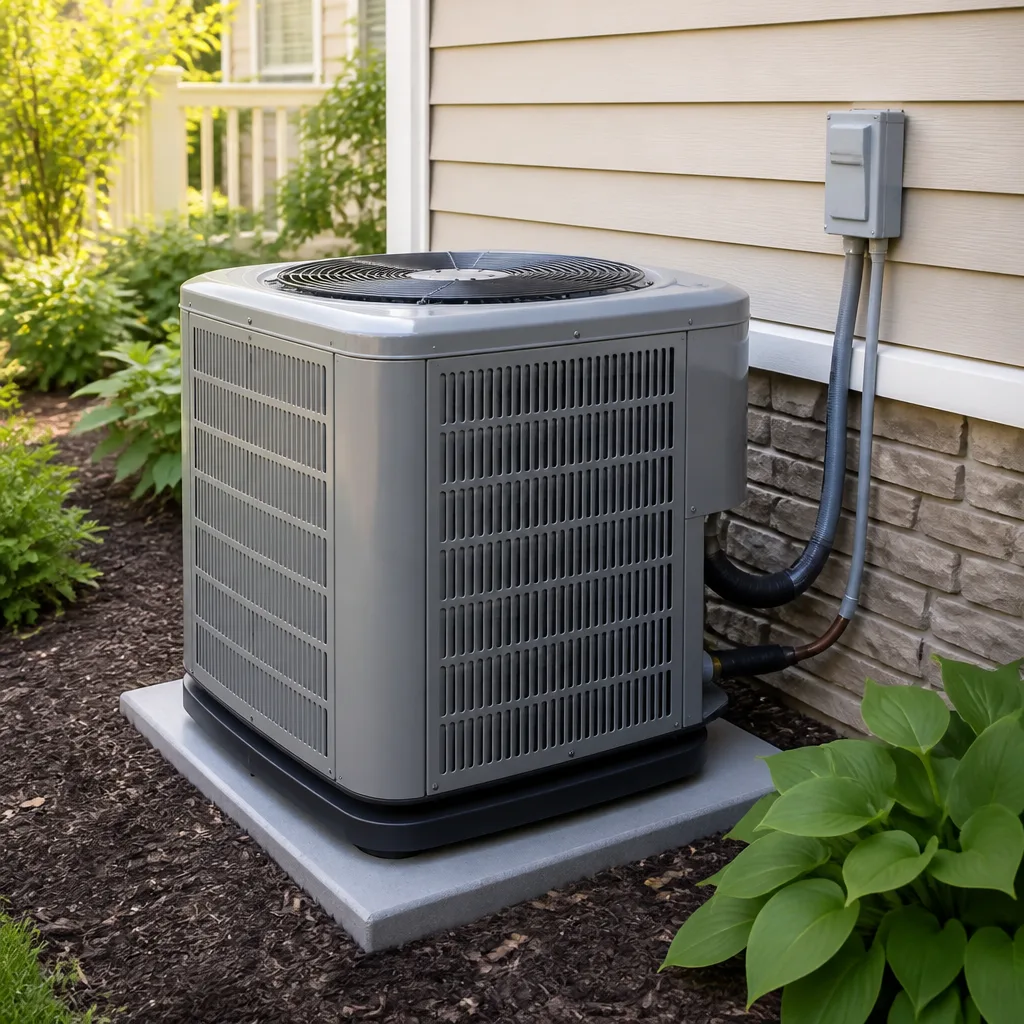
- Inspect the outdoor condenser visually. Walk around the unit. Look for leaves packed against the fins, grass clippings from winter mowing, and any signs of animal activity. Dry-season debris sits on the coil and blocks heat transfer. When the system first runs hard, that blockage forces the compressor to work harder than it was designed to, and compresses its lifespan in the process. Clear away everything within 18 inches of the cabinet.
- Run a 15-minute test cooling cycle. Set the thermostat 3 to 4 degrees below the current indoor temperature and let the system run. Stand near a supply register and confirm the air coming out is noticeably cooler than the room air. Listen to the outdoor unit. A healthy compressor should hum steadily, not rattle, clank, or short-cycle on and off every few minutes. Any unusual sound is an early warning that something is about to fail.
- Check the condensate drain line. Miami’s humidity means your system pulls gallons of water out of the air every day in summer. That water has to go somewhere, and it goes through a narrow PVC drain line to a floor drain or outside. If that line has been slowly clogging all winter, the first hard cooling day will back it up and spill water onto your floor or trip a float switch that shuts the system down. Pour a cup of white vinegar into the drain line access point once a year to break up early buildup.
- Verify the thermostat is reading accurately. If you have an older mechanical thermostat, the calibration can drift over time, especially in a humid climate where the internal components expand and contract. A thermostat that reads 3 degrees off forces your system to run longer or shorter than it should. Digital thermostats rarely have this problem, but it’s worth comparing the displayed reading to a separate indoor thermometer once a year.
- Schedule your annual professional inspection now, not in June. By June, every reputable HVAC company in Miami is running emergency calls back-to-back and the lead time for a non-emergency inspection stretches to two or three weeks. Late April is the calm before the storm. Schedule the inspection before you need it, when the technician can spend the full window checking refrigerant pressures, capacitor health, amperage draw, and coil condition without rushing to the next heat emergency.
How Miami’s Rainy-Season Humidity Changes Your Thermostat Settings
Here’s the thing most HVAC blogs get wrong about Miami: 74 degrees on your thermostat in January and 74 degrees in July are not the same experience. The difference is latent heat, the energy carried by water vapor in the air. In January, Miami’s outdoor dew point sits in the 50s or low 60s. The air inside your home is relatively dry, and your body sheds heat through evaporation easily. In July, the dew point is in the high 70s. The air is saturated, your sweat doesn’t evaporate, and the same 74-degree reading feels 8 to 10 degrees warmer. That’s why you can feel sticky and uncomfortable at 74 in August but perfectly fine at 76 in February.
What does this mean for your thermostat? Two things. First, don’t chase temperature. Many Miami homeowners respond to July humidity by lowering the thermostat from 76 to 72, thinking the system isn’t cooling well. The system is cooling. It’s not dehumidifying enough, because lowering the setpoint only makes the system run longer at the same moisture removal rate. The result is a colder but still clammy house and a 20 to 30 percent jump in your electric bill. The better fix for high humidity is to have a technician verify the system’s dehumidification performance: check the evaporator coil is clean, confirm the blower speed is set correctly for your ductwork, and if necessary, discuss adding a whole-home dehumidifier. A dedicated dehumidifier pulls moisture out of the air without overcooling the house, which means you can actually keep the thermostat higher and still feel comfortable.
Second, if you have a newer thermostat with a “fan on” setting, don’t leave it on during the rainy season. In a humid climate like Miami’s, running the blower fan continuously pulls moisture off the dehumidifying coil and blows it right back into the house after each cooling cycle ends. That’s the opposite of what you want in July. Leave the fan set to “auto” so it only runs during an active cooling call.
October Wind-Down: Preparing the Condenser for the Mild Season
Late October is the second transition month, and it’s the one most Miami homeowners skip entirely. The first real cold front of the season rolls through, the humidity breaks, the AC drops from 14-hour days to 4-hour days, and everyone relaxes. But the October wind-down matters for a simple reason: the outdoor condenser unit spent five months being pelted by rain, wind, leaf litter, and whatever the Atlantic hurricane season threw at it. If you leave that debris on the unit, two things happen. First, the coil’s heat transfer efficiency drops, which means higher energy use even during the mild season. Second, the accumulated organic matter becomes a habitat: palmetto bugs, lizards, and rodents love a warm, dark, debris-filled condenser cabinet. A rodent nest inside the electrical compartment is a preventable cause of winter failures and short circuits.
Your October checklist is shorter than the April one. It’s a 20-minute job. Here’s the sequence we recommend.
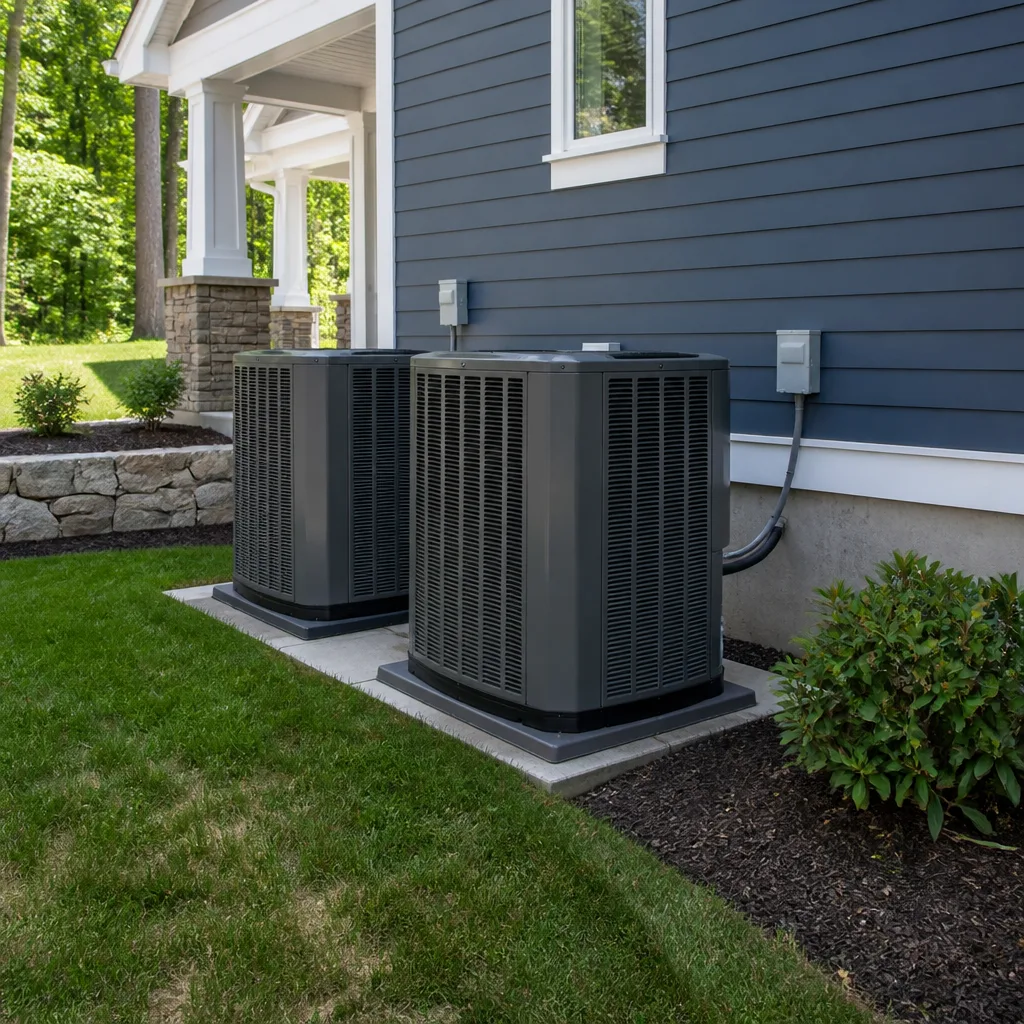
- Kill power to the outdoor unit. At the disconnect box mounted on the wall next to the condenser, flip the switch or pull the plug. Never clean a powered condenser.
- Clear the surrounding area. Trim back any grass, shrubs, or vines that have crept within 18 inches of the unit during the summer. Miami’s growing season is relentless, and hedges that were fine in May are often touching the condenser by October. The unit needs free airflow on all four sides.
- Remove the outer debris. With a wet-dry vacuum or a soft brush, remove leaves, twigs, and grass clippings from the outside of the cabinet and the visible coil fins. Work top-down so debris falls away from the coil rather than deeper into it.
- Check the condensate drain one more time. Rainy-season runoff leaves more than just water in the line; it leaves sediment, algae, and sometimes plant roots. A quick visual check now means you won’t have a surprise puddle in January.
- Consider a professional coil cleaning every two to three years. The inside of the coil can’t be reached without removing the top of the unit, and that’s not a homeowner job. A licensed technician has the tools and training to clean the inner coil surfaces safely. If your condenser is more than a few years old and has never been cleaned internally, schedule it before next summer.
Hurricane Season and Your HVAC System: What Surge Protection Actually Covers
Atlantic hurricane season runs from June 1 through November 30, and Miami sits squarely in the strike zone. Every year, homeowners ask us the same question: do I need a surge protector for my air conditioner? The short answer is that if your system is less than 10 years old, it has an electronic control board and an ECM blower motor, both of which are sensitive to voltage spikes. A lightning strike or a grid surge from a downed line doesn’t have to hit your house directly to fry a control board. A surge that travels through the utility lines can damage the electronics in your outdoor unit and your air handler, and the repair typically runs $400 to $900. A dedicated HVAC surge protector installed at the disconnect box costs a fraction of that and protects against the most common cause of post-storm failures.
What a surge protector does not do is protect against complete submersion. If your outdoor condenser sits in a low part of the yard that floods during tropical storms, no surge protector will save it. The compressor sealed unit will survive brief flooding, but the electrical contacts, capacitor, and fan motor won’t. If you live in a flood-prone Miami neighborhood like parts of Little River or Flagami, the smarter investment is a concrete pad to raise the condenser above the typical flood level, or a hurricane pad for the unit to be elevated during the most severe warnings. A licensed HVAC technician can tell you whether your condenser’s current elevation is adequate for your area’s flood history.
When a hurricane watch is announced for Miami-Dade County, take these steps: turn the AC off at the thermostat before the storm arrives, so the system isn’t running when power surges or brownouts hit; at the disconnect box, kill power to the outdoor unit if flooding is expected; and after the storm passes, wait for a licensed technician to inspect the system before turning it back on if the unit was submerged at any point. The post-storm inspection is especially important for homeowners whose outdoor units sit near trees or construction sites, where high winds can hurl debris into the coil fins. Even if the unit still runs, a bent or debris-filled coil will overheat the compressor within weeks.
Homeowner Tasks vs. Licensed Technician Tasks: An Honest Breakdown
There’s a lot of well-meaning advice online about HVAC maintenance, and much of it blurs the line between what a homeowner can safely do and what requires a licensed technician. The honest breakdown is this: most of the routine seasonal work is homeowner-level, but everything involving refrigerant, electrical connections, or high-tension components belongs to a trained professional. See DIY vs Professional HVAC: The Miami Homeowner’s Decision Guide for a deeper look at where to draw the line. Not just for safety reasons, though those matter: a wrong move on a 240-volt condenser can kill you. It’s also because Miami-Dade County requires EPA Section 608 certification for anyone handling refrigerant, and most homeowner insurance policies won’t cover damage from unlicensed work.
Genuine homeowner tasks, with realistic time estimates:
- Changing the air filter (5 to 10 minutes). Every 30 to 60 days during heavy-use months, every 60 to 90 days in the dry season. This is the single most important maintenance step, and it’s completely safe.
- Clearing vegetation around the outdoor unit (15 to 20 minutes). Trim growth back to 18 inches on all sides. Anyone can do this with garden shears.
- Rinsing the visible coil surface with a garden hose (15 minutes). With the power off, a gentle rinse from the inside outward removes surface dust and improves airflow. Don’t use a pressure washer: the force bends the fragile aluminum fins.
- Pouring vinegar into the condensate drain line (5 minutes). A cup of white vinegar per month during the rainy season keeps the line clear of biofilm until the next professional flush.
- Checking the thermostat batteries and settings (5 minutes). Replace the batteries annually and verify the temperature reading against a separate thermometer.
Licensed technician tasks, and why you should not attempt them:
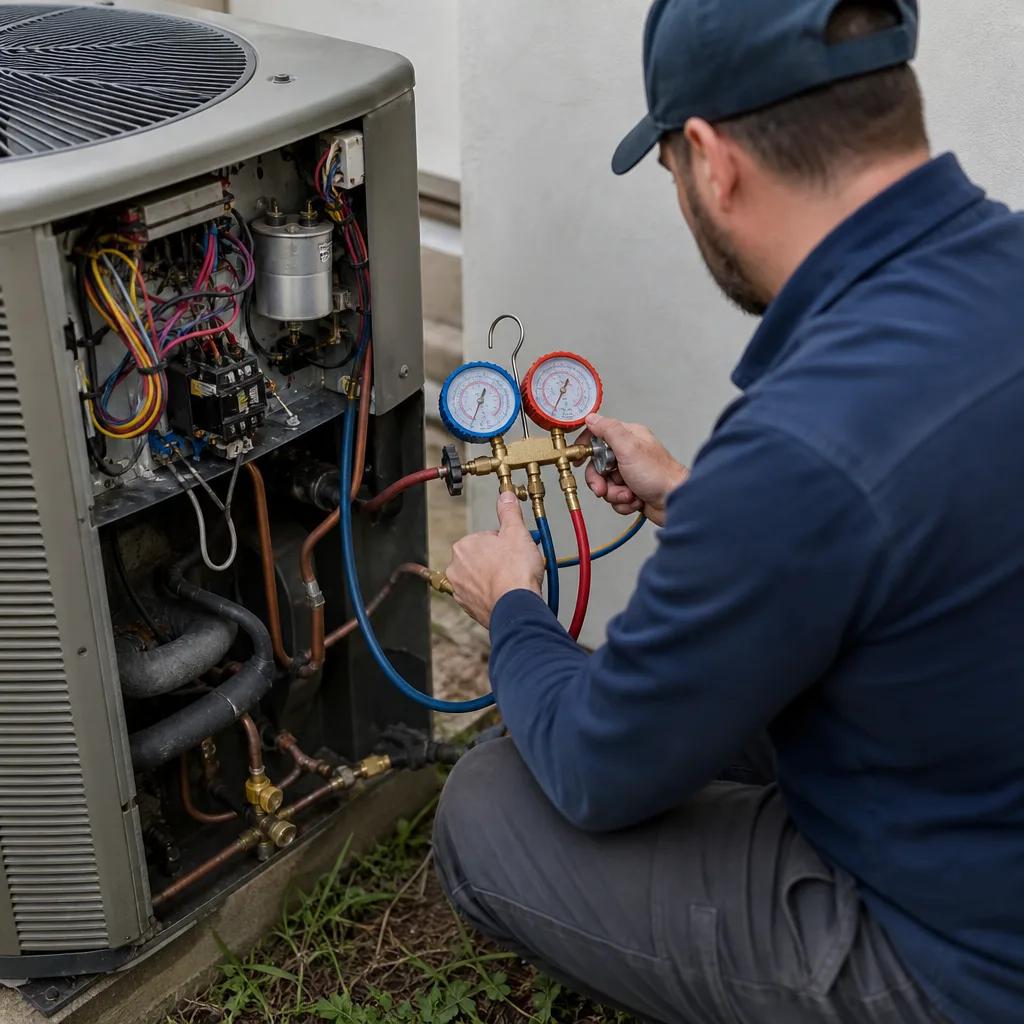
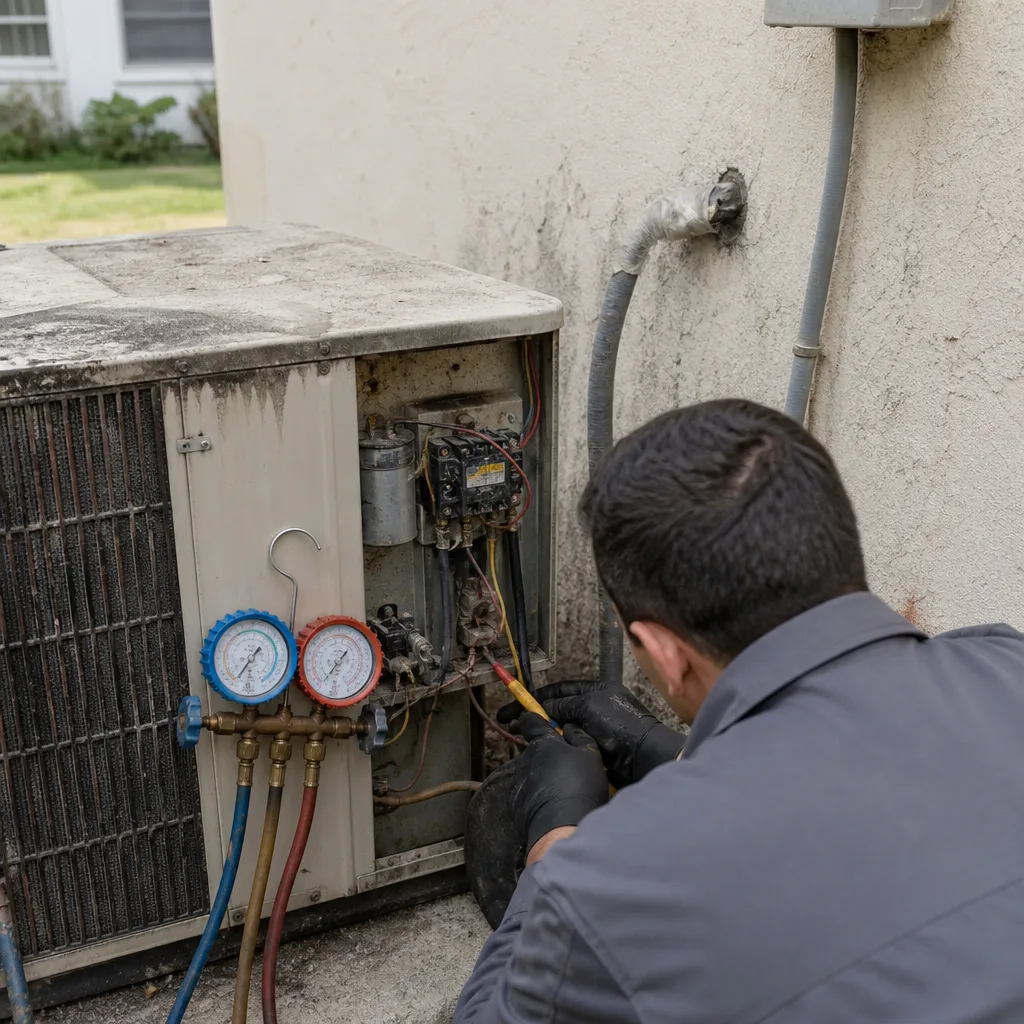
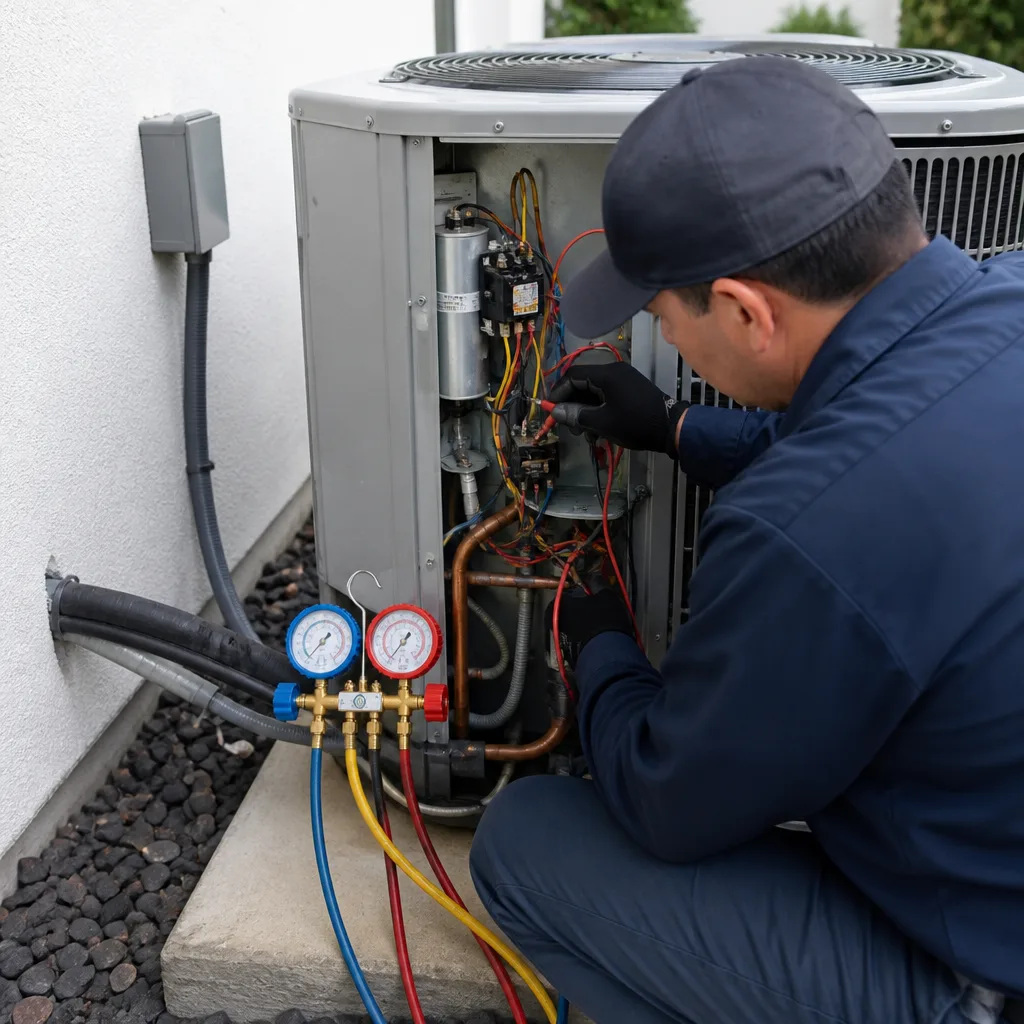
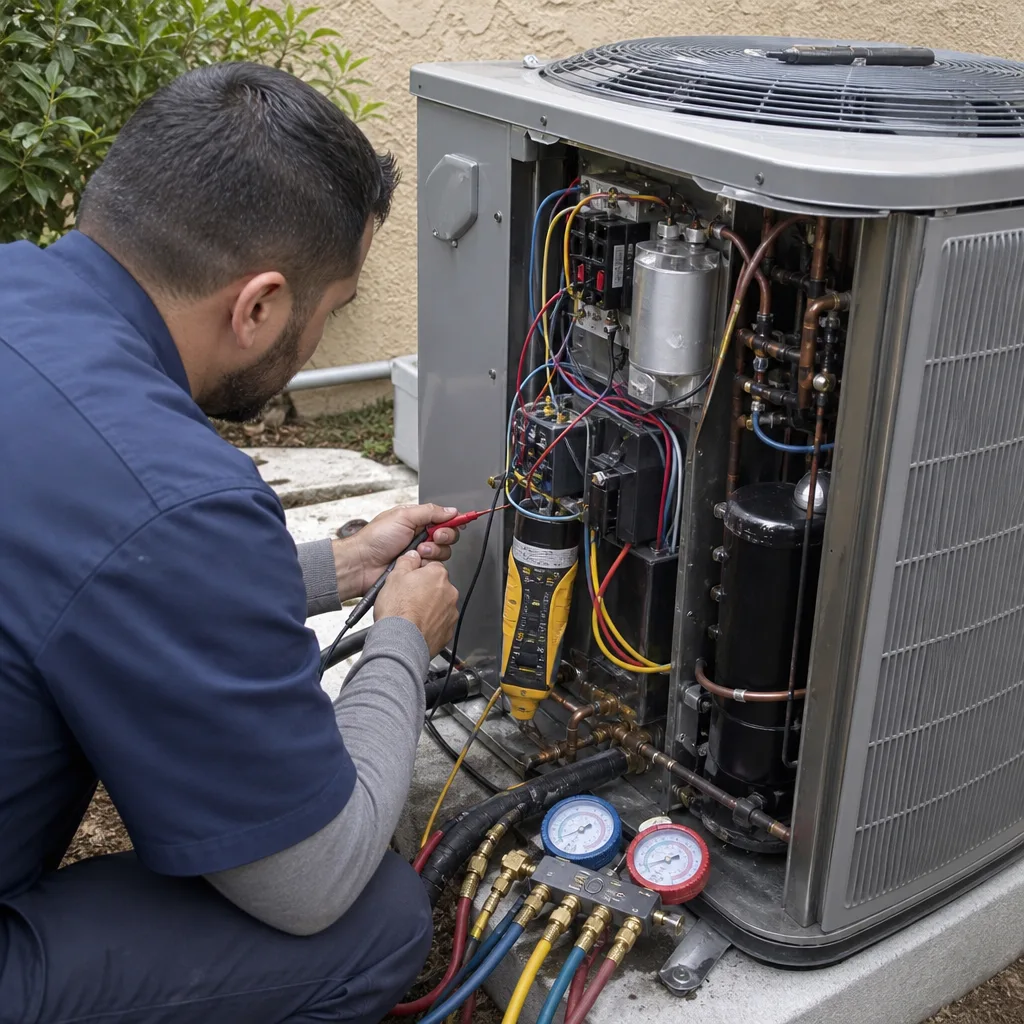
- Checking refrigerant charge. This requires manifold gauges, a recovery cylinder, and EPA certification. A low refrigerant level is a sign of a leak, and the leak must be repaired before the system is recharged. Topping off a leaking system without finding the leak is illegal under EPA rules and wasteful: you’ll be back in the same spot in a few months.
- Testing capacitors and contractors. These electrical components store charge even after power is disconnected, and a capacitor can deliver a dangerous shock if mishandled. A technician uses a multimeter and knows the voltage ratings.
- Cleaning the indoor evaporator coil. The coil is buried inside the air handler and requires panel removal, coil cleaner, and careful handling of the drain pan. It’s not a homeowner job, and the coil is easily damaged.
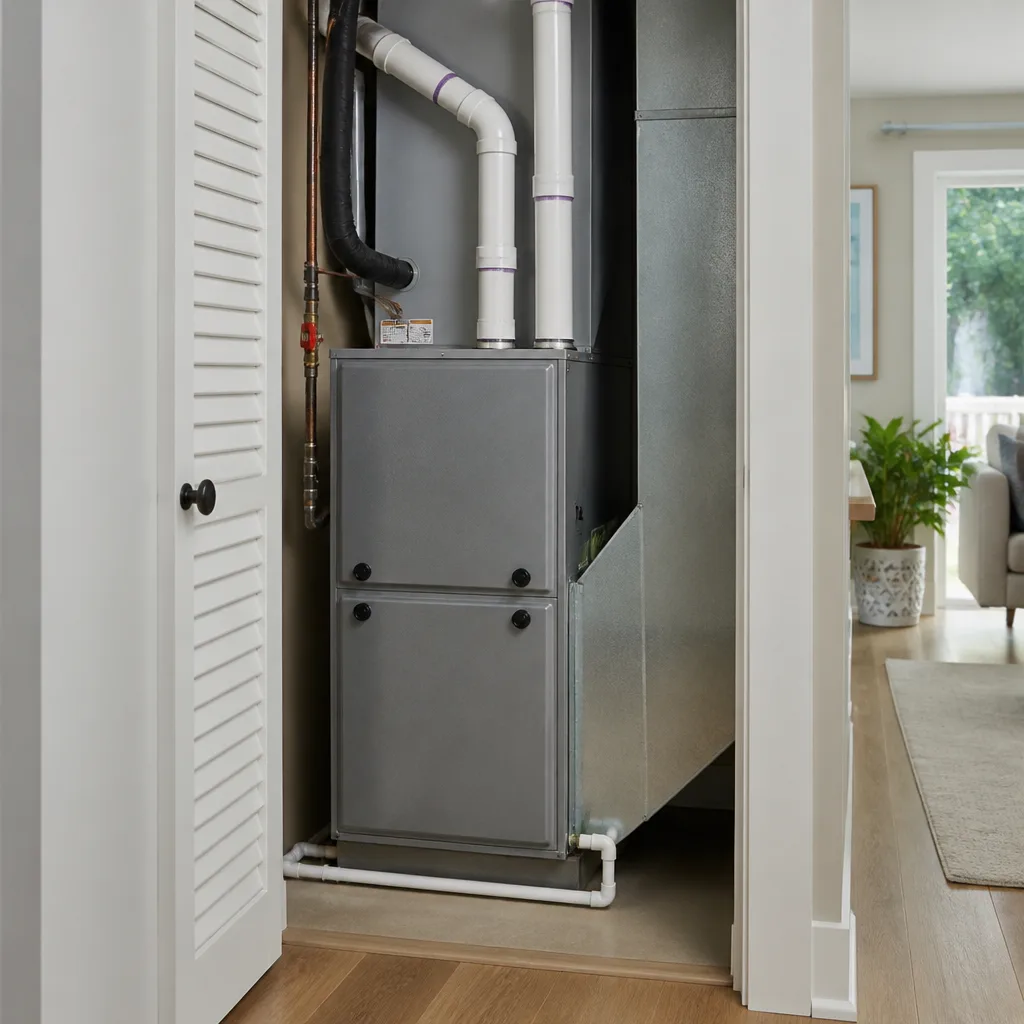
- Inspecting the heat exchanger on a gas furnace. Even in Miami, some homes have gas furnaces for the few genuinely cold days of the year. A cracked heat exchanger leaks carbon monoxide into the home, and only a technician with a combustion analyzer can check it properly.
The Miami Year-Round Maintenance Schedule at a Glance
Here’s the calendar we recommend for Miami homeowners. It’s built around the two transition months and the two seasons, not a fictional spring and fall.
January through March (Dry Season, Light Use):
- Change the air filter every 60 to 90 days.
- Let the system coast. If you notice any unusual sounds or smells, don’t wait for April. Call for a diagnostic visit while demand is low.
- If you skipped the October condenser cleaning, do it now: a dry-season afternoon is perfect for clearing debris without rain interruption.
April (Transition Month, Critical):
- Complete the full April Activation Checklist above.
- Schedule the annual professional maintenance visit now, before summer demand.
- Change the filter even if it was changed in March. Start the wet season with a clean one.
May through September (Wet Season, Heavy Use):
- Change the filter every 30 to 45 days. During the peak of summer, a filter can clog surprisingly fast in this climate.
- Pour vinegar down the condensate drain monthly.
- Monitor your electric bill. A 20 percent spike without a corresponding change in weather usually means the system is losing efficiency.
- If you hear any short-cycling or rattling from the outdoor unit, call promptly. Problems don’t fix themselves, and they get more expensive in August.
October (Transition Month, Wind-Down):
- Complete the October Wind-Down Checklist above.
- If you want a surge protector installed before next hurricane season, schedule it now. The lead time is short and the technicians aren’t slammed with cooling calls.
- If your system is 12 or more years old, start thinking about whether next summer is the right time for a replacement. Planning an AC Installation in Miami during the off-season gives you time to choose the right system without the pressure of a July emergency.
November through December (Dry Season, Light Use):
- Change the filter once.
- If you have a gas furnace or a heat strip, run a short test cycle on the first genuinely cold day of the season. You don’t want to discover a furnace problem on the one night it drops below 50 degrees.
- Schedule any lingering repairs from summer. This is the slowest season for HVAC work in Miami, which means the fastest response times and the most flexible scheduling.
For repairs in the dry season, our AC Repair in Miami team is on call around the clock, with a live person answering the phone 24/7. If your heat goes out during one of Miami’s brief cold snaps, our Furnace Repair in Miami technicians are trained across all major residential brands, including Rheem, York, and Daikin.
Common Mistakes to Avoid
- Using a pressure washer on the condenser coil. The force of the water flattens the thin aluminum fins and permanently reduces the unit’s ability to reject heat. A soft brush and a garden hose are the right tools.
- Changing the thermostat from 74 to 70 to fight humidity. Lowering the setpoint cools the air without removing additional moisture, so the house feels clammy and cold at the same time. Address the humidity itself, not the temperature.
- Closing supply registers in unused rooms. This is a legacy piece of advice that does more harm than good in modern central systems. Closing registers increases static pressure in the ductwork, which reduces airflow across the coil and can cause it to freeze.
- Skipping the drain line because you’ve never had a problem. By the time you see the first water stain on the ceiling or the first puddle on the floor, the line has been building up for months. The monthly vinegar flush is cheap insurance against water damage.
- Buying the cheapest 1-inch fiberglass filter. These filters do almost nothing for the coil and let fine dust coat the evaporator fins. A pleated filter with a MERV rating between 8 and 11 is the right balance of filtration and airflow for most Miami homes.
- Assuming your AC has a surge protector because “everything else does.” Most whole-home surge protectors installed at the electrical panel do not protect the HVAC condenser specifically. The unit needs its own surge protection at the disconnect box to be meaningful.
- Waiting until the system fails to think about replacement. Miami’s brutal August heat means replacement decisions made during a heatwave are rushed and often cost more. If your system is past 12 years old and you’re spending more than $500 a year on repairs, start planning now, before the next wet season hits.
When to Call a Professional
Some signs are self-evident: a system that won’t turn on at all, a breaker that trips the moment the condenser tries to start, a noticeable electrical burning smell. Other signs are subtler but just as serious. If your AC runs continuously but the house never quite reaches the setpoint, that’s a refrigerant or airflow problem, not a weather problem. If you hear water gurgling inside the wall or see water pooling under the air handler, the drain line has failed. If your outdoor unit freezes over in the summer, that’s an airflow restriction or a refrigerant leak. In any of these cases, turn the system off and call a licensed technician. Continuing to run a failing system turns a $200 repair into a $2,000 compressor replacement with surprising speed.
Cold Harbour Heating and Air Miami offers free estimates across Miami. Our technicians arrive in uniform, background-checked, and trained to service nine major residential HVAC brands including Bryant and York. The written price is handed to you before any work begins, and every repair carries the 365-Day Done Right Promise in writing. Call (850) 810-1910 for a free estimate.
Frequently Asked Questions
During Miami’s wet season from May through September, change a standard 1-inch pleated filter every 30 to 45 days. During the dry season from November through April, every 60 to 90 days is sufficient. Homes with pets, recent renovations, or high occupancy may need more frequent changes. A clogged filter reduces airflow across the coil, which can freeze the system and cause a breakdown you could have prevented for the cost of a $12 filter.
Most Miami homeowners find 76 to 78 degrees comfortable during the wet season if the humidity is being managed properly. The reason 74 in July feels sticky is high indoor humidity, not the temperature itself. If you’re uncomfortable at 76 degrees, the fix is usually dehumidification, not a lower setpoint. Lowering the thermostat to 70 forces the system to run longer, which only modestly increases moisture removal while significantly increasing your electric bill. Call (850) 810-1910 for an exact assessment of your system’s dehumidification performance.
Yes, and in this climate, the timing matters more than the visit itself. Annual maintenance catches issues like a failing capacitor, a slow refrigerant leak, or a partially clogged drain line before the wet-season heat turns them into full system failures. The best time for the visit is late April or early May, before the first sustained heat and humidity. Waiting until June means longer lead times and a higher chance of needing emergency repair during a heatwave.
You can and should clear debris, trim vegetation, and rinse the visible coil surface with a garden hose, provided you kill the power at the disconnect box first. You cannot safely clean the inner coil surfaces, inspect the electrical components, or check refrigerant levels on your own. Those tasks require a licensed technician with the right training, tools, and EPA certification. If you’re unsure where the line is, call us and we’ll walk you through what you can safely do before scheduling a professional visit.
That smell is almost always microbial growth on the cooling coil or in the drain pan, fed by months of Miami humidity and the organic matter that collected during the dry season. It’s not dangerous in most cases, but it’s not going to fix itself. A professional coil cleaning with an EPA-registered antimicrobial treatment removes the source of the odor. The homeowner-level fix is to ensure the condensate drain line is clear and the filter is fresh so moisture doesn’t sit stagnant in the system.
Every repair from Cold Harbour Heating and Air Miami comes with a written guarantee valid for 365 days. If the repair fails within that window, we return and correct the work at no additional charge. The guarantee is printed and handed to you before the technician leaves, not buried in fine print or mentioned casually. It covers the specific repair performed: if the same component fails again, the second visit is free, no argument. Call (850) 810-1910 for details on what’s covered for your specific repair.
The Bottom Line
Miami doesn’t have four seasons, and pretending it does leads to maintenance schedules that miss the point. The city has two HVAC seasons: a dry-and-mild stretch from November through April and a humid, demanding stretch from May through October. The work you do in April and October, the two transition months, determines whether your system handles the next season or fails under its load. Change the filter on a real schedule, clear the condensate drain, keep the condenser clean and unobstructed, and have a licensed technician inspect the system once a year before the heat arrives. For more guides & resources on keeping your Miami home comfortable year-round, visit our blog. The Kingswell Way is simple: say the price before the work, show up in the window given, leave the place cleaner than found, put the guarantee in writing, and come back if it fails. That’s the standard we work to on every job in Miami.
Written by Victor Mancini, Owner at Cold Harbour Heating and Air Miami, serving Miami since 2003.
See the difference
 Before
 After
After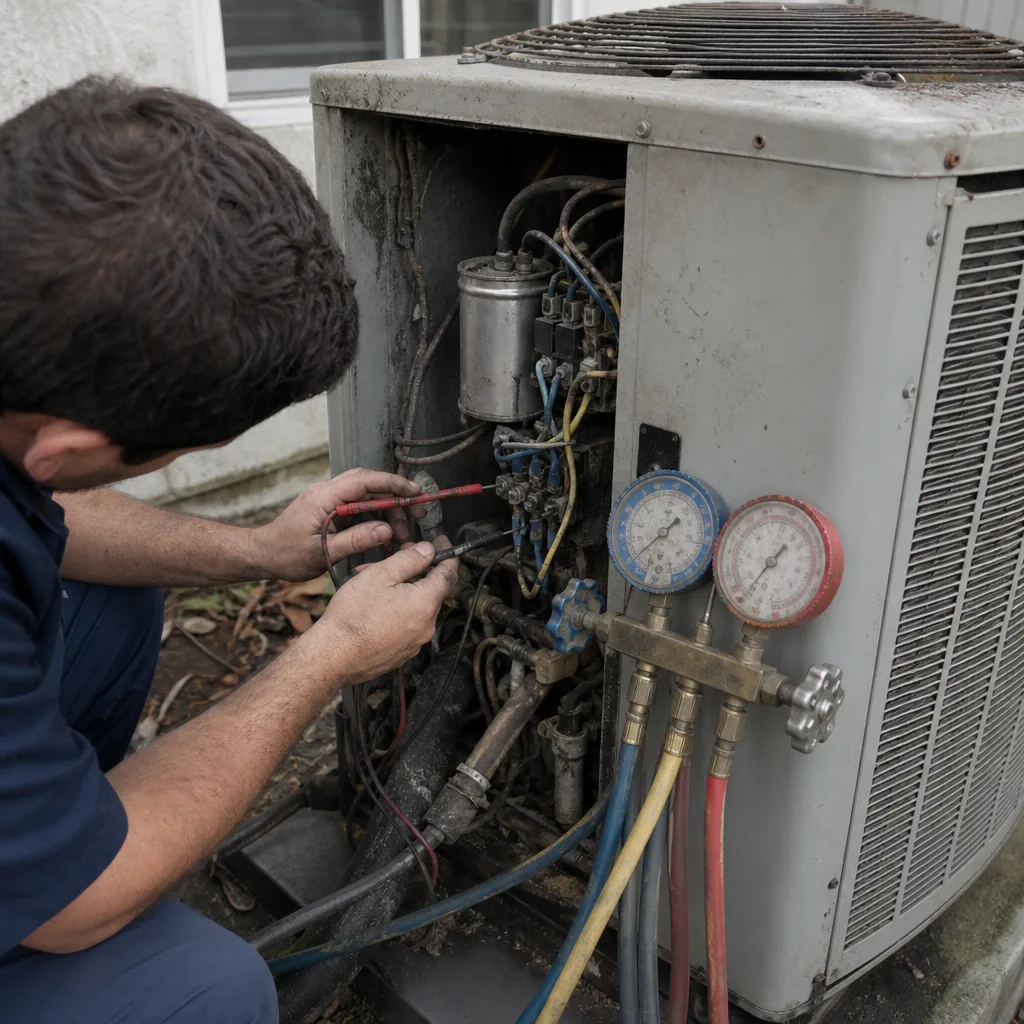 Before
 After
After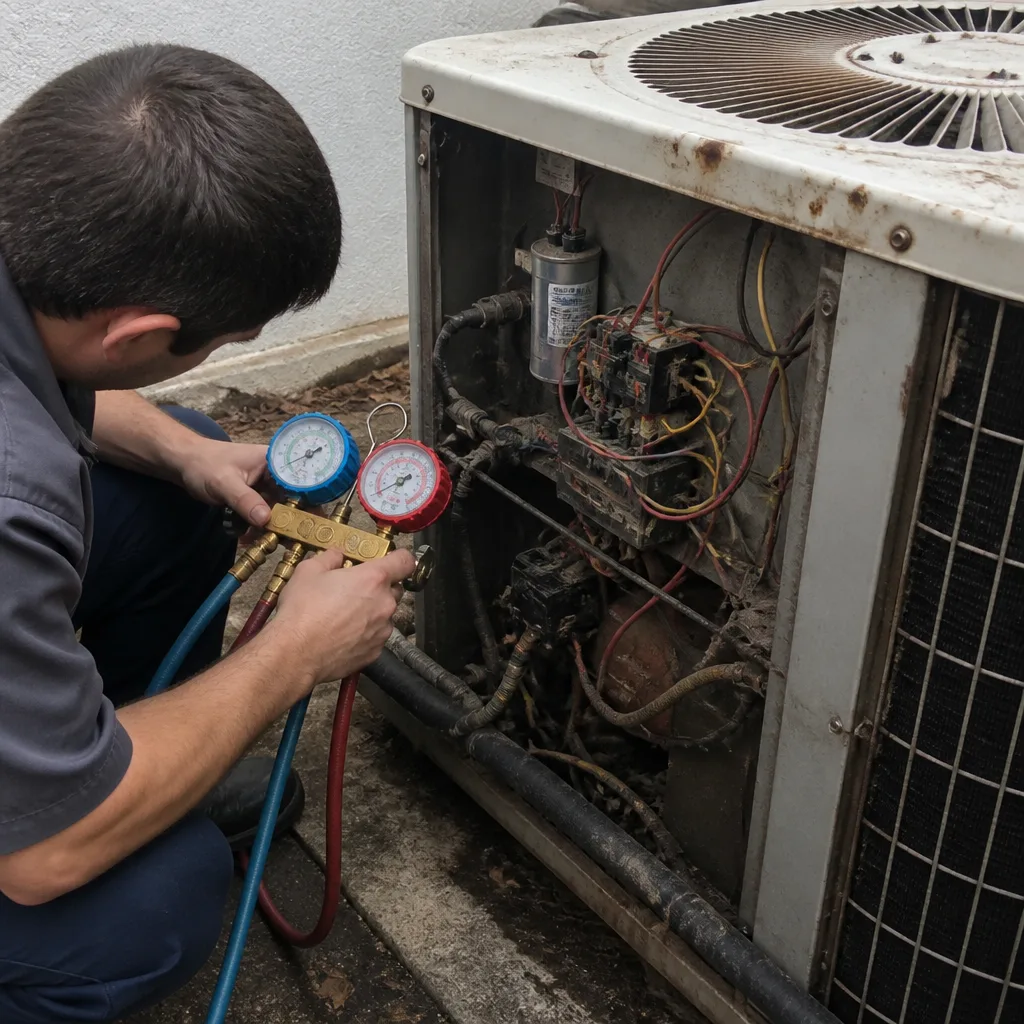 Before
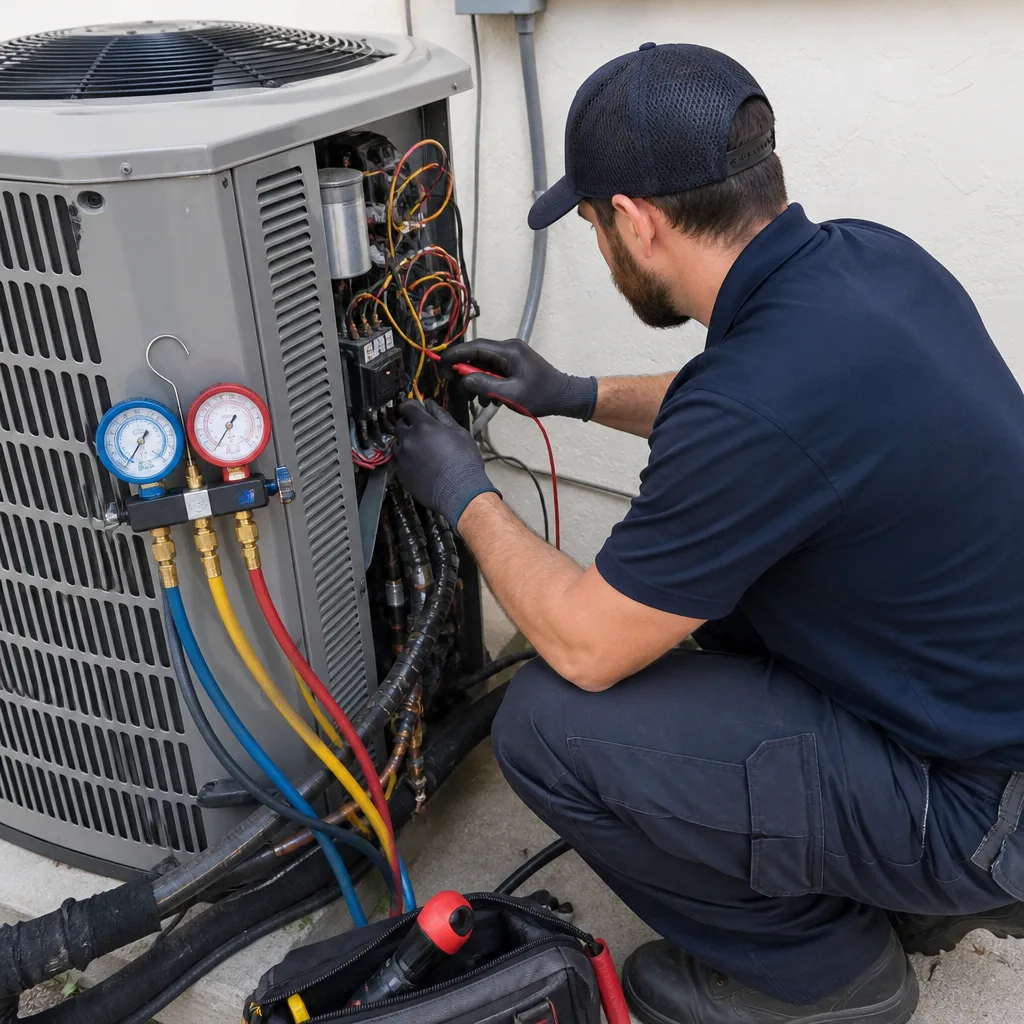 After
After