
Last updated October 16, 2026
 AC repair
 Furnace & heating
 Heat pumps
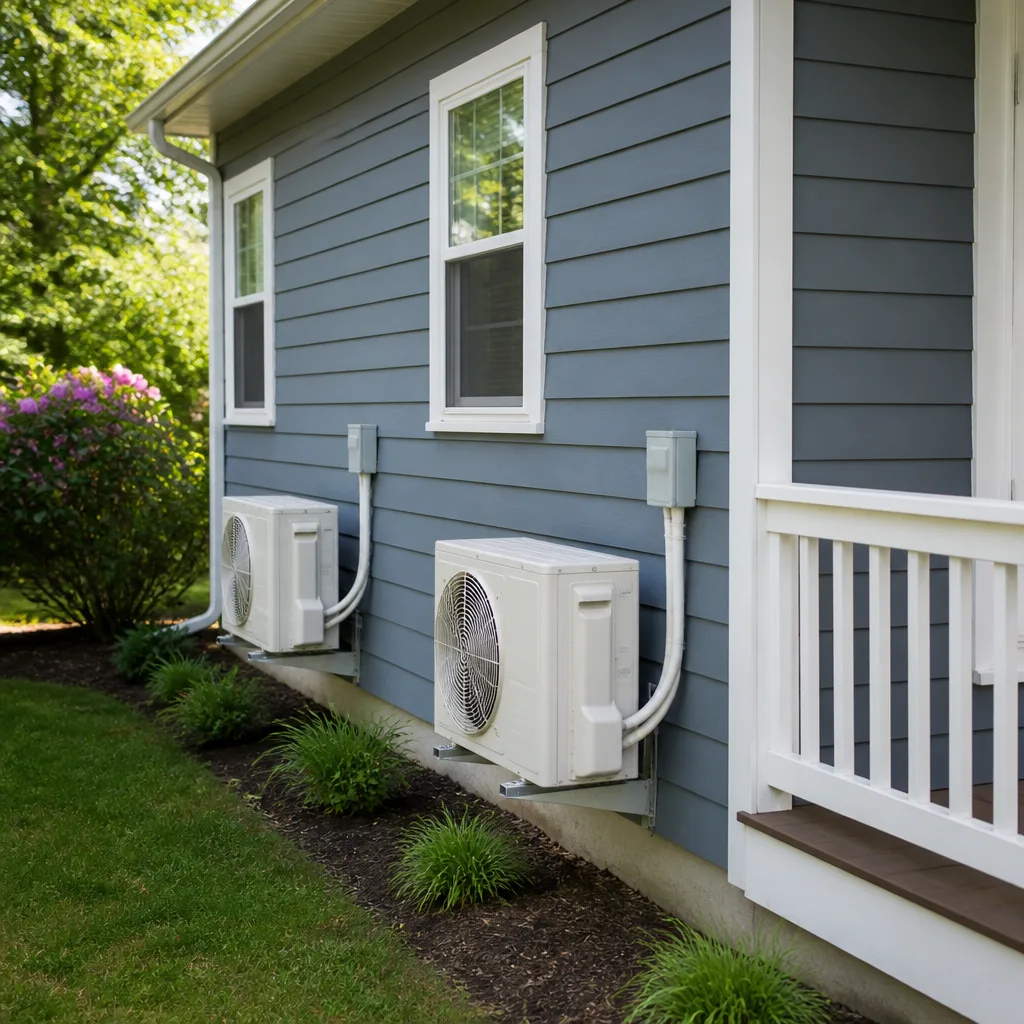 Ductless mini splits
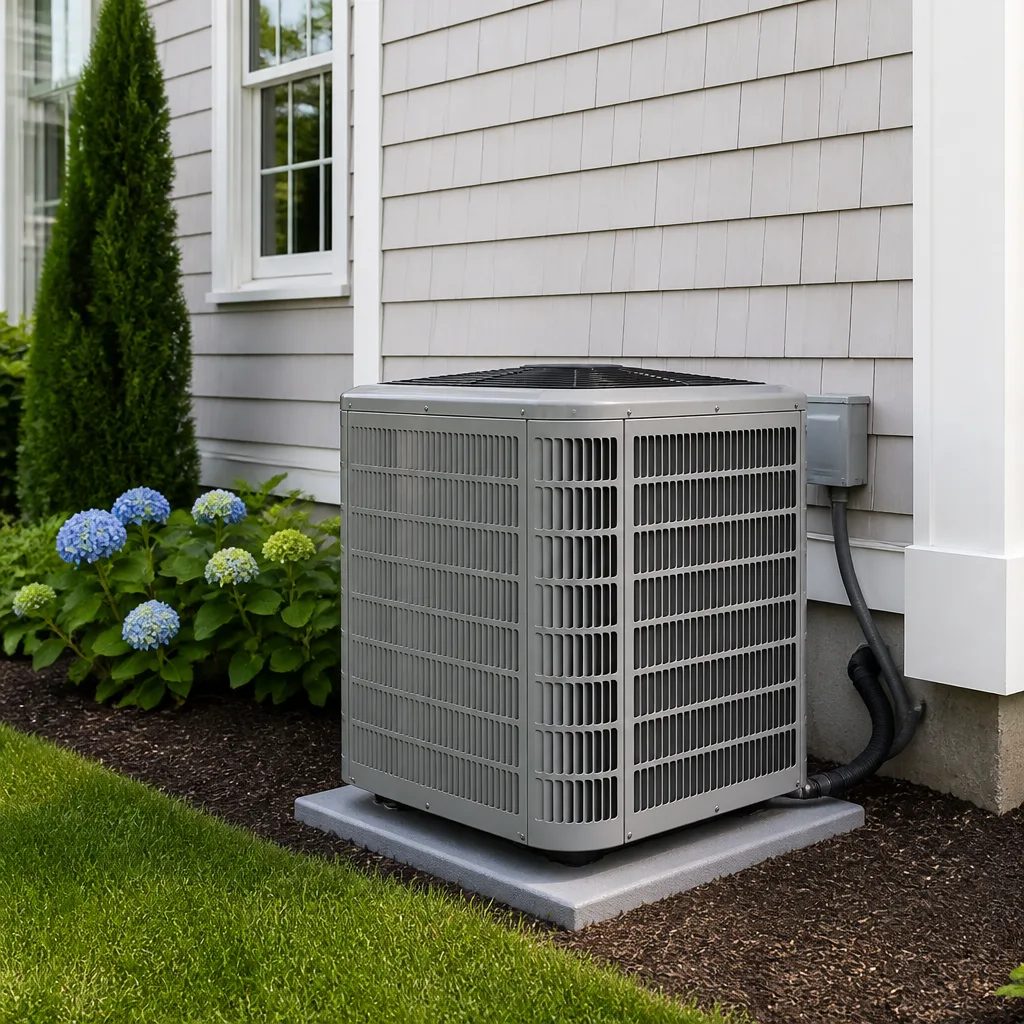 Carrier
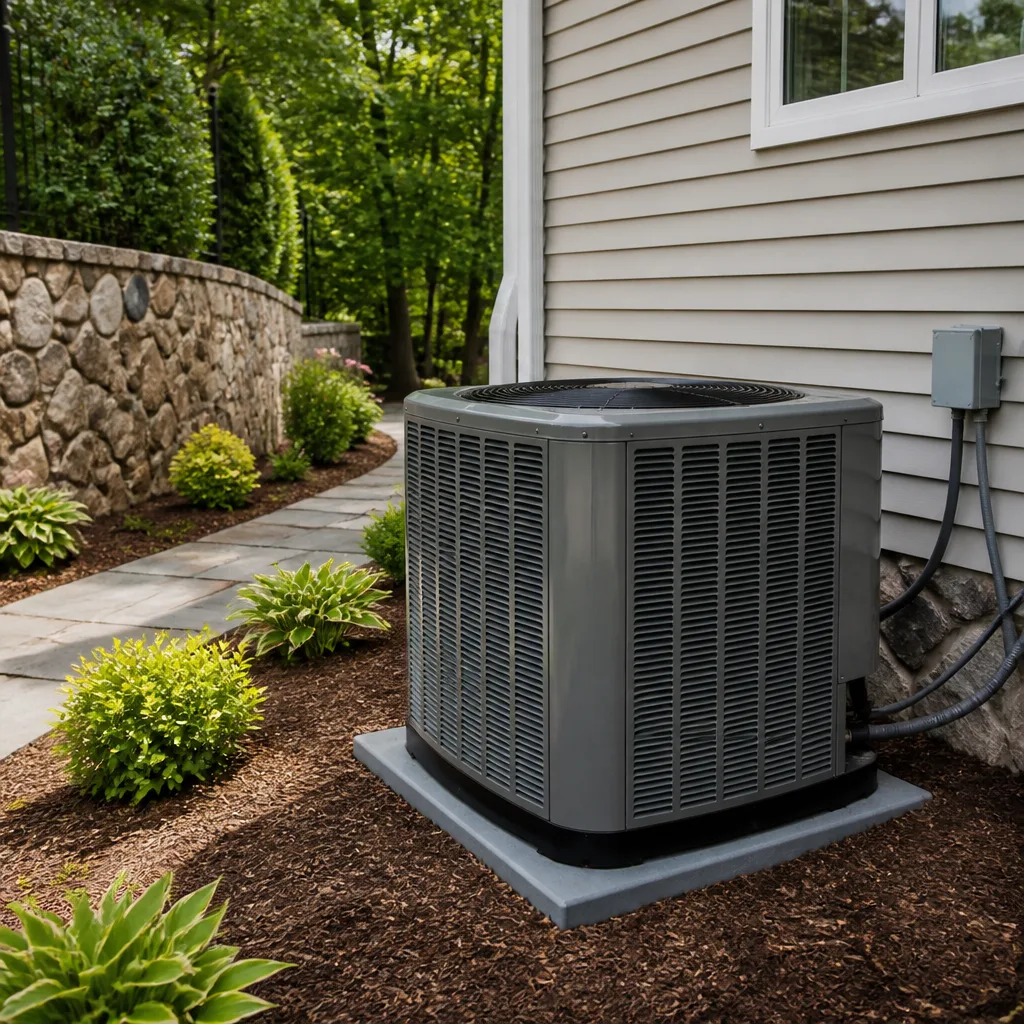 Trane
Trane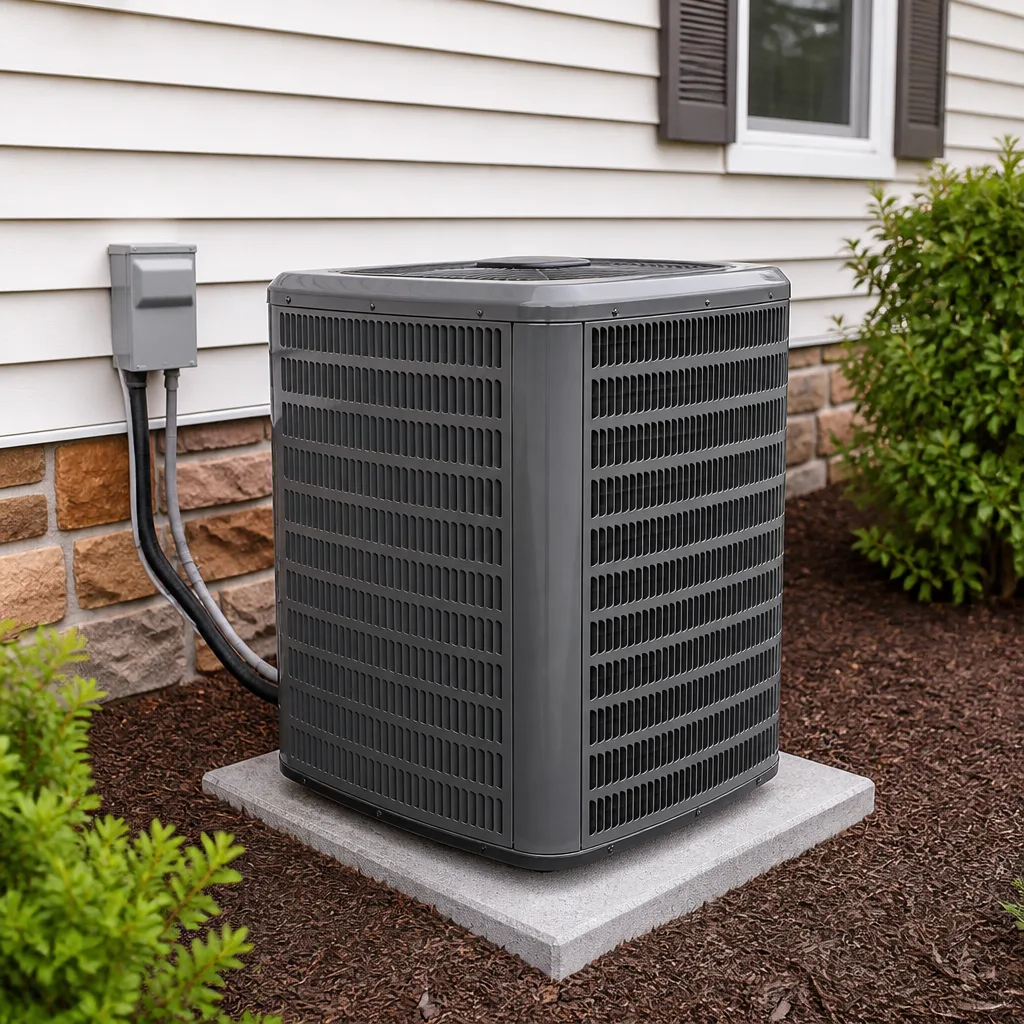 Goodman
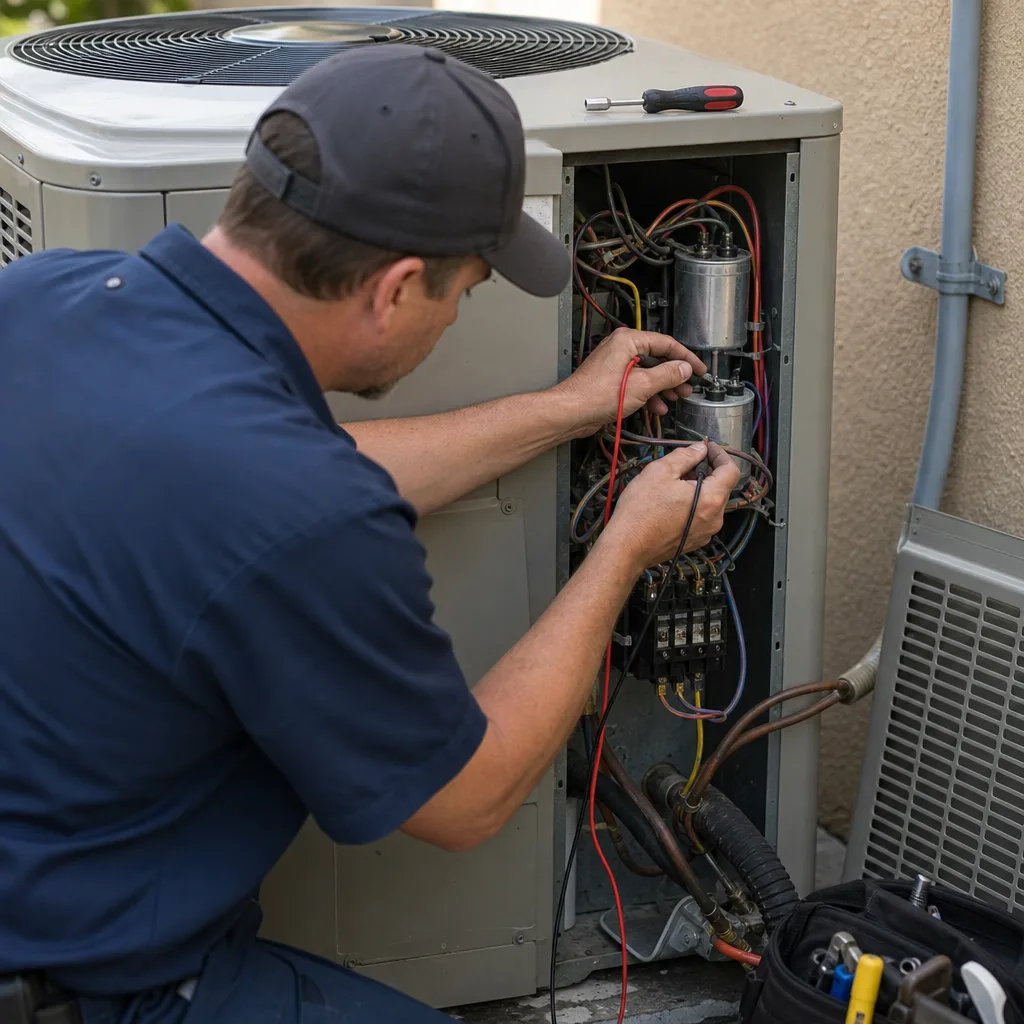
Seasonal tune-up and full diagnostic on your Carrier, Trane, or Goodman system - readings shown to you before any repair is proposed
Diagnosis first, numbers second - you approve the repair price before a single part goes in.
Get your free estimateThe Complete Guide to HVAC in Miami
Miami’s average outdoor dew point in July sits around 74°F. That means the air your AC fights is already nearly saturated before it even enters the house. Most HVAC guides written for “hot climates” were built around Phoenix or Dallas, where the enemy is dry heat. Miami is a different animal entirely: you’re fighting humidity, salt, and a building code shaped by hurricanes. This guide maps those variables to real decisions so you never buy the wrong system or skip the wrong service.
Styles & brands we work with
Quick Answer
The complete guide to HVAC in Miami is this: choose a system sized for humidity control rather than raw cooling speed, insist on corrosion-resistant coils rated for coastal salt air, verify your outdoor unit meets Miami-Dade hurricane strapping code, and budget for 2 – 3 service visits per year instead of one. A properly selected and maintained Miami system should last 12 – 15 years even in salt-heavy neighborhoods, while an undersized or corrosion-prone unit can fail in under 8. The full breakdown of costs, equipment choices, and maintenance rhythms follows below.
Table of Contents
- Why Miami HVAC Is Different From Anywhere Else
- What SEER2 Ratings Actually Mean in Miami (and What to Shop For Instead)
- Salt Air Corrosion: The Silent Coil Killer
- Oversized vs. Right-Sized: Why Bigger Leaves Your Home Damp
- Hurricane Code for Outdoor Units: What Miami-Dade Actually Requires
- How to Read Your FPL Bill and Know What Your HVAC Really Costs
- The Right Maintenance Rhythm for Miami Homes
- What HVAC Service and Installation Actually Costs in Miami
- Common Mistakes to Avoid
- When to Call a Professional
- Frequently Asked Questions
- The Bottom Line
Why Miami HVAC Is Different From Anywhere Else
Miami’s climate doesn’t just demand more from an HVAC system; it demands different things. The combination of 90% average relative humidity, year-round cooling loads, and airborne salt from Biscayne Bay and the Atlantic creates operating conditions that simply don’t exist in Atlanta, Houston, or even Tampa.
Here’s what makes Miami unique:
- Latent heat load is the real enemy. In dry climates, an AC’s primary job is dropping temperature. In Miami, roughly half the work is removing moisture from air that arrives already carrying 75°F dew-point water vapor. A system that cools but doesn’t dehumidify leaves you at 72°F and still feeling sticky. That’s a comfort failure, but more importantly, persistent indoor humidity above 60% invites mold in drywall, closets, and ductwork.
- Salt air accelerates corrosion 3 – 5x faster than inland environments. The aluminum fins and copper coils in a standard condenser will pit and leak years sooner within two miles of the coast. We see condenser coils in Coral Gables and Coconut Grove fail at 8 – 10 years on systems that would run 15 years in Kendall or Westchester.
- The building stock is split into two very different eras. Pre-1992 concrete block homes (common in Little Havana, Allapattah, and North Miami) typically have undersized ductwork, minimal insulation, and single-pane jalousie windows. Post-Hurricane Andrew construction (most of Kendall, Doral, and West Kendall) is tighter and better insulated but often has higher internal heat loads from modern appliances and larger window areas.
- FPL demand charges punish afternoon peaks. Miami’s utility rate structure charges more for electricity used during summer afternoons. An inefficient AC running hard between 3 – 7 PM costs dramatically more per month than the same unit running at night.
- Outdoor units must survive hurricane wind loads. Miami-Dade’s product approval requirements for rooftop and ground-mounted condensers are the strictest in the country. A unit anchored with generic brackets may fail inspection or, worse, become airborne debris in a storm.
These five factors mean every equipment decision in Miami has a right and wrong answer depending on your neighborhood, your home’s era, and your distance from the water. That’s what the rest of this guide works through.
What SEER2 Ratings Actually Mean in Miami (and What to Shop For Instead)
SEER2 is the federal efficiency standard that replaced SEER in 2023. It measures cooling output per watt of electricity under a fixed set of laboratory conditions: 95°F outdoors, 80°F indoors, 50% relative humidity. Those conditions almost never match a Miami summer afternoon.
Here’s what that means in practice:
- Miami’s heat is humid, not dry. SEER2 testing does not fully account for the energy cost of dehumidification. A 16 SEER2 unit in a dry test chamber behaves differently than the same 16 SEER2 unit pulling moisture from 74°F dew-point air in Coral Gables. In our experience across Miami, a “16 SEER2” system in a coastal high-humidity home often delivers real-world efficiency closer to 13 – 14 SEER2.
- The real number to shop for is the moisture-removal capacity (latent capacity), not just the SEER2 badge. Look for systems with an enhanced dehumidification mode: a two-stage or variable-speed compressor that can run at partial capacity for longer cycles. Longer, slower cycles remove more moisture per kilowatt-hour than short, fast blasts.
- If you’re within three miles of salt water, efficiency is secondary to coil survivability. A 20 SEER2 unit with a standard fin-and-tube coil will leak and lose charge within a decade. A 15 SEER2 unit with a factory epoxy-coated coil will run efficiently for 15 years. The “efficient” choice in Miami is often the lower-numbered unit with the right coil.
- What to actually shop for: a 15 – 17 SEER2 two-stage system with a variable-speed air handler and a coastal-rated condenser coil. This combination trades a modest efficiency headline for dramatic real-world humidity control and lifespan in Miami’s climate. Single-stage 14 SEER2 units are adequate for inland parts of West Kendall or The Hammocks, but they struggle to dehumidify coastal homes without overcooling.
If you’re replacing an 8 – 10 SEER unit from the 1990s, any modern system will cut your cooling bill. The question is whether you want to cut it once, or cut it and still be comfortable. In Miami, comfort and efficiency are the same calculation, and both hinge on the latent heat equation.
Salt Air Corrosion: The Silent Coil Killer
Walk through Coconut Grove, Key Biscayne, or Surfside and you’ll see condenser units with fins that look like they’ve been sandblasted. That’s salt air corrosion, and it’s the single biggest reason Miami HVAC equipment dies young.
Airborne salt from Biscayne Bay and the Atlantic settles on the aluminum condenser fins. Combine salt with Miami’s humidity, and you get a persistent, conductive film of saltwater on the coil. That film attacks the aluminum fins and the copper tubing beneath them. The result is pinhole leaks that slowly bleed refrigerant and force the compressor to work harder until it fails.
Here’s how we see it progress across Miami neighborhoods:
- Within 1 mile of open water (Key Biscayne, Miami Beach, eastern Coral Gables, Brickell): expect visible fin corrosion within 5 years. Standard coils often fail at 8 – 10 years. We recommend factory-applied epoxy or phenolic-coated coils on every coastal installation.
- 1 – 3 miles from water (Coconut Grove, Shenandoah, Buena Vista, North Bay Village): moderate corrosion. Coated coils are recommended, not optional. Standard coils typically last 10 – 12 years.
- 3+ miles inland (Kendall, Doral, Hialeah, Westchester): lower salt exposure. A standard coil is usually acceptable, though we still see accelerated fin corrosion near major highways where road salt and brake dust blow across the condenser.
There are several coil protection options worth knowing about:
- Factory epoxy-coated coils (e-coat). The coil is dipped in epoxy at the factory, sealing the fins and tubing before the unit is assembled. This is the most durable option and adds roughly $400 – $900 to condenser cost depending on brand and size. Bryant, Carrier, and Trane all offer factory-coated coastal models.
- Phenolic-coated coils. A thicker polymer coating, sometimes applied aftermarket. Effective but less uniform than factory e-coat. Adds $500 – $1,200.
- Corrosion-resistant condenser cabinets. Some manufacturers offer units with coated cabinets and fasteners in addition to coated coils. Worth considering on exposed rooftop or oceanfront installations where salt spray is direct.
- Rinsing the condenser. A homeowner can (and should) rinse the outdoor coil with a garden hose every 2 – 3 months during the wet season. This removes loose salt film before it bakes into the aluminum. Do not use a pressure washer. It will flatten the fins and reduce airflow.
One more note: the warranty is your first check. Some manufacturers void the coil warranty on units installed within two miles of salt water unless a coated coil was factory-ordered. If you live coastal and your installer quotes a standard coil, ask to see the warranty language for coastal installations.
Oversized vs. Right-Sized: Why Bigger Leaves Your Home Damp
The single most common mistake we see in Miami HVAC installations across all neighborhoods from Allapattah to Palmetto Bay is oversized equipment. It’s an understandable instinct: South Florida heat is brutal, so why not buy a bigger AC? The answer is that an oversized system cools the air so quickly that it never runs long enough to remove moisture.
Here’s the physics, in plain English: air conditioning dehumidifies when air passes over the cold indoor coil and water vapor condenses out. That process takes time. A correctly sized system in Miami should run for 20 – 30 minutes per cycle during a hot afternoon, removing moisture the entire time. An oversized system drops the temperature setpoint in 10 – 12 minutes and shuts off, leaving most of the humidity still hanging in the air. You end up at 72°F with 70% relative humidity, which feels warmer and stickier than 75°F with 50% humidity. You also get short-cycling, which wears out compressors and costs more in repairs.
The sizing calculation that matters is Manual J, the industry standard for load calculation. A competent HVAC company in Miami runs a room-by-room Manual J before quoting any replacement system. The calculation considers:
- Square footage and ceiling height
- Window area, orientation, and glazing type (single-pane jalousie windows in a 1960s concrete block home leak far more heat and humidity than post-Andrew double-pane)
- Insulation levels in walls, attic, and floor
- Air infiltration rates (older Miami homes often leak 50% more air than 1992+ construction)
- Internal heat loads from appliances, occupants, and electronics
- Latent (humidity) load, which is enormous in Miami
In our experience across Miami, correctly sized systems typically land at 1 ton per 600 – 800 square feet in pre-1992 homes and 1 ton per 500 – 700 square feet in post-Andrew homes, with coastal humidity pushing those numbers slightly higher. That’s a wide range, which is exactly the point: any contractor who quotes “1 ton per 500 square feet” without running a room-by-room load calculation is guessing.
The fix for humidity if your home is already damp with a right-sized system is often a two-stage or variable-speed compressor that runs longer at lower output, plus a thermostat configured to prioritize humidity setpoint. We configure these on nearly every new Miami installation, and the difference in comfort is immediate.
Hurricane Code for Outdoor Units: What Miami-Dade Actually Requires
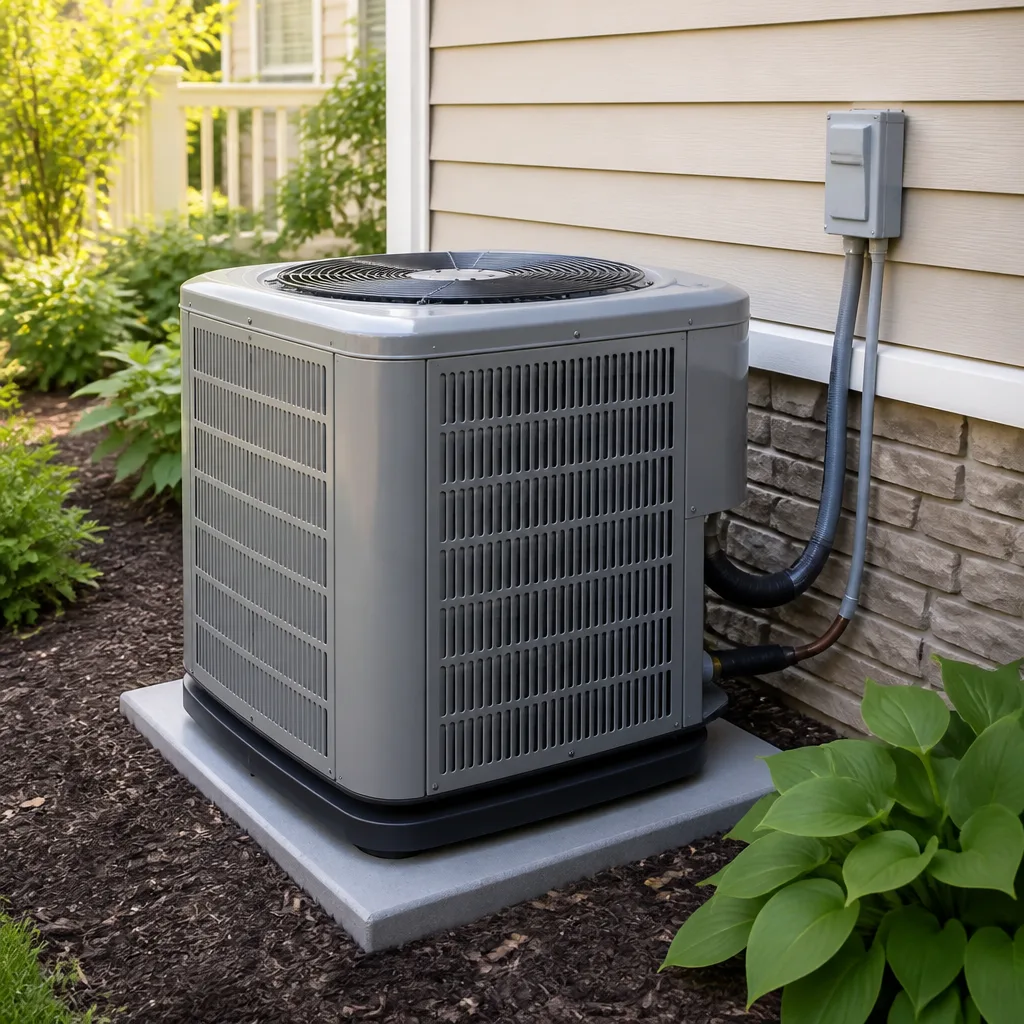
Miami-Dade County operates under the strictest wind-load building code in the United States, a direct legacy of Hurricane Andrew in 1992. Your condenser unit is part of that code. Whether you’re installing a new system, replacing an old one, or just wondering why the existing unit is strapped to the slab with thick metal bands, here’s what you need to know.
Every outdoor HVAC unit in Miami must be:
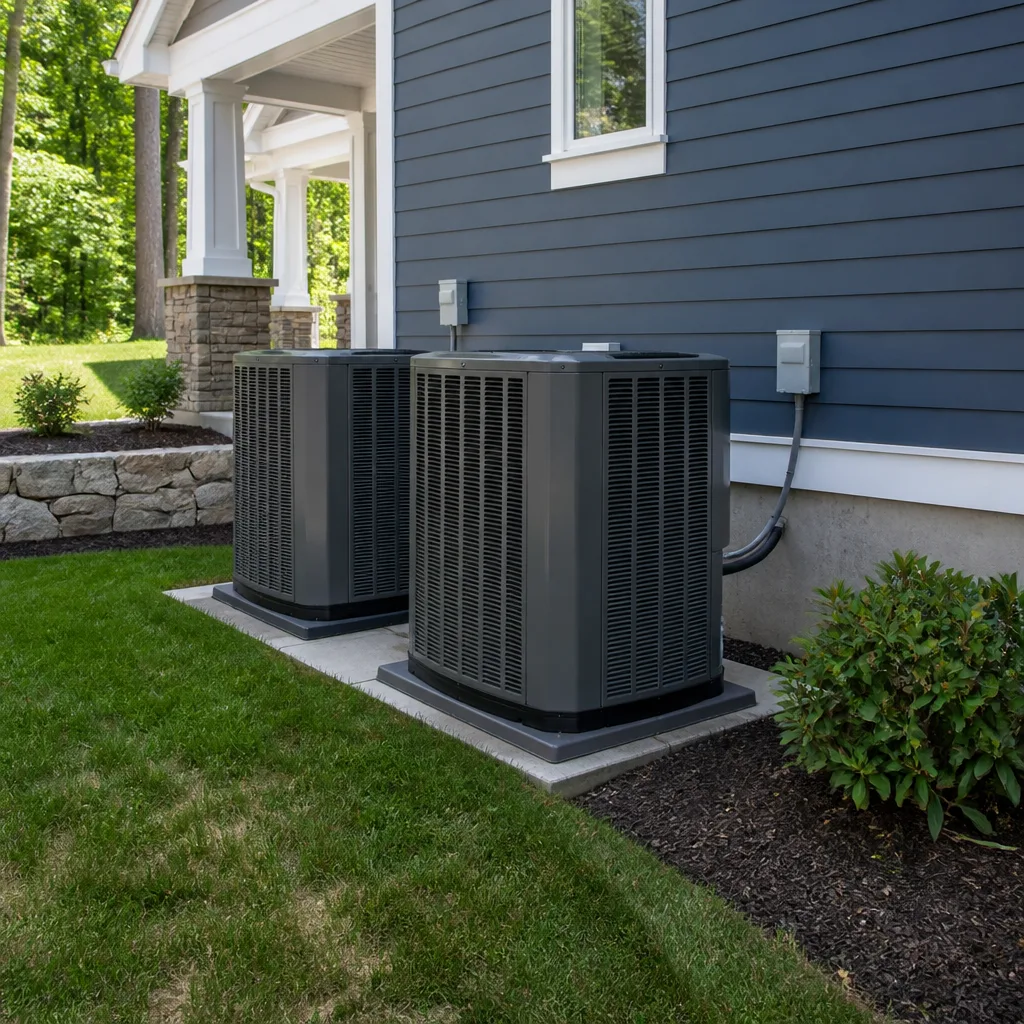
- Anchored to a concrete pad or platform that is itself secured to the structure or ground. The unit cannot simply sit on a plastic or fiberglass pad. In most Miami installations, the condenser is anchored to a poured concrete slab with embedded anchor bolts, or to a raised platform bolted through the roof structure.
- Secured with hurricane straps or anchor brackets rated for Miami-Dade wind loads. The specific anchor system depends on the unit’s location (ground-mount, rooftop, or elevated platform), the unit’s dimensions, and the site’s wind exposure category. Coastal and high-rise exposures require heavier-gauge anchoring.
- Product-approved by Miami-Dade County. The condenser unit itself must carry a Miami-Dade Product Approval number, not just a Florida building code approval. All major brands (Carrier, Trane, Bryant, American Standard) offer Miami-Dade approved outdoor units; a few budget lines do not, and they cannot legally be installed here.
- Installed by a licensed contractor who pulls the mechanical permit. In Miami, a mechanical permit is required for any condenser replacement. The permit triggers an inspection, and the inspector will verify anchoring and strapping.
If you live in a condo or apartment building, the HOA or building engineer usually determines the approved anchoring method and mounting location. If your unit sits on a high-rise balcony, the wind load calculation changes substantially, and a rooftop-rated anchor system is mandatory.
This is a safety code, not a bureaucratic nuisance. A poorly anchored condenser in a Category 3 hurricane can become a projectile that destroys windows, cars, and people. It’s worth doing right. For full details on AC installation in Miami, our team handles Miami-Dade permits, product approvals, and anchoring on every job, and we provide the written permit and inspection record before we leave.
How to Read Your FPL Bill and Know What Your HVAC Really Costs
Most Miami homeowners look at the bottom line of their FPL bill and never understand what the HVAC system actually costs them. Here’s the breakdown, because once you understand it, the equipment decisions in this guide make sharper financial sense.
FPL residential rates in Miami-Dade use a tiered structure plus a summer demand charge for customers on the optional time-of-use rate. The critical numbers to understand:
- Energy charge (kWh): the base cost of every kilowatt-hour consumed. The more you use, the higher the tier rate. A Miami home running a 4-ton AC for 8 – 10 hours a day in July can burn 2,500 – 3,500 kWh per month on cooling alone.
- Demand charge (kW): this is the charge most homeowners never notice. On time-of-use rates, FPL bills a higher rate for electricity used during peak afternoon hours (typically 3 – 7 PM weekdays). Your AC is usually running hardest during exactly those hours. The demand charge can add $30 – $80 per summer month depending on your AC’s efficiency and your thermostat settings.
- Fuel adjustment and taxes: pass-through costs that scale with your total usage.
What this means for your HVAC decisions:
- A 15 SEER2 system in an uninsulated 1960s Miami home will cost roughly $180 – $280 per month in electricity during summer. The same system in a post-1992 insulated home costs $120 – $180. Insulation and duct sealing are often the highest-ROI HVAC improvements in Miami, not the AC itself.
- Shifting your thermostat setpoint up 3 – 4°F between 3 – 7 PM can cut your monthly bill by 8 – 12% on a demand-charge rate. Program the thermostat to pre-cool the home to 74°F in the morning, then let it drift to 77 – 78°F during peak and recover after 7 PM.
- The difference between a 14 SEER2 and a 17 SEER2 two-stage system in a typical Miami home is roughly $250 – $400 per year in energy costs. That’s meaningful over 15 years, but it’s less than the cost of one major compressor failure. If you’re on a budget, the two-stage humidity control often matters more than the SEER2 badge.
- Two full maintenance visits per year. One in early spring (March – April) before the wet season hits, and one in late fall (October – November) after the heaviest runtime and salt exposure. Each visit includes coil cleaning, drain line clearing, refrigerant pressure check, electrical connection tightening, and airflow measurement.
- Monthly filter checks during summer. In Miami’s summer, a clogged filter can starve the system of airflow and freeze the evaporator coil within three weeks. Pleated MERV 8 – 11 filters are fine for most homes; change them every 30 – 60 days during peak.
- Quarterly condenser coil rinsing for coastal homes. A 10-minute garden-hose rinse of the outdoor coil removes salt film. This is a homeowner task, not a service call.
- Annual drain line clearing with algaecide tablets. Miami’s humidity breeds microbial growth in the condensate drain line faster than anywhere in the continental US. A clogged drain line is the most common summer service call we get in Miami-Dade.
- Duct inspection every 3 – 5 years. In a hot, humid attic, duct joints fail and insulation degrades. Leaking ducts in a Miami attic can waste 20 – 30% of your cooling output and pull humid outside air into the system.
- Skipping the Manual J load calculation. If a contractor quotes a system size based on square footage alone or “what was there before,” they’re guessing. In Miami, guessing wrong means a humid house or a short-lived compressor. Always ask to see the load calculation.
- Buying the cheapest condenser on the market without a coated coil. Within three miles of Biscayne Bay or the Atlantic, that’s a 8 – 10 year death sentence. The $700 coil upgrade pays for itself in lifespan.
- Oversizing the system. Bigger is not better in a high-humidity climate. An oversized Miami AC cools fast and dehumidifies poorly, leaving a 72°F home that feels like 80°F and invites mold.
- Ignoring the condensate drain line. The most common no-cooling call we get in Miami during summer is a clogged drain line tripping the float switch. A $10 algaecide tablet once a year prevents it.
- Not checking the Miami-Dade product approval number. Some budget AC brands are not approved for installation in Miami-Dade County. If your contractor shows up with a unit that lacks the approval number, the permit will be rejected and the unit is illegal to install here.
- Deferring maintenance on a coastal unit. A neglected condenser coil in Coral Gables or Miami Beach loses 15 – 25% efficiency within 2 years. Two visits a year is the Miami minimum, not the manufacturer’s generic recommendation.
- Programming the thermostat like you live in Phoenix. A constant 70°F setpoint in Miami pushes the system to run continuously, spikes your FPL demand charge, and shortens compressor life. Let the temperature drift during peak afternoon hours and pre-cool in the morning.
When you call for service or a replacement quote, ask the technician to show you the expected annual kWh consumption of the proposed system based on your home’s load calculation. A reputable company can produce that number. If they can’t, they’re selling boxes, not performance.
The Right Maintenance Rhythm for Miami Homes
Most HVAC manufacturers recommend one annual maintenance visit. That’s national advice built around a heating-dominant climate with a short cooling season. Miami is cooling-dominant 10 months a year, and the salt, humidity, and constant runtime change the maintenance math.
Here’s the rhythm we recommend for Miami homes, based on what we actually see in the field across neighborhoods from North Miami to Cutler Bay:
A maintenance visit in Miami should cost $80 – $180 depending on system size and whether it’s a basic tune-up or a full clean-and-check. Maintenance services are genuinely valuable in this climate: a neglected coastal AC will lose capacity and efficiency noticeably within 2 – 3 years, not the 5 – 7 years you might see inland.
What HVAC Service and Installation Actually Costs in Miami
Miami’s HVAC market has a wider price range than almost anywhere else in the country, driven by the mix of high-end coastal homes, older construction, permit requirements, and the salt-air premium on equipment selection. Here are the realistic ranges we see across Miami-Dade as of writing:
| Service | Typical Range | Notes |
|---|---|---|
| AC repair diagnostic visit | $79 – $149 | Applied toward repair if you proceed. |
| Capacitor replacement | $120 – $220 | Parts and labor included. Single most common repair in Miami. |
| Condensate drain clearing | $90 – $180 | Adds algaecide treatment. |
| Refrigerant leak repair + recharge | $400 – $1,500 | Depends on leak location and coil replacement need. |
| Thermostat replacement (smart/Wi-Fi) | $180 – $350 | Includes installation and programming. |
| Condenser fan motor replacement | $250 – $450 | Parts and labor. |
| Compressor replacement | $1,800 – $3,500 | Often triggers a repair-vs-replace conversation. |
| Full system replacement (3 – 4 ton, 15 – 17 SEER2, coated coil) | $7,500 – $12,500 | Includes Miami-Dade permit, hurricane anchoring, and labor. |
| Full system replacement (5 ton, high-efficiency, coastal) | $11,000 – $16,000 | Variable-speed, factory e-coat, smart thermostat. |
| Annual maintenance agreement (2 visits/year) | $180 – $320 | Miami-appropriate two-visit rhythm. |
Every repair from Cold Harbour Heating and Air Miami includes a written price before any work begins, and a written guarantee: if the repair fails within 365 days, we come back and correct it at no charge. That’s the standard across all of our work in Miami, from AC repair in Miami to full system replacements. For furnace repair in Miami (yes, Miami homes have furnaces too, especially older heat pump and electric strip heat systems), the same written guarantee applies.
These are our observed market ranges, not a quote. Every home is different, and the only honest way to price an HVAC job is to run a load calculation and inspect the existing ductwork, electrical, and slab anchoring. Anyone who gives you a fixed quote over the phone without seeing the job is guessing.
Common Mistakes to Avoid
When to Call a Professional
Some HVAC problems are diagnoses, not DIY projects. Call a licensed Miami-Dade HVAC contractor when you notice any of these: refrigerant hissing or bubbling from the outdoor unit, a sudden spike in your FPL bill with no obvious cause, ice forming on the indoor coil or the copper line set, a burning or electrical smell from the air handler, or a condenser unit that has shifted on its pad or shows loose hurricane strapping. Any of these signals a system fault that can cause a cascading failure if left alone. High-tension components, refrigerant handling, and electrical wiring are not homeowner-level work; a trained professional with the right tools and a Miami-Dade mechanical license should handle them. Cold Harbour Heating and Air Miami offers free estimates across Miami, and you’ll get a real person on the phone 24 hours a day at (850) 810-1910. We’ll give you a written price before any work begins, and a written 365-day guarantee on every repair.
Frequently Asked Questions
Twice a year: once in early spring (March – April) before the wet season, and once in late fall (October – November) after peak runtime. Miami’s salt air, constant humidity, and 10-month cooling season make a single annual visit insufficient for most homes. Each service includes coil cleaning, drain line clearing, refrigerant pressure check, and electrical inspection.
Most homeowners in Miami should shop for 15 – 17 SEER2 with a two-stage or variable-speed compressor and a factory-coated coil if you’re within three miles of salt water. The SEER2 badge alone understates real energy costs in humid Miami air; a two-stage system that dehumidifies effectively often delivers more real-world comfort and lower bills than a higher-SEER2 single-stage unit.
A complete system replacement in Miami-Dade (condenser, air handler, coil, thermostat, hurricane anchoring, permit, and labor) typically runs $7,500 to $16,000 depending on home size, efficiency level, and coastal corrosion requirements. Coated coils and Miami-Dade product-approved units add several hundred dollars but extend the life of a coastal system by years. Call (850) 810-1910 for a free in-home estimate with a written price.
That’s the classic signature of an oversized or poorly dehumidifying system. The AC drops the temperature quickly and shuts off before removing enough moisture from Miami’s saturated air. The fix is usually a two-stage compressor, a lower airflow setting, or a thermostat configured to prioritize humidity over temperature. In old concrete-block homes, duct leaks and inadequate insulation make it worse.
Yes. Every outdoor condenser in Miami-Dade County must be anchored to a secured concrete pad or platform with hurricane-rated straps or brackets, and the unit itself must carry a Miami-Dade Product Approval number. This is code, not optional. A permit and inspection verify compliance on every installation.
Yes, and it’s worse than most manufacturers admit. Within two miles of Biscayne Bay or the Atlantic, salt film on the condenser coil accelerates corrosion dramatically: standard coils often fail within 8 – 12 years versus 15+ years inland. Factory epoxy-coated coils are the single best protection, and a quarterly garden-hose rinse removes fresh salt before it bakes on.
The Bottom Line
Miami HVAC is a specialized discipline, not just “air conditioning in a hot place.” The right system here is one that controls humidity as aggressively as it controls temperature, resists salt-air corrosion, meets Miami-Dade hurricane anchoring code, and is maintained on a twice-yearly rhythm. The wrong system is one picked from a national playbook: oversized, uncoated, under-anchored, and under-maintained. If you take one thing from this guide, let it be this: in Miami, the humid air is the first enemy, salt is the second, wind is the third, and the heat is just the noise they ride in on. Choose your equipment, your contractor, and your maintenance plan accordingly. The Cold Harbour Heating and Air Miami home page has more on how we work, and our AC repair in Miami and AC installation in Miami pages detail our process and pricing.
Written by Victor Mancini, Owner at Cold Harbour Heating and Air Miami, serving Miami since 2003.
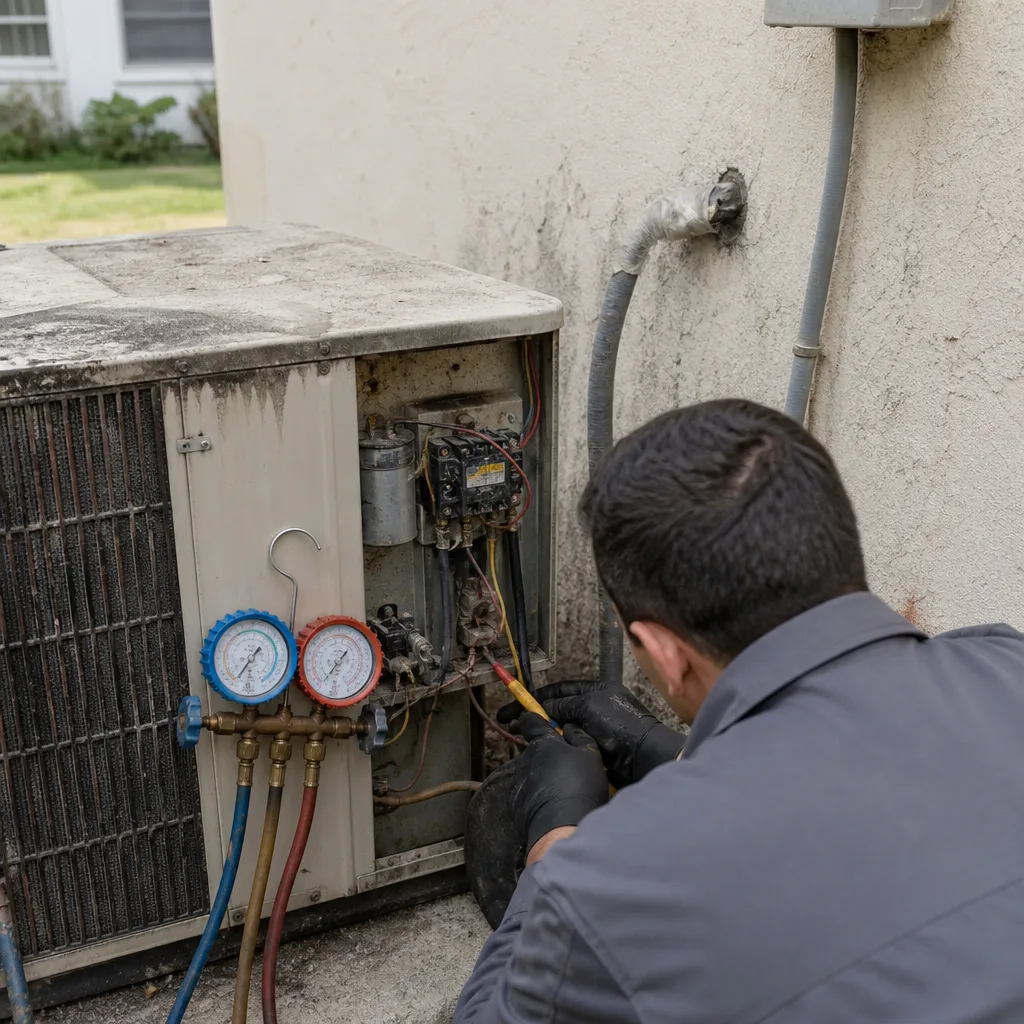
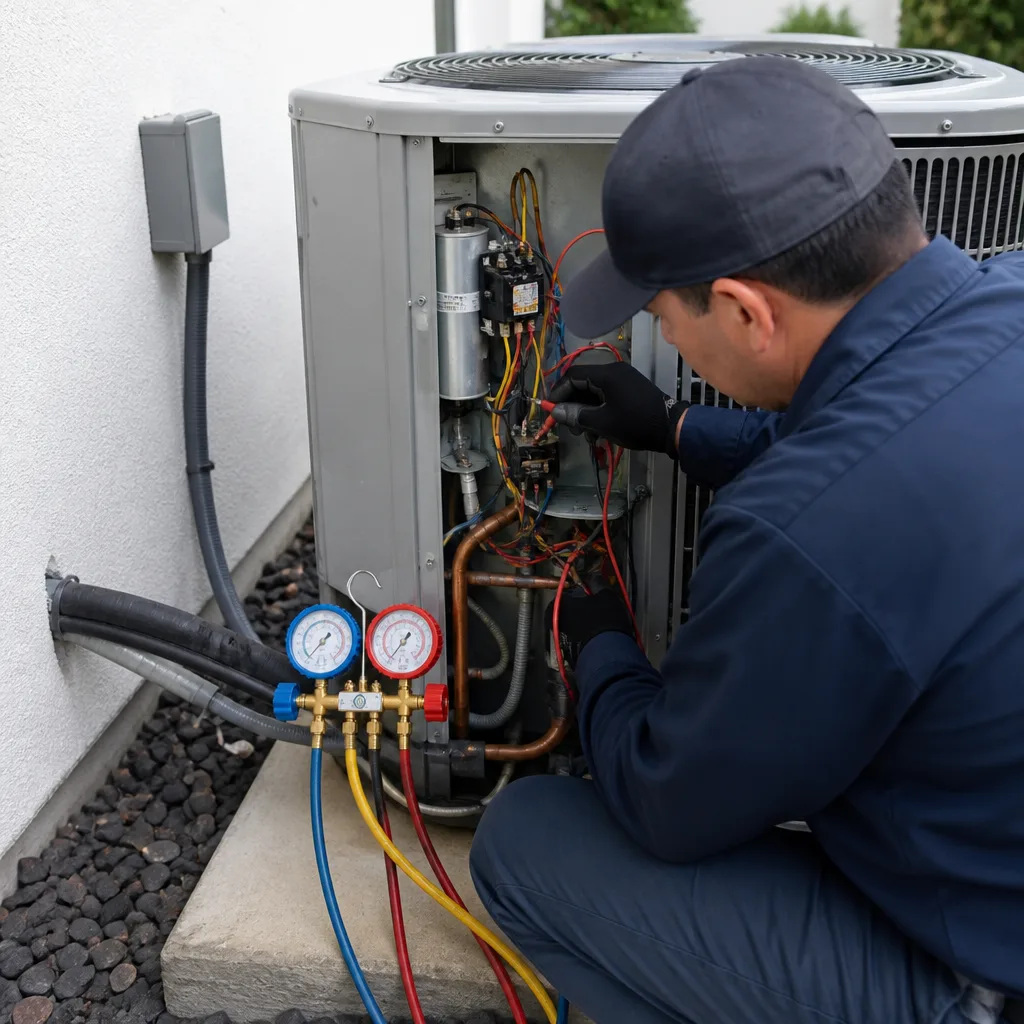
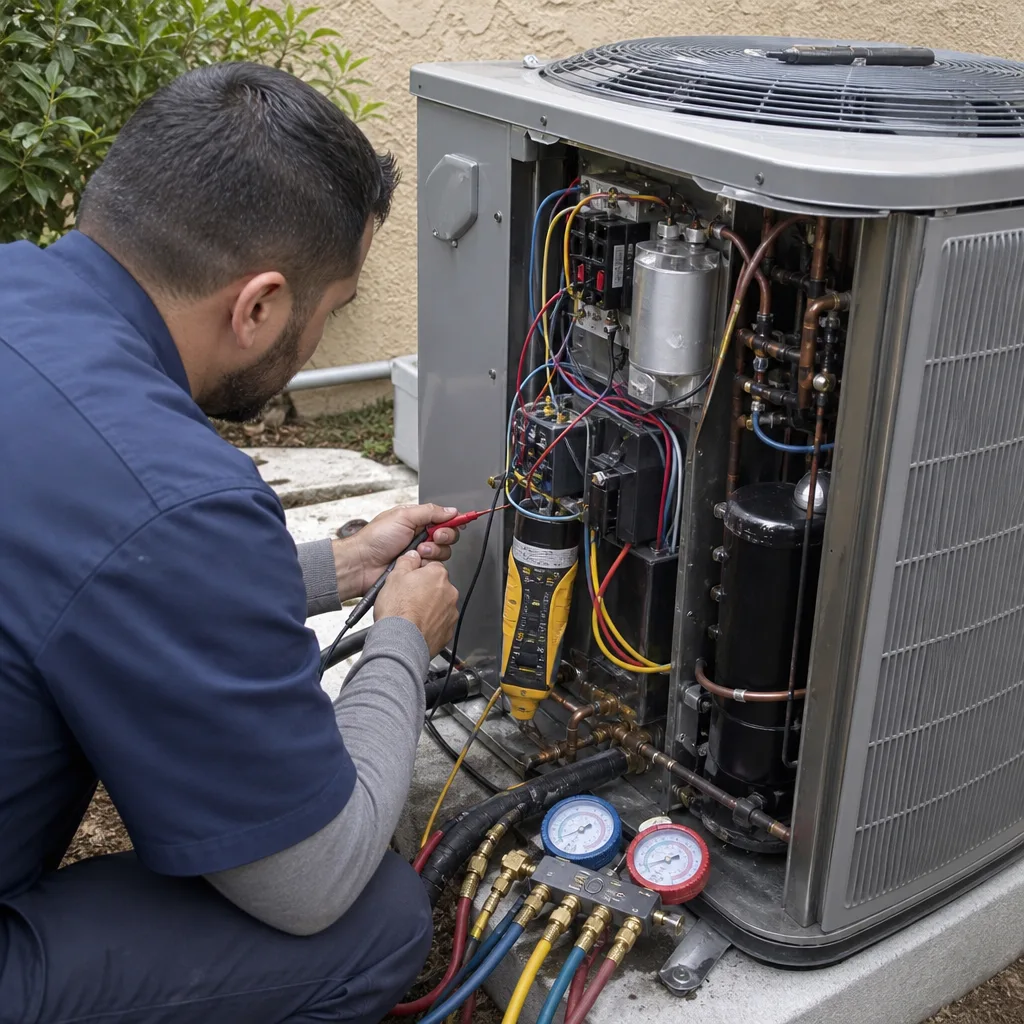
See the difference
 Before
 After
After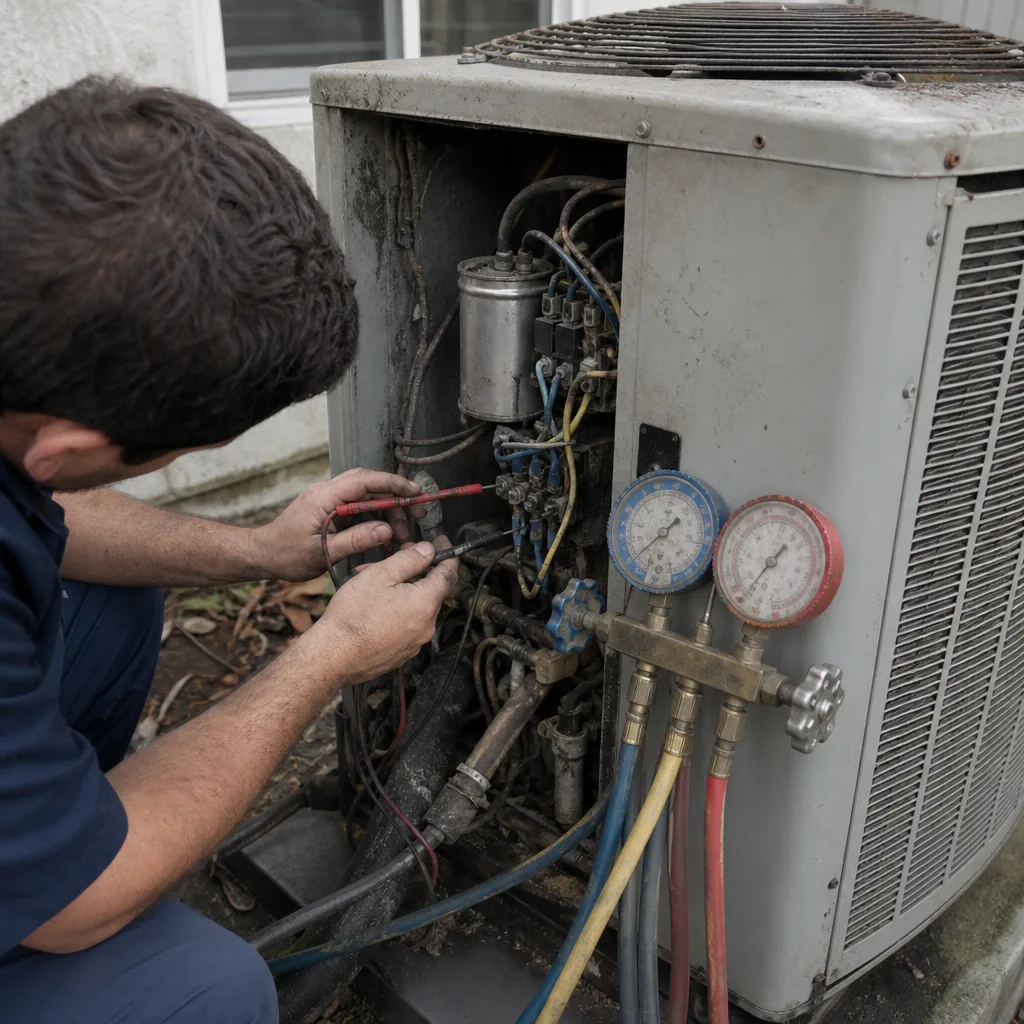 Before
 After
After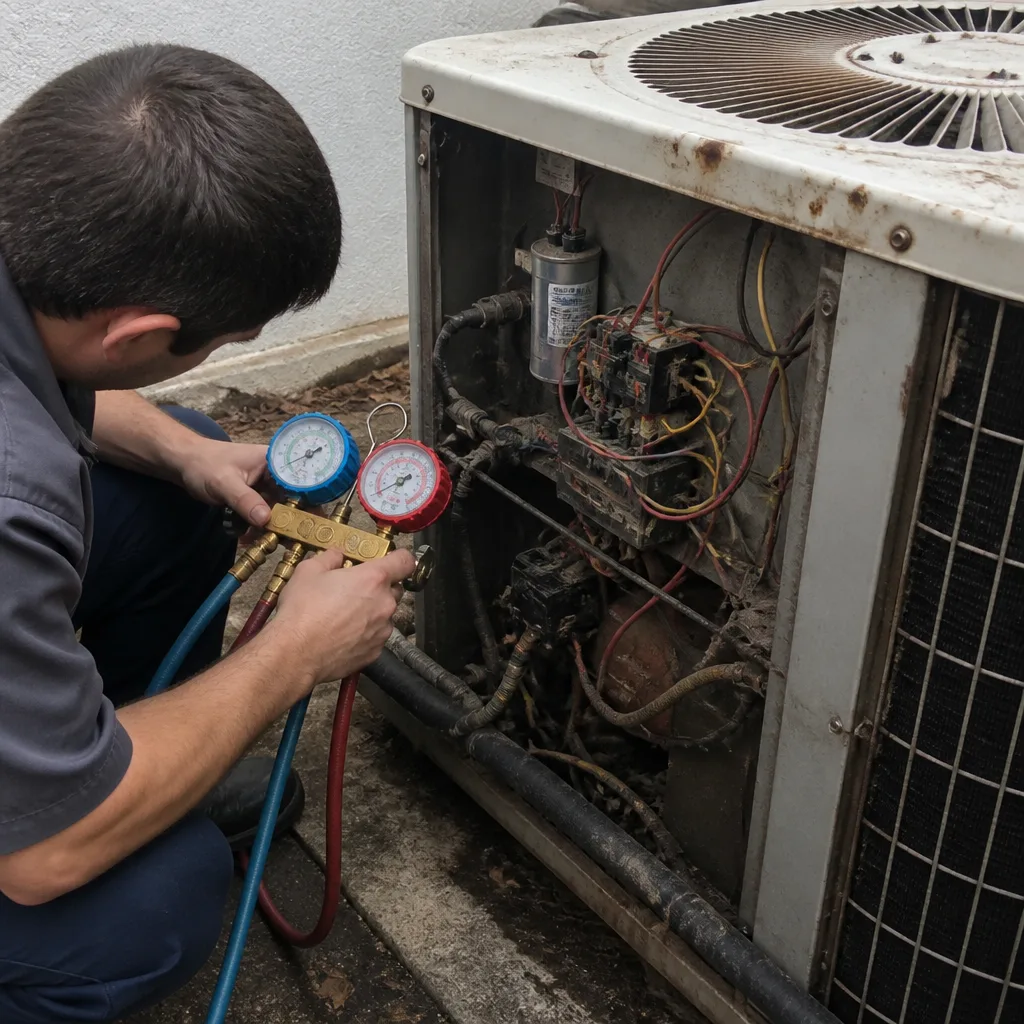 Before
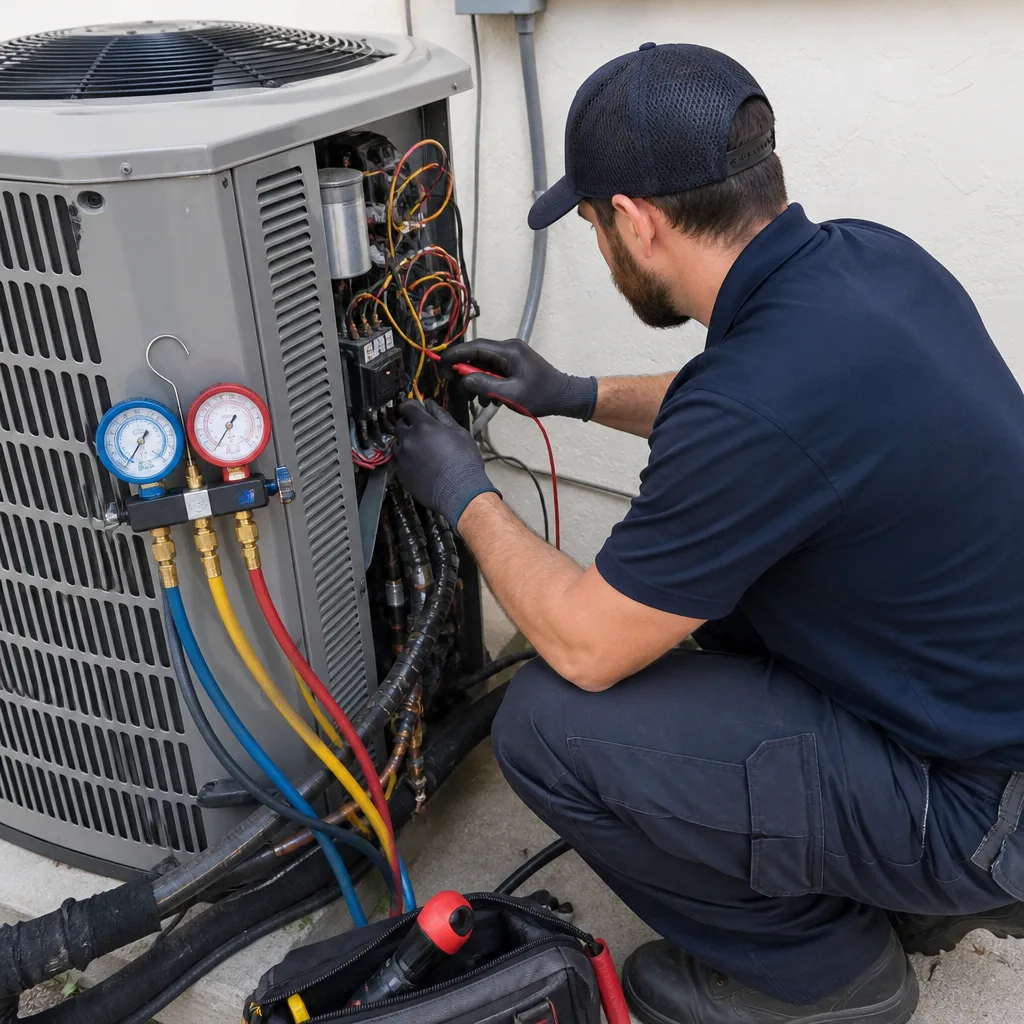 After
After