
Last updated October 16, 2026
 AC repair
 Furnace & heating
 Heat pumps
 Ductless mini splits
 Carrier
 Trane
Trane Goodman
Seasonal tune-up and full diagnostic on your Carrier, Trane, or Goodman system - readings shown to you before any repair is proposed
Diagnosis first, numbers second - you approve the repair price before a single part goes in.
Get your free estimateHVAC Cost Breakdown: The Miami Homeowner’s Reference for 2026
When a national home services site says “AC replacement costs $3,800 – $7,200,” that range was not built from Miami contractor data. Miami-Dade’s permit fees alone, plus required hurricane strapping and wind-rated disconnect requirements, add $300 – $600 before the first hour of labor. This guide gives you the real numbers for Miami in 2026: what each line item on a quote actually costs, why two bids for the “same” 3-ton unit can differ by $2,000, and when repairing beats replacing at current FPL electricity rates. If you’ve been burned by a vague price before, this breakdown is written for you.
Styles & brands we work with
Quick Answer
A full central AC replacement in Miami runs $7,200 – $12,800 for a 3-ton system in 2026, with the equipment itself representing only about 45% of that total. A typical repair call lands between $180 and $650 depending on the part, and a maintenance agreement that actually protects your system costs $180 – $320 per year. Miami pricing runs 10 – 18% above the national average because of HVAC Permits, Codes & Inspections in FL: What You Need to Know, hurricane-rated installation code, and refrigerant prices that shifted after the R-22 phaseout.
Table of Contents
- Why Miami HVAC Costs More Than National Averages
- Line-Item Breakdown of a Typical Miami AC Replacement
- Why Two Quotes for the “Same” Unit Can Differ by $2,000
- Repair vs. Replace: The Miami Payback Math
- Financing and PACE Programs for Miami Homeowners
- What a Fair Maintenance Agreement Costs in Miami
- Common Mistakes to Avoid
- When to Call a Professional
- Frequently Asked Questions
- The Bottom Line
Why Miami HVAC Costs More Than National Averages
Miami is not a generic market, and treating it like one is how homeowners end up with bad numbers. Three structural factors push Miami HVAC pricing above what you’ll see on national cost guides, and they’re baked into every legitimate quote you’ll receive.
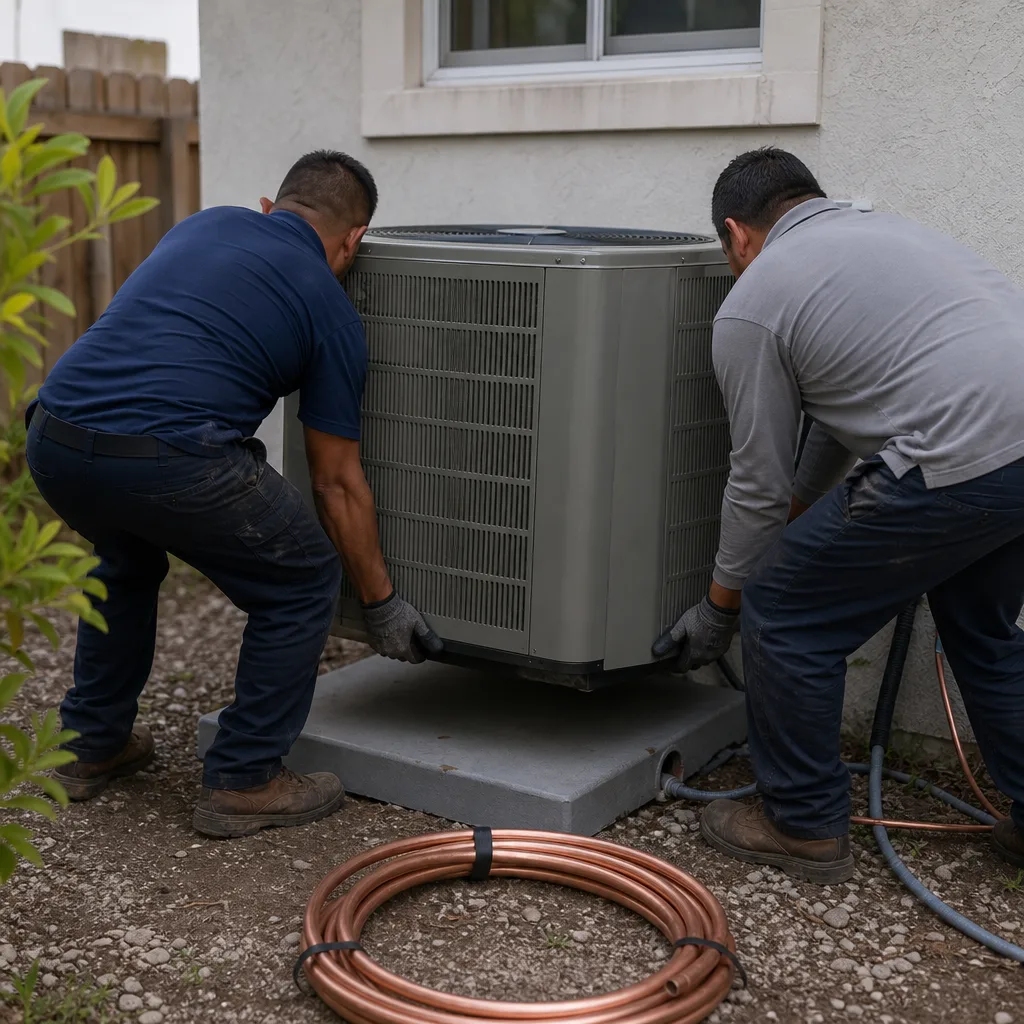
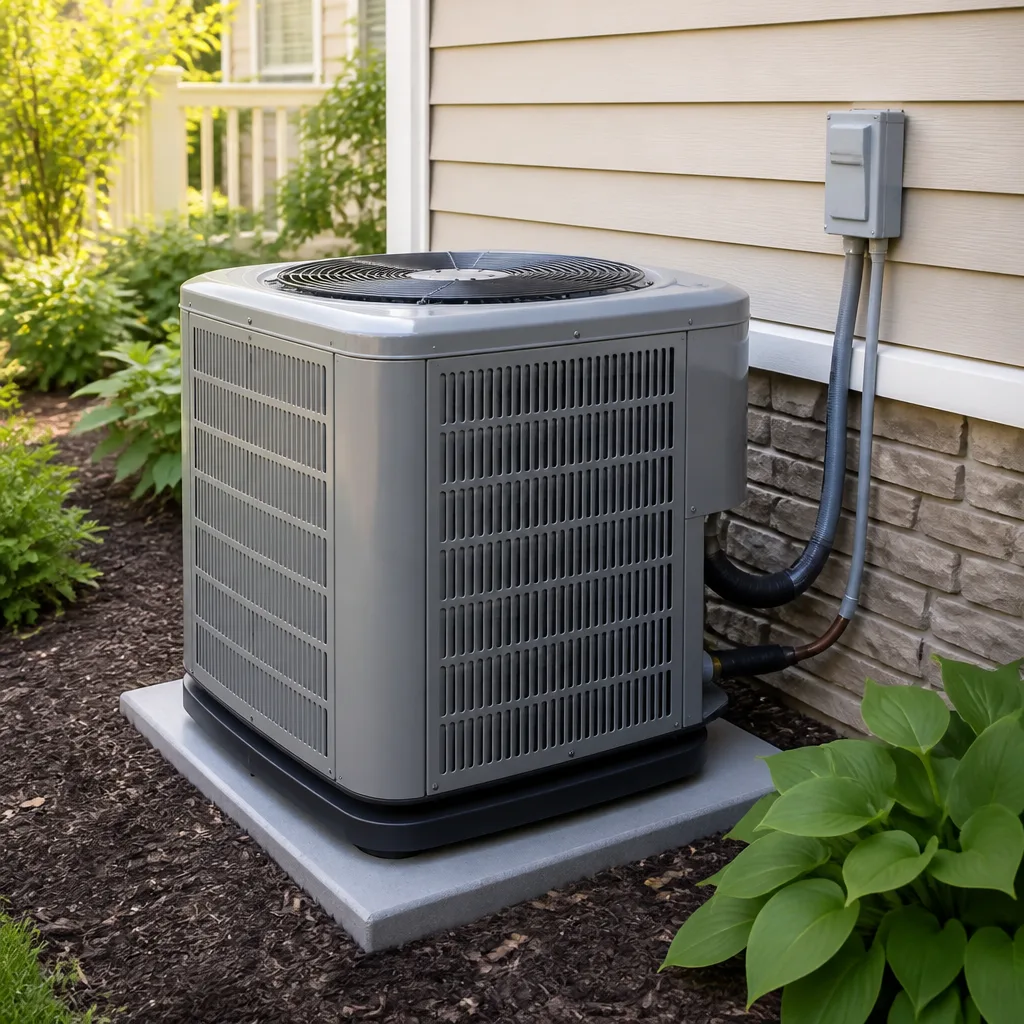
First, Miami-Dade County sits in the High Velocity Hurricane Zone, which carries the strictest wind-load requirements in the continental United States. Your outdoor condenser must be anchored with hurricane-rated strapping, the electrical disconnect must be wind-rated, and the pad beneath the unit has specific elevation and anchoring standards. Those requirements are not optional upgrades. They are code. And they add real labor time to every installation.
Second, the licensed contractor pool in Miami is thinner than in most metro areas of comparable size. Florida’s licensing requirements are rigorous, and the local trade schools simply haven’t produced enough technicians to meet demand. When licensed labor is scarce, labor rates climb. We see this in the field daily: the same repair that might cost $220 in Jacksonville or Tampa often runs $280 – $340 in Miami simply because the qualified technician’s time is worth more here.
Third, refrigerant economics hit Miami harder than most places. The R-22 phaseout meant systems built before 2010 either get retrofitted or replaced, and R-22 itself now costs $150 – $250 per pound wholesale when it can be found at all. Modern R-410A and the newer A2L refrigerants like R-454B are more available, but Miami’s year-round cooling load means systems here cycle more in five years than a Chicago system cycles in twelve. That accelerated wear shows up in both repair frequency and replacement timing.
When you add those three factors together, the 10 – 18% premium Miami homeowners pay is not price gouging. It’s the cost of building and maintaining comfort equipment that survives hurricane season, runs almost daily, and meets a stricter code than almost anywhere else in the country.
Line-Item Breakdown of a Typical Miami AC Replacement
Here is what a complete 3-ton, 16 SEER2 central AC replacement actually costs in Miami in 2026, broken down line by line. These are honest ranges from our own quotes and the Miami market, not national averages.
| Line Item | Typical Range (Miami, 2026) | What It Actually Covers |
|---|---|---|
| Condenser (outdoor unit) | $2,800 – $4,200 | The 3-ton, 16 SEER2 unit itself. Brand matters less than installation quality at this tier. |
| Air handler or evaporator coil | $1,500 – $2,600 | The indoor component that circulates air over the cold coil. Often replaced at the same time. |
| Labor | $1,800 – $2,800 | Typically 6 – 10 hours for a two-person crew, including the full mechanical and electrical hookup. |
| Miami-Dade permit | $180 – $350 | Required by the county. Any contractor who skips this is cutting a corner you’ll pay for later. |
| Hurricane strapping and wind-rated disconnect | $180 – $350 | Code-required anchoring and electrical protection for High Velocity Hurricane Zone compliance. |
| Refrigerant charge | $250 – $450 | New systems ship dry. The full factory charge must be weighed in by the installing technician. |
| Condenser pad | $90 – $180 | Elevated, anchored pad meeting Miami-Dade elevation standards. |
| Haul-away and disposal | $150 – $250 | Removing the old condenser, air handler, and refrigerant recovery. Refrigerant must be recovered legally. |
| Thermostat (if replaced) | $80 – $250 | Basic digital model up to a smart thermostat. Often worth doing while the system is out. |
| Total installed | $7,200 – $12,800 | Everything above, with permit pulled and all Miami-Dade code requirements met. |
Two things stand out in that table. First, equipment is less than half the total. When a national guide quotes you “$4,000 for a 3-ton AC,” that’s the condenser plus maybe the coil at wholesale, not the installed price in Miami. Second, the permit and hurricane-related lines, which national guides never mention, add $360 – $700 on their own. That’s the Miami difference in black and white.
If you’re weighing a full replacement, our AC Installation in Miami page walks through equipment selection, timing, and what to expect during the install day itself.
Why Two Quotes for the “Same” Unit Can Differ by $2,000
Homeowners in neighborhoods like Kendall, Coral Gables, and Palmetto Bay often show us two quotes for what looks like the same 3-ton system with a $1,800 – $2,200 gap between them and ask which contractor is overcharging. The honest answer: usually neither. The quotes aren’t actually for the same job. Here are the five specification differences that explain most of the gap.
- SEER2 rating. The difference between a 14.3 SEER2 entry-level unit and a 16 or 17 SEER2 unit is $700 – $1,200 on the condenser alone. If one quote says “14 SEER2” and the other says “16 SEER2,” they are different machines from the start. In Miami’s heat, that efficiency gap translates to $110 – $180 per year in electricity at current FPL rates, so it’s not just a comfort upgrade.
- Evaporator coil coating. Miami’s salt air, especially east of US-1 and anywhere near Biscayne Bay, corrodes standard copper coils fast. A coated coil, often called an epoxy or hydrophilic coating, adds $300 – $500 but meaningfully extends coil life in coastal neighborhoods. If one quote includes it and one doesn’t, that’s not a hidden fee. That’s one contractor protecting the system from Miami conditions.
- Warranty tier. A base manufacturer warranty covers parts for 5 – 10 years. A premium tier, which some contractors register on your behalf, extends to 12 years or adds a labor allowance. The difference at the quote level can be $200 – $600, and it determines whether you pay for a failed compressor in year 9.
- Permit inclusion. A quote that doesn’t list the permit isn’t a cheaper quote, it’s an incomplete one. Miami-Dade requires a mechanical permit for a full system replacement. Some low bids leave it out and then bill it as a “change order” on install day. A written price that includes the permit, before any work begins, is one of the core commitments we make at Cold Harbour Heating and Air Miami.
- Thermostat and ancillary work. Whether the quote includes a new thermostat, new disconnect box, new pad, and an updated drain line can swing the total $250 – $600. If you compare only the line that says “3-ton AC,” you’re comparing one-fifth of the job.
The takeaway is not that the higher quote is always better. It’s that the lower quote is often lower because it’s leaving something out, and the only way to know is to compare line items side by side. In our experience, the best quote is the one that lists every line, puts the price in writing before tools come out, and includes the permit. Everything else is guesswork.
When a repair is the question rather than a replacement, the same logic applies. Our AC Repair in Miami page covers how we diagnose, price, and guarantee repair work in writing.
Repair vs. Replace: The Miami Payback Math
Every Miami homeowner eventually faces the same decision: put $600 into a 12-year-old system and hope it holds, or put $8,000 into a new one and stop hoping. See our HVAC Warning Signs: A Miami Homeowner’s Reference Guide for what to watch for. The right answer depends less on the repair cost and more on what the old system is doing to your electric bill every month it keeps running.
Here’s the calculation we walk customers through. A 12-year-old system in Miami is likely a 13 SEER unit running on R-22, if it hasn’t already been retrofitted. At current FPL residential rates, which run roughly 13 – 15 cents per kilowatt-hour including all charges, that 13 SEER system costs about $135 – $165 per month to cool a 1,800-square-foot home through a typical Miami summer. A new 16 SEER2 system doing the same job runs $100 – $120. The monthly delta in mid-summer is $35 – $45, averaged across the year maybe $20 – $30 per month, but the real point is the repair history. If the system has needed two repairs in the last 18 months, and especially if it’s been leaking refrigerant, the next repair is not the last one. You are not deciding “$600 now vs. $8,000 later.” You’re deciding “$600 now plus probably another $900 within two years, on a system that’s already costing you extra every month, vs. a replacement that resets the clock.”
Miami’s climate tilts the balance toward replacement sooner than national guidance suggests, because the system never gets a rest season. There’s no mild Ohio autumn where the AC sleeps for two months. The wear compounds.
Once you’ve decided to replace, we walk every customer through the selection process, from load calculation to equipment match. Our AC Installation in Miami page covers that process step by step.
Financing and PACE Programs for Miami Homeowners
A replacement system is a large cash outlay, and Miami homeowners have more financing options than most realize. The two most common are traditional installment loans, either through the contractor’s financing partners or a personal lender, and Florida PACE programs, which use a different mechanism entirely.
PACE, which stands for Property Assessed Clean Energy, is available in most Miami-Dade municipalities through programs like Ygrene and RenewPACE. Here’s how it actually works, in plain English. The financing is attached to your property tax bill, not to you personally. You pay it back as a line item on your annual property taxes over a term of usually 10 – 20 years. Qualification is based primarily on property equity and tax payment history, not credit score, which makes it accessible to homeowners who might not qualify for a traditional loan.
But the mechanics cut both ways, and you should understand the full cost before signing. PACE interest rates run higher than conventional home equity lines, often 6.5 – 9.5% in 2026. Because the obligation attaches to the property, if you sell the home before the term ends, the balance may transfer to the buyer or need to be settled from sale proceeds, depending on the program’s terms. And PACE assessments sit in a priority position on the tax bill, which some mortgage lenders view unfavorably if you refinance later.
When PACE makes sense: you have significant equity, you plan to stay in the home at least 10 years, and the energy savings from a substantially more efficient system offset the interest cost. When it doesn’t: you’re planning to sell within five years, you have access to lower-cost credit elsewhere, or the upgrade is modest enough that the financing cost outweighs the benefit.
- Ask for the total financed cost, not the payment. A 15-year PACE assessment at 8% on a $9,000 project will pay back roughly $15,500 over the term. Know that number before you sign.
- Confirm the program is active in your municipality. Not all Miami-Dade cities participate in the same programs.
- Compare against a conventional contractor financing option. Many HVAC companies, including ours, offer third-party installment plans at rates that beat PACE for credit-qualified buyers.
We help Miami homeowners understand these options at estimate time, not as a sales pitch but as a clear comparison of total cost over the life of each option. The written price stays the same regardless of how you choose to pay for it.
What a Fair Maintenance Agreement Costs in Miami
A Seasonal HVAC Care for Miami: Year-Round Homeowner’s Guide starts with a maintenance agreement that should cost $180 – $320 per year for a single system, and at that price it should include two visits: a cooling check in spring before the summer load hits and a heating check in fall, although in Miami the heating check is closer to a safety inspection on the electric strip heat or heat pump. If an agreement costs $400 and only includes one visit, you’re paying for marketing, not maintenance.
Here is what a fair agreement actually includes, and what it looks like in practice. The technician should check refrigerant pressures and superheat/subcooling, which tells us whether the system is still holding the factory charge or slowly leaking. The evaporator coil should be inspected for corrosion, which matters more in Miami than almost anywhere because salt air accelerates coil failure. The drain line should be flushed, because Miami’s humidity grows algae in condensate lines faster than any climate in the country, and a clogged drain line is the most common cause of water damage from an AC system. Electrical connections should be tightened, capacitors measured, and the condensate pump tested. The technician should also check the hurricane straps and the condenser pad for any movement or corrosion, because Miami-Dade code requires them and time loosens everything.
What should not be in the agreement: a vague “32-point checklist” that nobody can show you. A maintenance visit should produce a written report of what was actually measured and found, not a checklist of boxes ticked by someone who was in the home for 20 minutes. Our technicians are not paid on what they sell. They’re paid to find problems early and report them honestly.
If a maintenance visit uncovers a real weakness, the technician should show it to you, explain what it means in plain English, and give you a written price to address it if you choose to. No pressure, no “this will fail tomorrow” theater. That’s the standard we hold ourselves to, and it’s one of the reasons Cold Harbour Heating and Air Miami home guidance and service standards are built around the Kingswell Guarantee: a price before the work starts, a firm arrival window, a clean job site, and a guarantee that brings the technician back for free if a repair fails inside 365 days.
Common Mistakes to Avoid
- Comparing only the equipment line item. Two quotes for a 3-ton AC are not automatically comparable. One might include the permit, coated coil, and new thermostat; the other might pad the labor line and leave the permit out. Compare line items, not totals.
- Accepting a quote without a permit line. Miami-Dade requires a mechanical permit for full replacements, and skipping it saves a few hundred dollars now and creates a real problem if you ever sell the home or file an insurance claim.
- Deferring maintenance on a coastal system. Near Biscayne Bay, coil corrosion is not an if, it’s a when. Annual inspection catches it at $400 rather than $1,800 for a coil replacement.
- Refilling R-22 indefinitely. At $150 – $250 per pound for refrigerant that’s getting harder to source, repeatedly topping off a leaking R-22 system is the most expensive way to stay cool in Miami.
- Picking the lowest bid without asking what’s missing. The gap between a $6,000 quote and an $8,000 quote isn’t profit padding. It’s usually a missing permit, an uncoated coil, or a 14 SEER2 condenser compared to a 16 SEER2.
- Ignoring the condensate drain line until it overflows. Miami humidity makes drain line algae a year-round issue. A $15 annual flush beats a $1,500 ceiling repair.
- Signing a PACE agreement without reading the total financed cost. The monthly payment can look small while the total repayment is nearly double the project cost. Ask for the total.
When to Call a Professional
Call a licensed HVAC technician when your system is blowing warm air, when the outdoor unit is running but the indoor air isn’t cooling, when you hear grinding or banging from the condenser, when water is pooling around the air handler, or when your electric bill spikes month over month with no change in usage. Refrigerant handling requires an EPA Section 608 certification, and Miami-Dade code compliance on any replacement is not a homeowner project. HVAC systems involve high-voltage wiring, pressurized refrigerant, and moving mechanical parts. If you’re not certain what you’re looking at, the safest and cheapest path is a trained professional who will diagnose and put the price in writing before any work begins. Furnace Repair in Miami covers heating-side concerns when the rare cold snap hits, and Cold Harbour Heating and Air Miami offers free estimates in Miami – call (850) 810-1910.
Frequently Asked Questions
A complete 3-ton, 16 SEER2 central AC system with full installation, Miami-Dade permit, hurricane strapping, and haul-away runs $7,200 – $12,800 in Miami in 2026. The range depends on efficiency rating, coil coating, thermostat, and the condition of your existing ductwork. Call (850) 810-1910 for a written, line-item quote specific to your home.
Miami-Dade County sits in the High Velocity Hurricane Zone, which requires hurricane-rated condenser strapping and wind-rated electrical disconnects. Permit fees add $180 – $350 per replacement, licensed labor is scarcer than in comparable metros, and the year-round cooling load accelerates system wear. Those factors together push Miami pricing 10 – 18% above national averages.
Replace it if it’s an R-22 system that’s needed two or more repairs in 18 months, because R-22 refrigerant now costs $150 – $250 per pound and the system is costing you more in electricity every month than a new 16 SEER2 unit would. Repair makes sense if the system holds charge, has a clean repair history, and the failing part is under $400 installed. Call (850) 810-1910 for an honest assessment with the price in writing before anyone picks up a tool.
A fair single-system maintenance agreement in Miami costs $180 – $320 per year and includes two visits: a spring cooling check and a fall heating check. At that price, the technician should measure refrigerant pressures, inspect the evaporator coil for salt-air corrosion, flush the condensate drain line, tighten electrical connections, and test the capacitor. Anything over $400 for one visit is padded.
PACE programs like Ygrene and RenewPACE work well for Miami homeowners with significant equity who plan to stay in the home 10 or more years, because qualification is based on property value and tax history rather than credit score. But interest rates run 6.5 – 9.5% in 2026, and the balance attaches to the property tax bill, which matters if you sell or refinance. Compare the total financed cost against a conventional installment loan before signing.
Yes. Miami-Dade County requires a mechanical permit for any full AC system replacement, and the cost is typically $180 – $350. Any quote that omits the permit line is either incomplete or planning to add it as a surprise change order on install day. A legitimate written quote includes the permit before the work begins.
The Bottom Line
Miami HVAC pricing doesn’t match national guides for good reason: hurricane code, permit costs, salt air, and a cooling season that never really ends all push real numbers higher. A 3-ton replacement runs $7,200 – $12,800, a repair call $180 – $650, and a fair maintenance agreement $180 – $320 per year. The smartest thing any Miami homeowner can do is demand line-item written pricing, confirm the permit is included, and choose a contractor who guarantees the work in writing rather than by handshake. For more guides & resources on keeping your system running, visit our blog. Those are the standards Cold Harbour Heating and Air Miami has operated under since 2003. Call (850) 810-1910 for a free estimate with the price in writing before the work starts.
Written by Victor Mancini, Owner at Cold Harbour Heating and Air Miami, serving Miami since 2003.
See the difference
 Before
 After
After Before
 After
After Before
 After
After